
Victorian Cast Iron Radiators: A Complete Guide to Victorian Home Design Styles
Estimated reading time: 10 minutes
Few architectural styles carry the pull of the Victorian era. Walk down almost any street in Britain and you’ll find warm terracotta brickwork, ornate bay windows and the quiet grandeur that defined six decades of house building. Victorian homes aren’t just popular. They’re consistently among the most sought after properties on the UK market.
And it’s easy to see why.
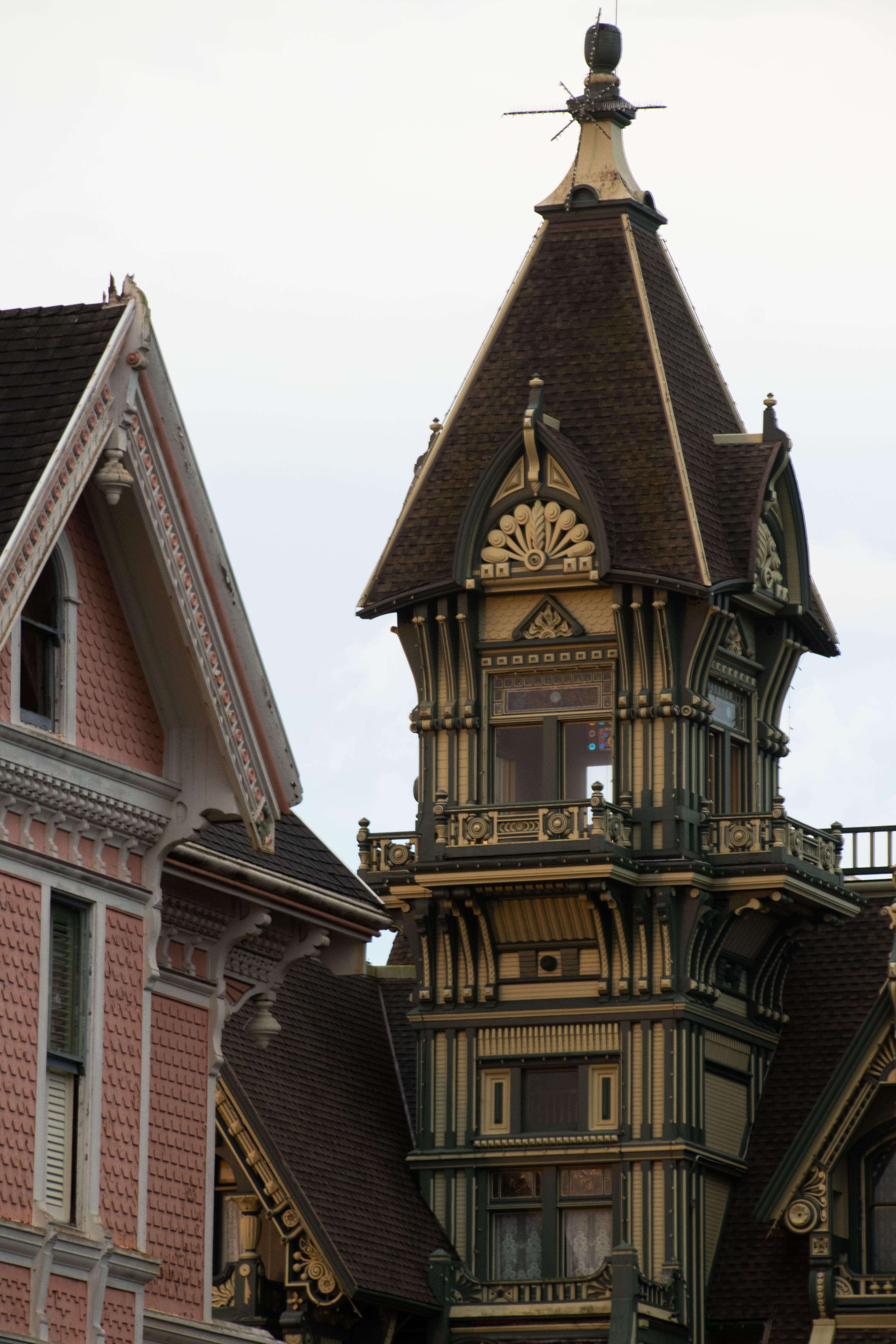
What keeps them relevant is how well they adapt. Original Victorian architecture from the 1830s to 1901 produced an extraordinary range of styles, from the decorative intensity of Gothic Revival to the cheerful confidence of Queen Anne. Today’s homeowners are restoring, renovating and reinterpreting these styles with modern layouts and contemporary finishes, but the instinct is always to preserve what makes them special.
Heating is a central part of that conversation. Victorian cast iron radiators are one of the most authentic and practical ways to complete a period inspired home. Browse our full range of traditional cast iron radiators to find the right fit for your project.
What Defines Victorian and Victorian-Inspired Home Design Today?
Craftsmanship defines Victorian homes. The era drew on a rich mix of architectural movements, each evolving across a long and productive period of British history. And the UK’s housing stock still reflects it.
In the original period, quality was built into every detail. Ornate cornicing, deep skirting boards, ceiling roses, picture rails, solid masonry and carefully proportioned rooms: these weren’t finishing touches. They were the point.
Today, Victorian inspired design takes two forms:
- The careful restoration of original properties, keeping as much period fabric as possible.
- The reinterpretation of Victorian character in new builds and extensions, blending heritage aesthetics with open plan living, modern kitchens and contemporary functionality.
Both are gaining momentum. Historic England documents strong and sustained interest in Victorian and Edwardian properties across England, particularly in urban areas where terraces dominate the street. These homes offer architectural character that modern construction rarely matches.

Which Victorian Home Style Is Right for You?
Victorian architecture isn’t one thing. It’s a collection of overlapping movements, each with its own personality, detailing and mood. Understanding your home’s specific style makes it easier to choose the right interior treatment and the right heating.
Gothic Revival Homes
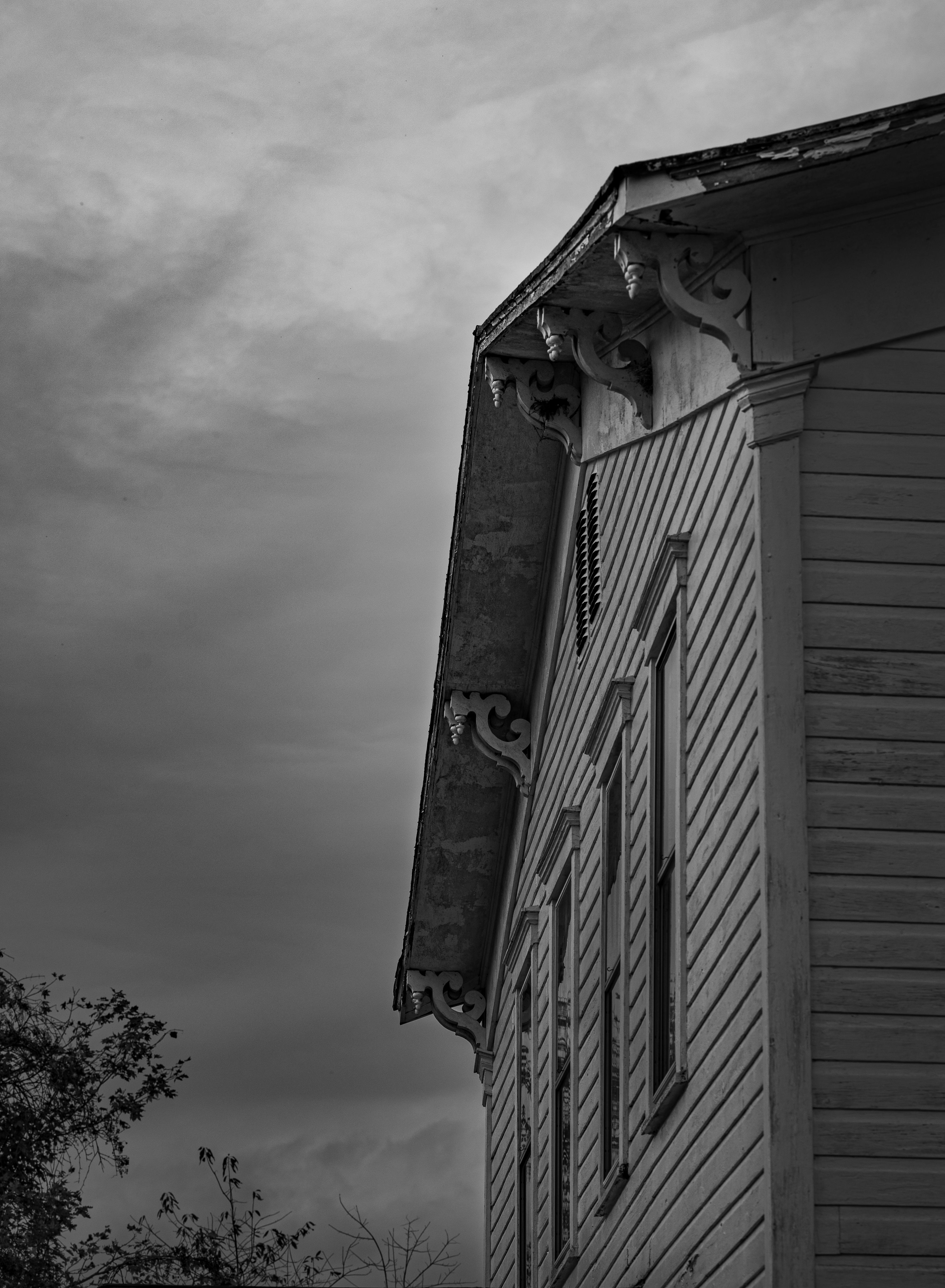
Gothic Revival was the dominant force in Victorian architecture from the 1840s onwards. Augustus Pugin and John Ruskin championed verticality, craft and the vocabulary of medieval buildings, and their influence shaped residential design for decades.
In homes, that means:
- Pointed arch windows
- Decorative brickwork with contrasting stone or tile detail
- Steep gabled rooflines
- A strong vertical rhythm throughout
Interiors tend towards dark stone fireplaces, exposed timber and rich jewel toned colour schemes. Deep greens, burgundy and cobalt blue all sit naturally within the Gothic Revival palette.
For heating, you want ornate cast iron radiators with real decorative presence. The Oxford is a strong choice, with its layered decorative columns and bold profile. The Bartholomew and the Saint Paul suit the style too. Their substantial proportions and deeply cast detailing give them a sculptural quality that Gothic Revival interiors reward. Hand polished and antiqued finishes bring out that detail and echo the craftsmanship the style demands.
Queen Anne Victorian Homes
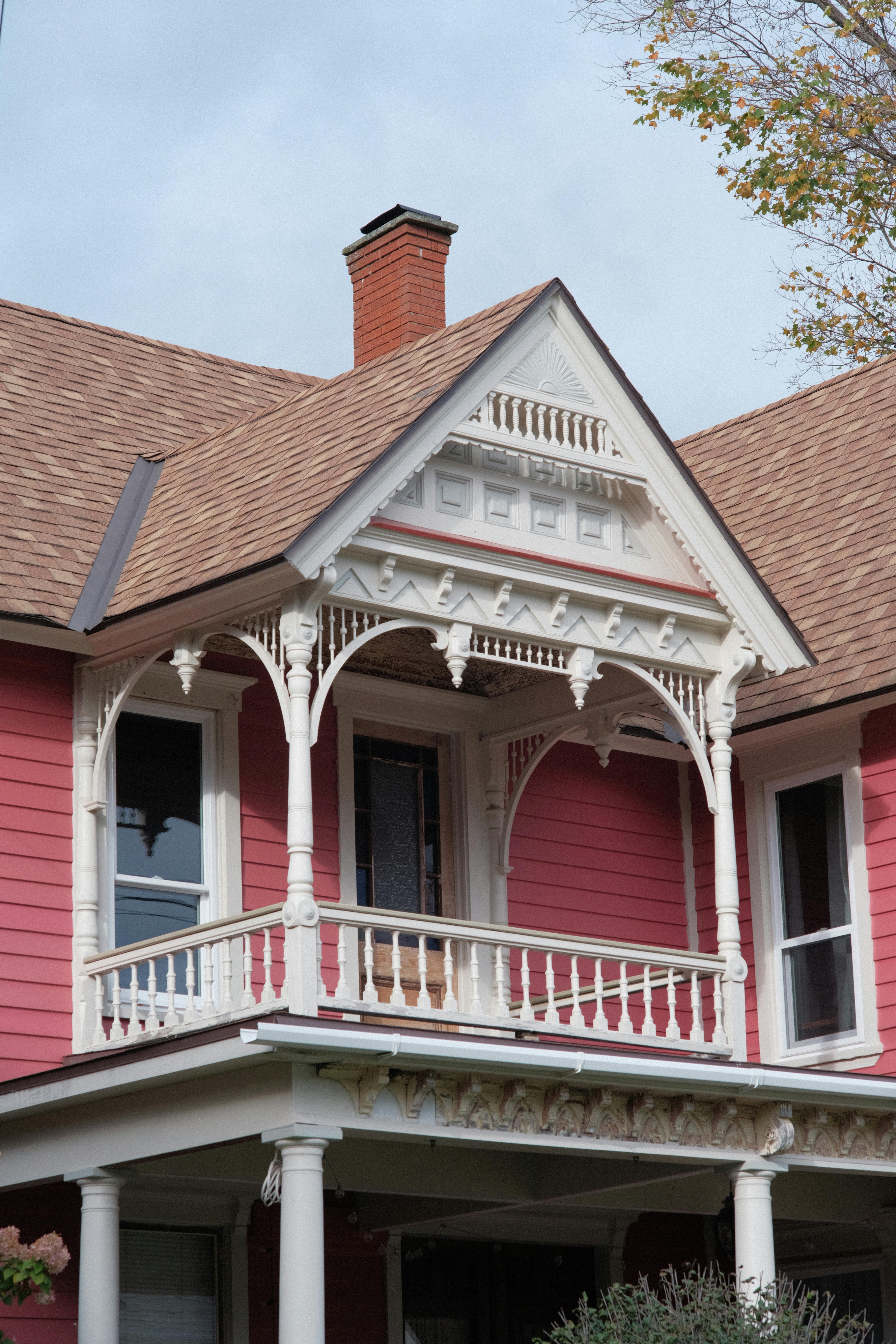
Queen Anne style is the most expressive of the Victorian residential movements. Popular from the 1870s onwards, you’ll find asymmetrical façades, decorative tile panels and vibrant contrasting brickwork. These homes have real personality.
Inside, expect panelled walls, dado rails, tiled hallways and ornate fireplaces. The palette is bold: deep navy blues, rich terracotta and warm heritage greens all work well in these spaces.
Highly decorative cast iron radiators suit this style. The Kensington is a good fit, especially the 780mm model with its decorative etched crown. The Montpellier and the Piccadilly, which includes Hampton decorative bush ends as standard, both complement the character. Finish them in Farrow & Ball or Little Greene colours and the radiator becomes part of the scheme, not an afterthought fighting against it.
Bay-Fronted Victorian Homes
The bay fronted Victorian terrace is the most common residential type in many British cities. The projecting bay window became a defining feature of working and middle class housing from the 1860s onwards, adding light and street presence at the same time.
Inside, these homes are typically well proportioned but not extravagant. Generous ceilings, narrow hallways and front reception rooms designed around the bay itself.
Sizing matters here. You need a radiator that sits comfortably beneath or beside a bay window sill without crowding the room. The Victoriana 3 Column and Victoriana 4 Column offer this flexibility, with multiple height options and strong period styling. The Clarendon is another good option. Its single column profile suits narrower window recesses. Period paint finishes in neutral heritage shades keep everything in step. Churchill is perfect for bay windows at 350mm height but has high BTU output for its size.
Modern Victorian Homes
Modern Victorian design borrows the proportions and character of the era and applies them to contemporary life. High ceilings and original fireplaces sit alongside open plan kitchens, glass rear extensions and underfloor heating. It respects the past. But it doesn’t live there.
The challenge is balancing period character with modern performance. Column cast iron radiators do this well. The Neo Georgian 4 Column is a good fit for open plan spaces: a recognisable traditional column profile that doesn’t overwhelm a contemporary layout. The Shaftsbury and the Louis offer a similar balance. Contemporary heritage finishes, including muted anthracite and restrained Farrow & Ball colours, keep the period reference without making the space feel like a museum.
Which Victorian Interior Design Trends Are Most Popular in the UK?
Houzz UK data consistently identifies Victorian and Edwardian properties among the most actively renovated home types in Britain. The interiors movement is strong, and a few themes come up again and again.
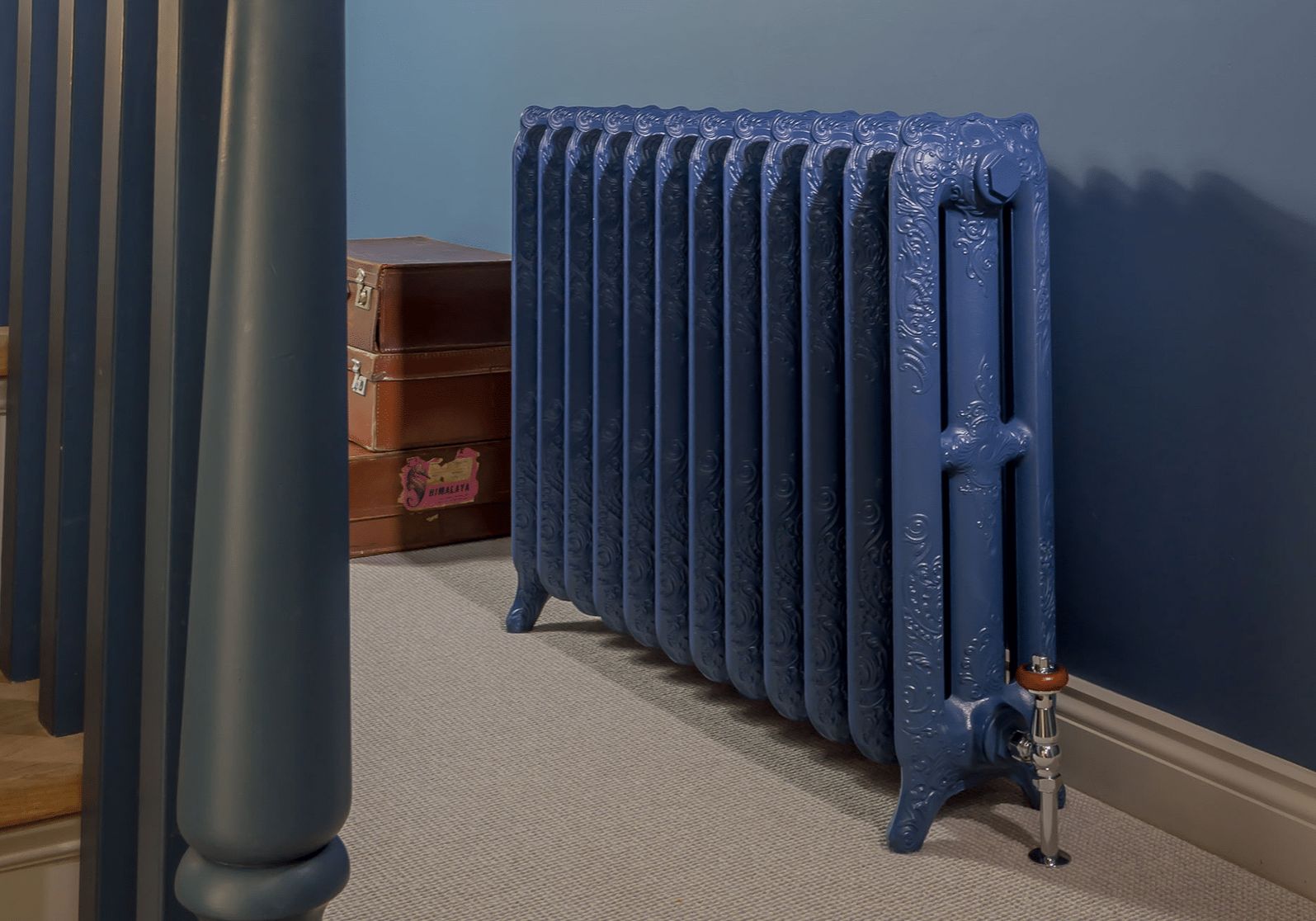
Heritage colour palettes. Deep greens, navy blues and warm terracotta have moved from fashion into the mainstream. Cast iron radiators suit these palettes well. Paint them in matching or complementary finishes and they become a feature, not a fixture. We offer Farrow & Ball, Little Greene and bespoke colour match options, so you can tie the radiator to the room exactly.
Wall panelling and wainscoting. Dado rails, full height panelled walls and beadboard effects create the layered quality that defines Victorian interiors. A cast iron radiator against a panelled wall works. The section pattern echoes the rhythm of the panelling behind it. Steel panels can’t replicate that.
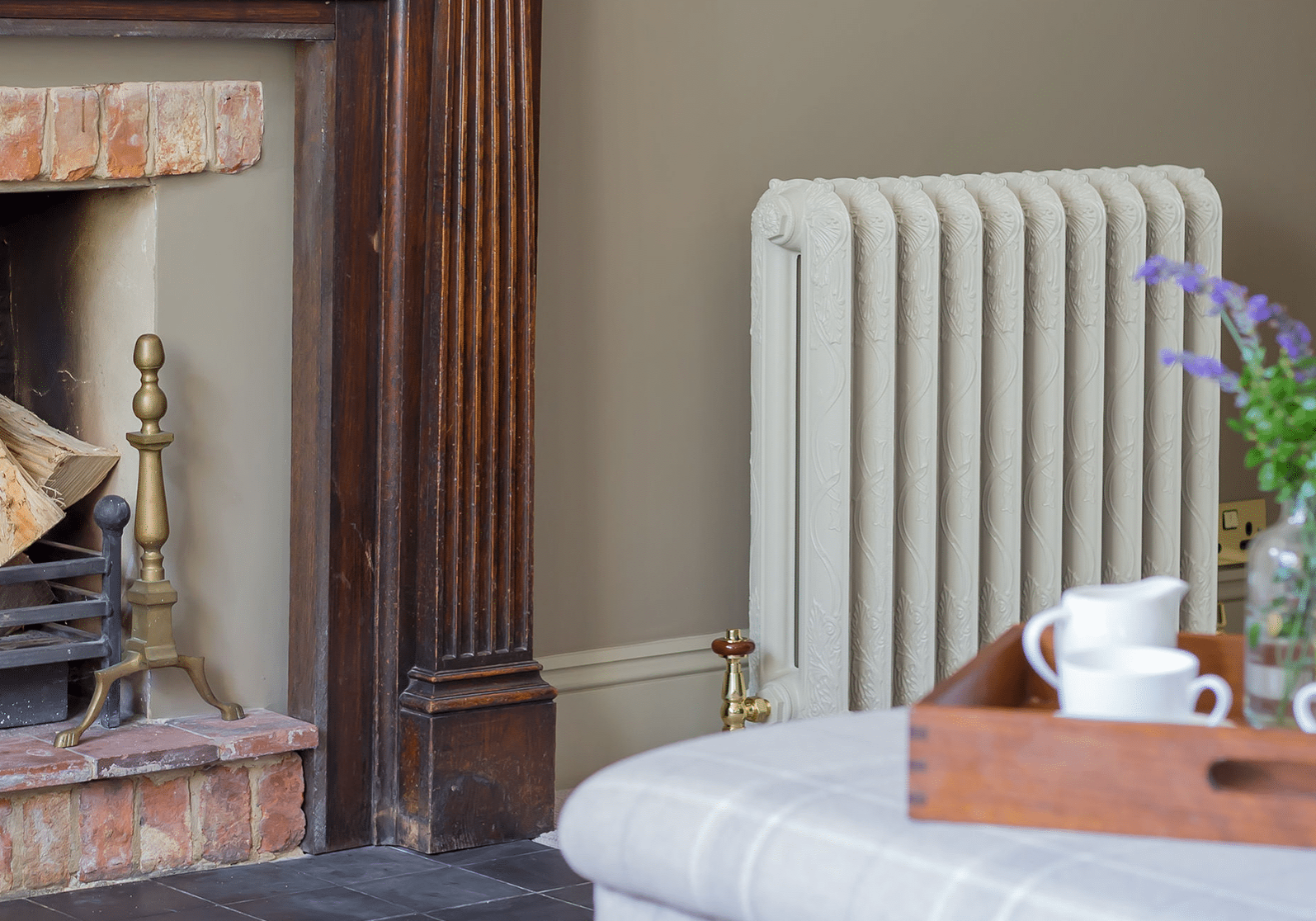
Period fireplaces. Original or restoration fireplaces in marble, slate or tiled surrounds anchor a room in the period. Cast iron radiators complement fireplaces naturally: both are functional objects with real decorative presence. Together they give a room a sense of intention.
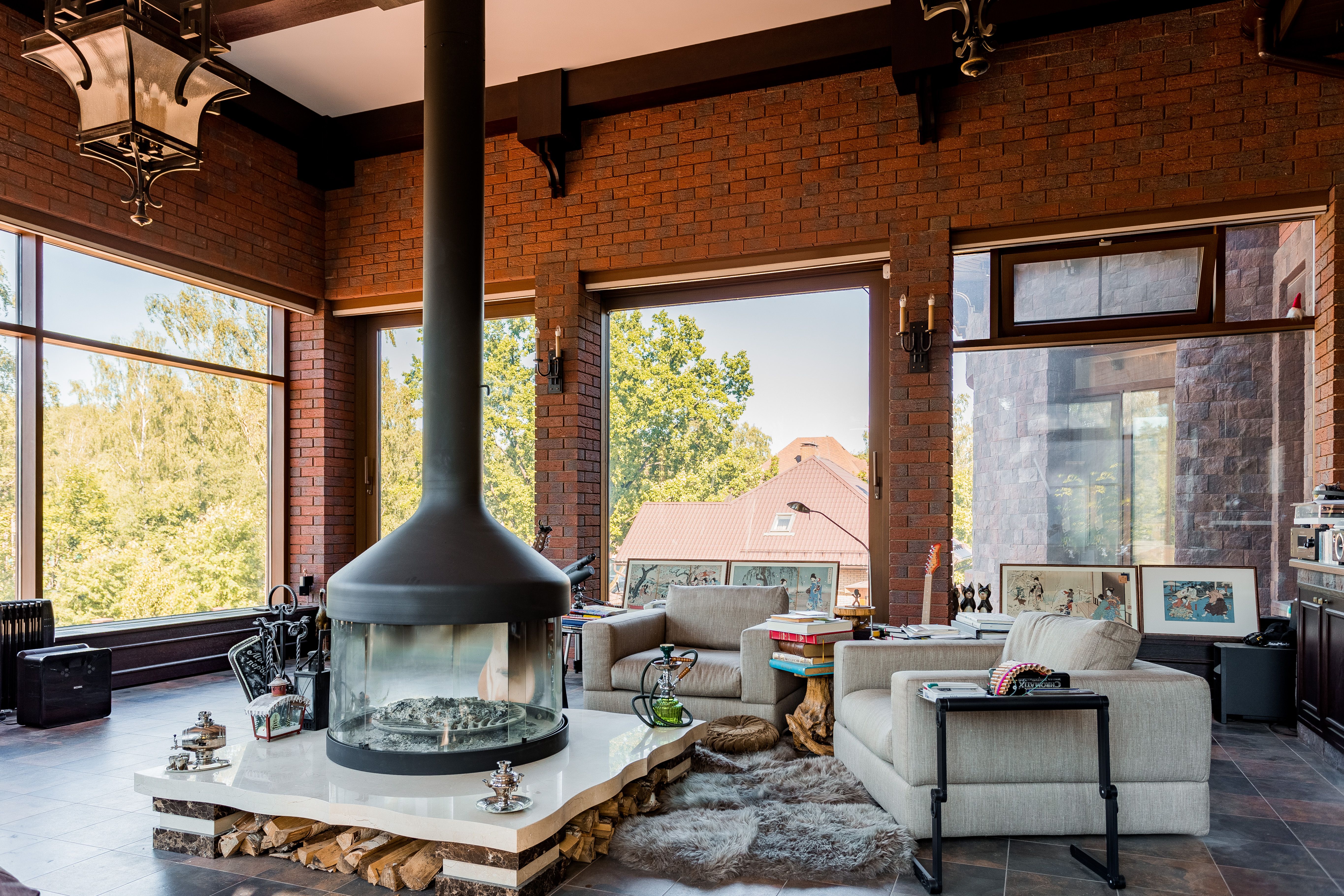
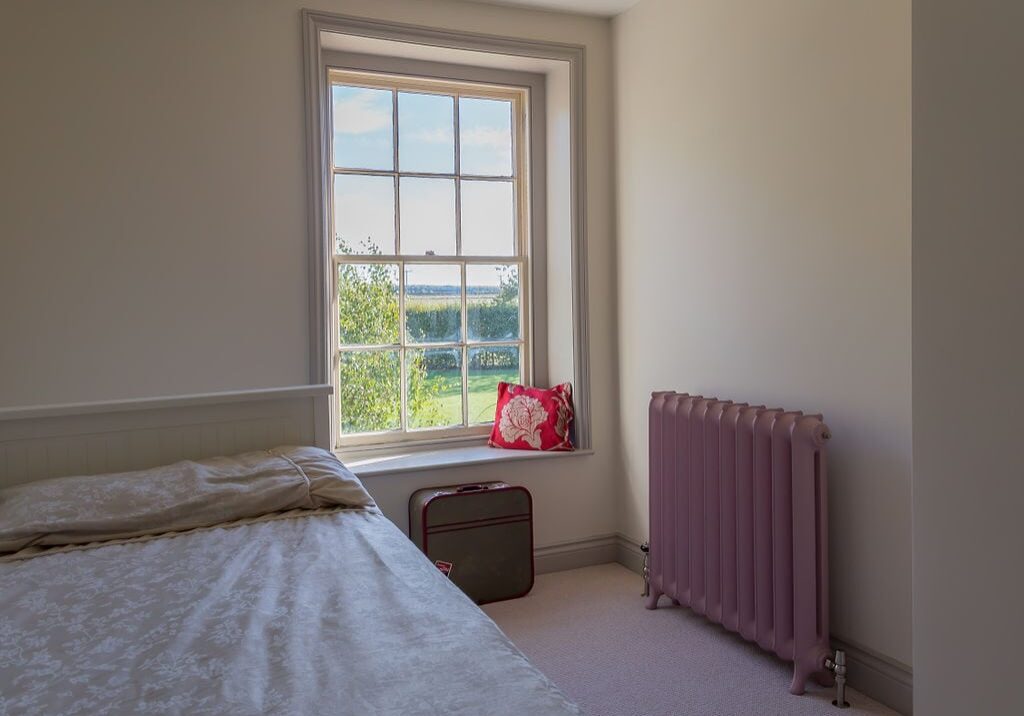
Heritage sash windows. Original frames with single glazing increase heat loss. Cast iron retains and releases heat gradually, which is a real practical advantage in rooms like these. The room stays comfortable for longer, even as temperatures drop.
Glass rear extensions. One of the most popular modifications to Victorian terraces, these create larger flowing spaces that keep the character of the original front rooms. Cast iron radiators perform well in these spaces once they reach temperature. Getting the BTU calculation right matters, and that’s where good technical advice pays off.
Which Cast Iron Radiator Style Works Best for Different Victorian Homes?
| Victorian Home Style | Recommended Radiator Style | Why It Works |
|---|---|---|
| Gothic Revival | Oxford, Bartholomew, Saint Paul | Deeply cast ornate detailing mirrors Gothic craftsmanship. Hand polished and antiqued finishes bring out the sculptural quality of each section. |
| Queen Anne | Kensington (780mm), Montpellier, Piccadilly | Decorative crowns, embossed profiles and Hampton bush ends suit the expressive Queen Anne character. Farrow & Ball and Little Greene finishes tie the radiator into the scheme. |
| Bay Fronted Victorian | Victoriana 3 Column, Victoriana 4 Column, Clarendon | Multiple height options allow precise fitting beneath or beside bay window sills. Strong period styling with proportions suited to front reception rooms. |
| Modern Victorian | Neo Georgian 4 Column, Shaftsbury, Louis | Traditional column profiles work naturally in open plan layouts. Clean lines suit modern finishes without dropping the period reference. |
| Victorian Terrace Renovation | Victoriana 4 Column, Clarendon, Elizabethan | Flexible sizing and bespoke colour options balance period character with modernised layouts and updated heating systems. |
Are Victorian Cast Iron Radiators Efficient?
Cast iron radiators work the same way as all wet radiators. Hot water from the boiler passes through the sections, the cast iron absorbs the heat and radiates it into the room. The difference is the material itself.
Cast iron has a higher thermal mass than steel. It absorbs more heat, stores it for longer and keeps emitting warmth after the boiler has cycled off. In practice, the room stays comfortable for longer between heating cycles.
The common criticism is that cast iron takes longer to heat up than modern steel alternatives. That’s true. But once it reaches temperature, it holds it. For most heating schedules in a period home, that’s an advantage, not a problem.
Cast iron versus modern steel: the thermal case for Victorian homes
Pressed steel panel radiators heat up quickly and lose heat at roughly the same rate. In older, less airtight Victorian homes with inherent thermal variation, this creates fast temperature fluctuation. Cast iron heats more gradually, but retains warmth across longer periods. Its larger surface area means it emits heat as a combination of radiant and convective output, warming both the air and the surfaces around it. In rooms with high ceilings, period features or sash windows, that sustained and even output is typically more effective than the fast response of modern steel. For renovation projects that need period aesthetics and contemporary performance, new handcrafted cast iron is the most capable option.
Cast iron radiators work with heat pumps too. You just need to design the system correctly. Heat pumps run at lower flow temperatures than traditional gas boilers, and cast iron’s larger surface area means it can still deliver adequate heat at those temperatures, particularly with accurate BTU calculation and the right section sizing. Our buying guide covers sizing and system compatibility in detail.
Every Paladin radiator is new and hand-built at our factory in Lincolnshire. Our 10-year guarantee covers every one we make. You’re not inheriting the uncertainty of a reclaimed radiator.
Where Can You Find Authentic Victorian Cast Iron Radiators?
There are broadly three routes.
Reclaimed original radiators from period properties are available through salvage yards and architectural antiques dealers. They can be beautiful. But age affects performance. Original radiators may have suffered from corrosion, section leaks or pressure failure. Refurbishing reclaimed cast iron is specialist work and the results aren’t always predictable.
New handcrafted reproduction radiators are the most reliable option for most projects. Good manufacturers use traditional sand casting techniques and hand finishing processes. The result is a radiator that looks and feels authentic, with modern performance data, a full range of finish options and a real guarantee.
We produce every Paladin radiator at our own dedicated factory in Lincolnshire. We don’t use large foundries that produce for multiple brands. We don’t automate what should be done by hand. The casting moulds stay sharp, the quality control stays in-house and every radiator is hand assembled and tested before it leaves us.
The Royal Institute of British Architects has long recognised the value of authentic materials in heritage renovation work. That principle applies to heating too. A radiator that belongs in a period room is worth getting right.
For restoration projects, our guide to choosing a bespoke radiator for a period property walks through the selection process in full.
What Should You Look for When Choosing Victorian Cast Iron Radiators?
Not all cast iron radiators are equal. The difference between a well made UK manufactured radiator and a generic import is significant, and not always obvious from product photographs.
| Green Flags | Red Flags |
|---|---|
| Sharp, deeply cast ornate detailing with clean section profiles | Blurred or shallow decorative detail: a sign of poor casting quality |
| A long guarantee of 10 years or more, with clear terms | Little or no warranty, or terms that limit cover significantly |
| Hand finished paintwork with specialist options including polishing, antiquing and hand highlighted effects | Generic factory sprayed finishes with limited colour choice |
| Documented BTU output data and section by section sizing guidance | Vague or absent heat output information |
| Bespoke colour matching and partnerships with heritage paint brands such as Farrow & Ball and Little Greene | No custom colour service or recognised paint brand partnerships |
| Compatibility information for modern heating systems including heat pumps | No guidance on low temperature or heat pump system compatibility |
| Qualified technical support and personalised sizing advice before purchase | No technical support before purchase |
For a breakdown of all available styles and what sets them apart, visit our guide to the different styles of cast iron radiator.
Victorian design hasn’t gone out of fashion. It’s evolved.
Today’s homeowners find creative ways to live in and restore these homes, keeping what makes them special and updating the rest. And heating isn’t incidental to that. A radiator that looks right in a period room, performs reliably and lasts for decades isn’t a detail. It’s part of what makes a house worth living in.
Get in touch with the team today and we’ll help you find the right radiator for your Victorian home.
All prices are inclusive of VAT. Prices are per section. Please refer to the current Paladin price list for full details of finishing costs and accessories.
“I want to say thanks and how fantastic the radiators look along with the cast quality and the excellent painting and polishing finish. I now can’t wait to get them installed! Many thanks again for all your help and assistance.”
“Thank you for all your help, we will definitely recommend Paladin to anyone we know who is looking for cast iron radiators and will get in touch when we’re needing radiators for our ground floor.”