
Cast Iron Radiators vs Aluminium: Which One Should You Choose For Your Home?
Estimated reading time: 5 minutes
Aluminium radiators heat up faster than almost anything else on the market. They weigh a fraction of the alternatives, which suits modern, well insulated rooms and installs where wall strength is tight. Cast iron radiators take longer to reach temperature, but they hold that heat for hours after the boiler cuts out. That’s why period properties, larger rooms and heat pump systems tend to favour them. The real difference comes down to mass: aluminium responds fast, cast iron lasts and lingers.


Are aluminium radiators any good compared to cast iron?
Aluminium radiators are genuinely good at one thing above all else: reacting fast to a thermostat. That responsiveness is exactly what most of aluminium’s disadvantages trace back to. The same low mass that lets it heat up fast also lets it cool down just as fast. Homeowners weighing up a period renovation tend to ask the same handful of questions. How much heavier is cast iron in practice? Does it really need special wall fixings? And is a lighter, cheaper aluminium radiator really a fair substitute for the original look?
Cast iron radiators: strengths and impact
- Thermal mass keeps releasing heat well after the boiler cycles off, so a Victorian terrace or Georgian townhouse keeps its warmth between heating cycles rather than cooling the moment the pump stops.
- We hand assemble and pressure test every radiator at our Lincolnshire factory, so wall thickness and heat transfer stay consistent from section to section.
- Bespoke in height and columns, with Farrow & Ball and Little Greene finishes, rather than the small set of factory sizes and profiles most aluminium ranges are limited to.
- Historic England’s own technical guidance for historic buildings favours cast iron sectional radiators against brick or stone walls, where the look and the mass both suit the building.
- We back every radiator with a 10 year guarantee. With basic care, many are still doing the job after 50 years or more.
Impact: fewer boiler cycles, a steadier room temperature, and a radiator we build to the exact size and colour a period room needs rather than the nearest stock size.
Aluminium radiators: strengths and impact
- Reaches full output faster than any other common radiator material, which suits rooms that only need short bursts of heat, like a home office or a box room.
- The lightest of the common radiator materials by some distance, so it’s easier to fit on a stud or plasterboard wall that couldn’t take a heavier radiator.
- Highly thermally conductive, which is why installers often push it hard for heat pump retrofits.
- Won’t rust on the surface, thanks to a natural oxide layer, though it needs a corrosion inhibitor rated for aluminium to protect it internally where it meets copper pipework.
- Loses its heat again almost as fast as it gains it, so the pump runs more often to hold a steady room temperature.
Impact: a quick, light, responsive radiator for a modern, well insulated room, provided you treat the system water properly. Aluminium radiator lifespan estimates vary by source, but a well maintained radiator is commonly put at around 15 to 20 years, against cast iron’s 50 plus.
Not sure which output your room needs before you commit either way? Use our radiator configurator to work out the BTU you need, then call our team on 01205 280354 or email sales@paladinradiators.com to talk through columns, finish and heat pump compatibility.
How do cast iron and aluminium radiators compare?
Here’s how the two materials compare, across the details that decide a heating job.
| Feature | Cast Iron Radiators | Aluminium Radiators |
|---|---|---|
| Heat up time | Slower: 20 to 40 minutes to reach full output | Fastest of the common materials, often minutes |
| Heat retention once switched off | Strong: keeps releasing warmth well after switch-off | Weak: cools almost as fast as it heats |
| Weight | Heavy: around 8 to 20kg per section | Very light: roughly a third the density of steel, lighter still than cast iron |
| Typical working life | 50 years or more with basic care | Around 15 to 20 years, with correct water treatment |
| Corrosion risk | Low: standard system inhibitor is enough | Higher if mixed with copper pipework without an aluminium rated inhibitor |
| Suited to heat pumps | ✓ (with correct sizing) | ✓ (with correct sizing) |
| Suited to period properties | ✓ | ✘ |
| Bespoke sizing and Farrow & Ball / Little Greene finishes | ✓ | ✘ |
| Guarantee | 10 years | Varies by manufacturer, often conditional on using the right inhibitor |
| Easiest to install unassisted | ✘ | ✓ |
What about aluminium radiators for heat pumps?
This is where the choice matters most right now. The UK’s shift toward heat pumps has changed the job we ask a radiator to do. A heat pump typically runs at a flow temperature of 35°C to 55°C, well below a gas boiler’s 65°C to 75°C. The Energy Saving Trust is clear on this: if you don’t size the radiator for that lower temperature, the room won’t reach a comfortable level. However capable the heat pump is, it can’t make up for the wrong radiator. Heating engineers often specify aluminium for heat pump retrofits because it responds fast at low water temperatures. Cast iron’s thermal mass takes a different route to the same result: it absorbs and releases heat steadily at those lower, slower flow temperatures rather than reacting to them. Our radiator configurator helps size either material correctly, once you’ve settled on a flow temperature.
If you’re weighing this up for a period property specifically, our guide to radiators for period properties covers where cast iron’s thermal mass and heritage look outperform lighter modern alternatives, aluminium included.


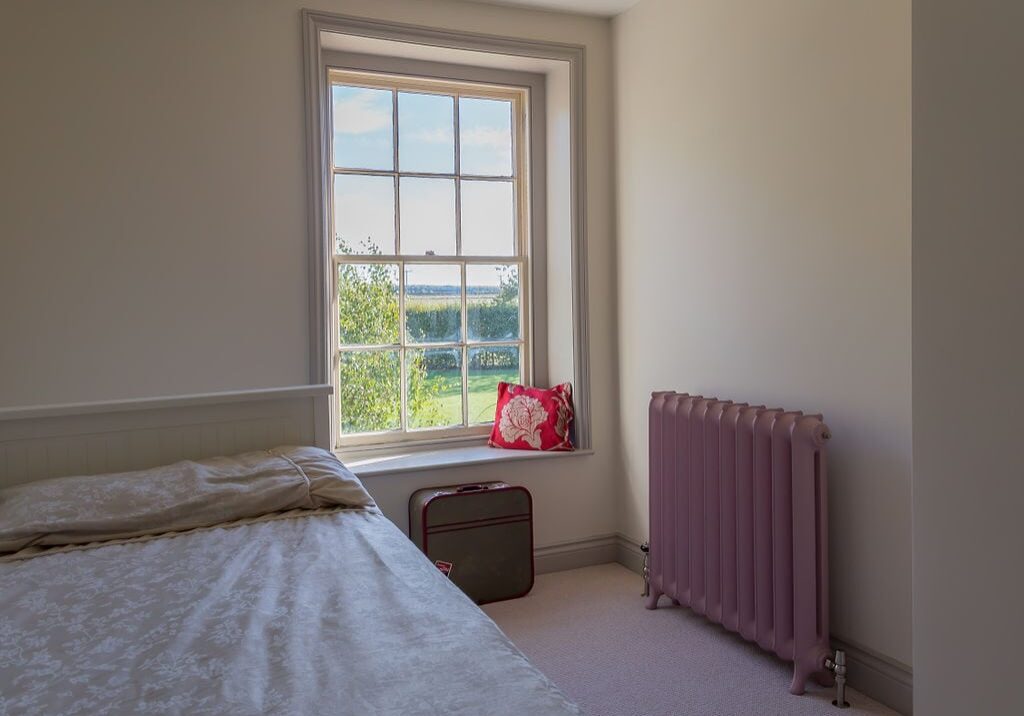
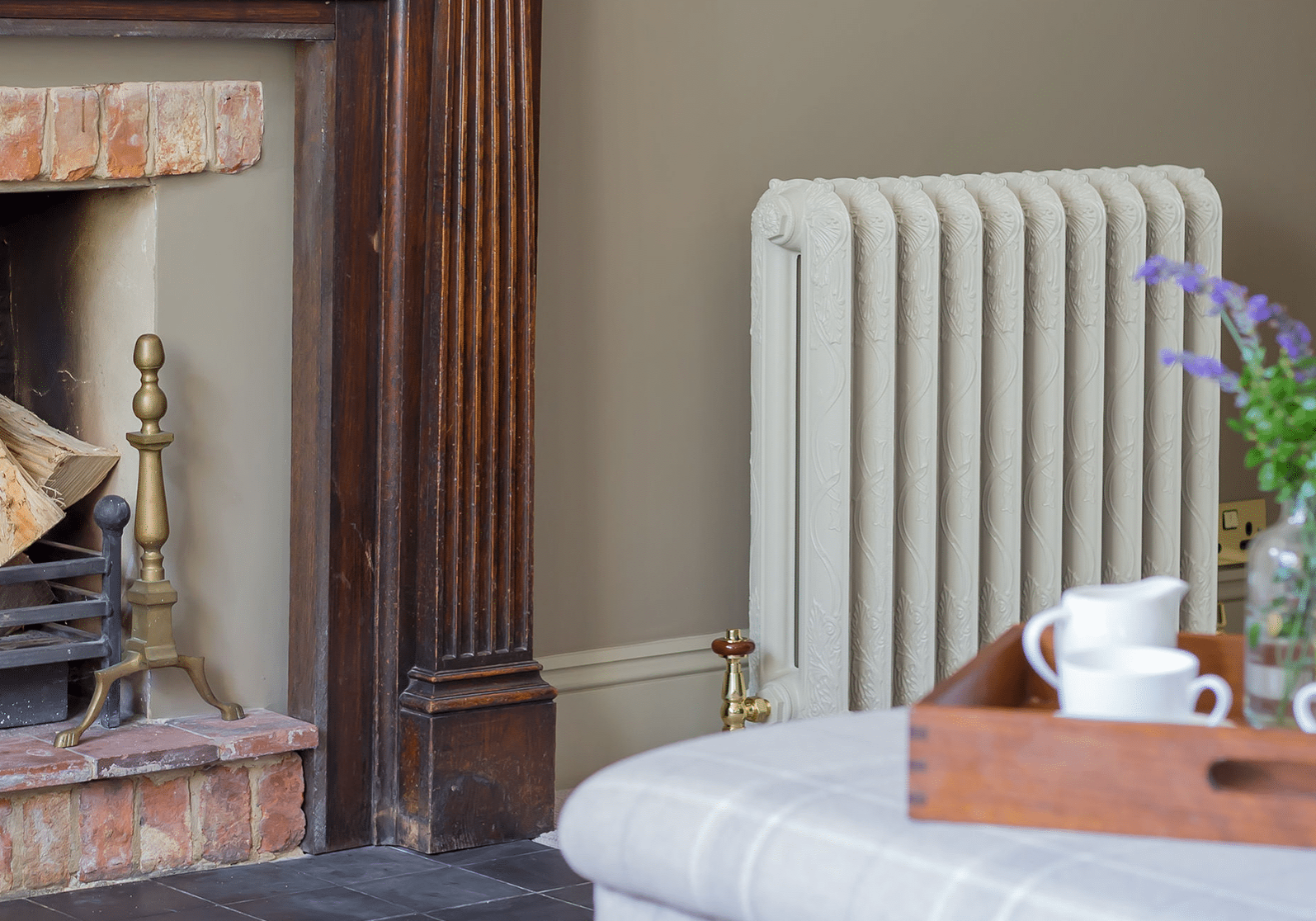
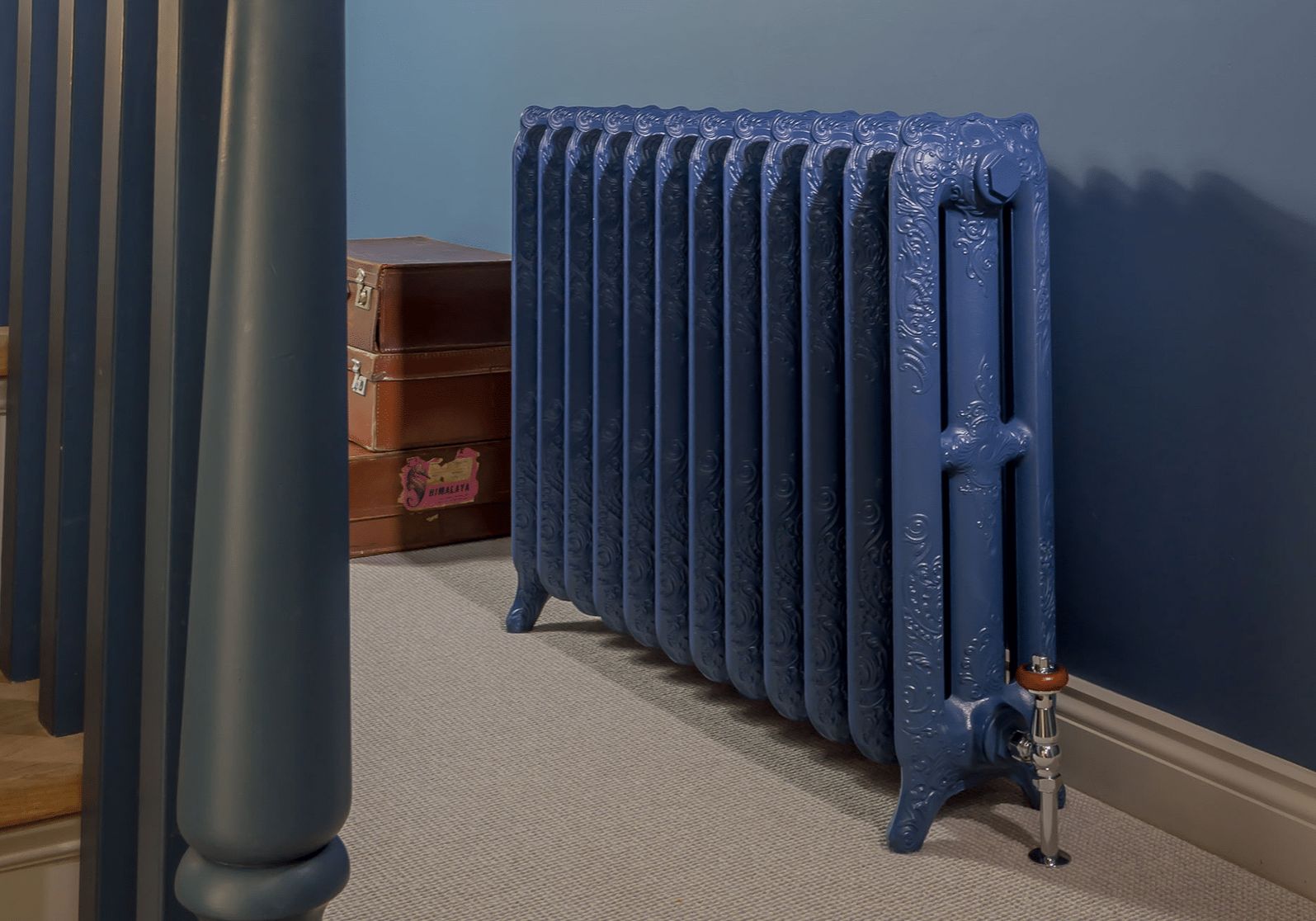
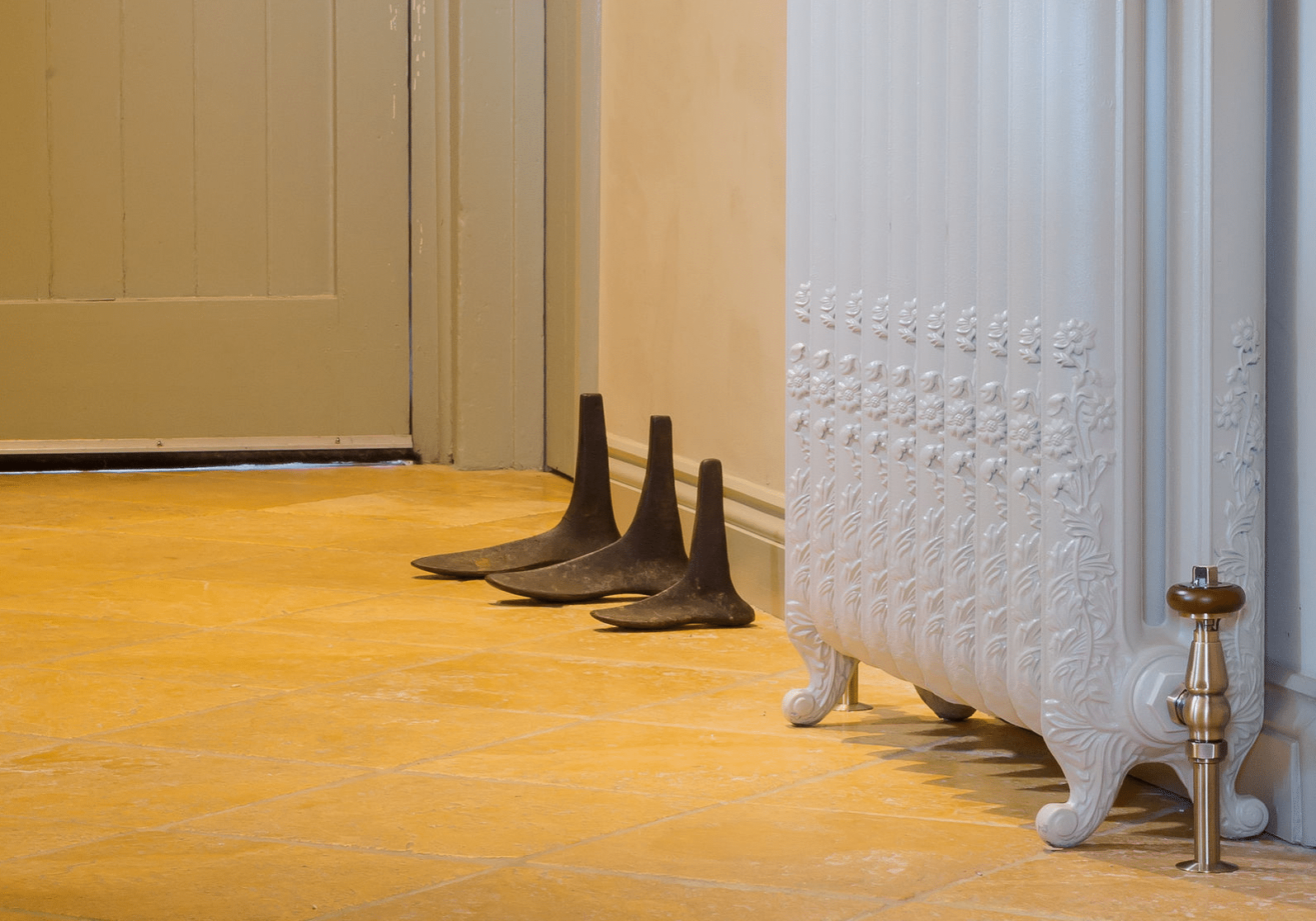
“I want to say thanks and how fantastic the radiators look along with the cast quality and the excellent painting and polishing finish. I now can’t wait to get them installed! Many thanks again for all your help and assistance.”
“Thank you for all your help, we will definitely recommend Paladin to anyone we know who is looking for cast iron radiators and will get in touch when we’re needing radiators for our ground floor.”