

Heat Pump Radiator Sizing Guide
Heat pump radiator sizing is the process of matching every radiator in your home to the heat your rooms lose, at the lower flow temperature a heat pump runs on. Get it right and your rooms stay warm without your heat pump working harder than it needs to.
This guide answers the questions we hear most from homeowners looking into heat pumps: how much bigger radiators need to be, whether existing radiators can stay, what flow temperature actually means for your heating bill and how cast iron radiators fit into a low temperature system.
What is heat pump radiator sizing?
Heat pump radiator sizing is a room-by-room calculation that matches each radiator’s heat output to that room’s heat loss at your heat pump’s design flow temperature. It’s not a single whole-house number. Every room loses heat differently depending on its size, its windows, its exposed walls and how well it’s insulated, so each radiator needs its own figure.
The recognised method in the UK is a heat loss calculation to BS EN 12831, carried out room by room. Under the MCS Heat Pump Design Standard, any installation applying for government grant funding must be designed this way, with an emitter schedule showing the required output for every radiator at the system’s design flow temperature. A rough online calculator gives you a starting point. A proper survey gives you the number you can actually rely on.
How much bigger do heat pump radiators need to be?
Heat pump radiators generally need more surface area than the same radiator would need on a gas boiler, because heat pumps run at a lower water temperature. A radiator’s output depends heavily on the difference between the water temperature inside it and the air temperature in the room. Heating engineers call this figure Delta T. Drop the water temperature and the same radiator puts out noticeably less heat, so you either need a bigger radiator, a radiator with more surface area for its size, or both.
The table below shows roughly how radiator output changes as flow temperature drops, using the EN 442 test method that manufacturers use to rate radiator output. Treat these as rough ranges rather than exact figures. Your installer’s heat loss survey will give you the number that matters for your own home.
| Flow temperature band | Typical Delta T | Approximate output vs a gas boiler rating |
|---|---|---|
| 70 to 80°C (gas boiler, high temperature) | Around 50 | 100% (the reference rating) |
| 50 to 55°C (heat pump, higher end) | Around 30 | Roughly 50 to 55% |
| 35 to 40°C (heat pump, lower end) | Around 18 | Roughly 25 to 30% |
In practice, this is why a radiator that kept a room warm on a boiler can leave it cold on a heat pump unless it’s upsized or the flow temperature is raised. Our own guide to Delta T and cast iron radiators covers the maths behind this in more depth.
Yes, sometimes, but not always. Many UK homes already have radiators sized generously for an older, less efficient boiler, and those radiators can cope with a heat pump’s lower flow temperature without any changes. Homes with smaller, older or single panel radiators are far less likely to get away without an upgrade.
UK Parliament’s POST briefing on heat pumps notes that most UK housing will need some radiator upgrades to get good performance from a heat pump, alongside wider barriers such as installer availability and public understanding of the technology. That doesn’t mean every radiator in the house. It usually means the largest or coldest rooms, where the existing radiator was already working close to its limit.
Do you need new radiators with a heat pump?
Not necessarily every radiator, but most homes need at least a few upgraded. The rooms most likely to need a bigger radiator are larger rooms, rooms with more external wall or window area and rooms that already feel slow to heat up on the current system.
If you’re applying for the Boiler Upgrade Scheme (BUS), radiator upgrades identified during the MCS design survey are normally included in the installation quote and covered by the same grant as the heat pump itself, currently £7,500 for an air source or ground source heat pump in England and Wales, rising to £9,000 until 31 March 2027 for homes currently heated by oil or LPG. GOV.UK’s guide to installing a heat pump confirms that installers commonly recommend radiator upgrades as part of the same job, rather than as a separate cost later. Our guide to knowing when to replace your radiator covers the wider signs worth checking too, heat pump or not.
How do you size radiators for a heat pump?
You size radiators for a heat pump by calculating each room’s heat loss, then choosing a radiator that can deliver at least that output at your heat pump’s design flow temperature. Add a small safety margin, typically 10 to 20%, to allow for colder than average days.
A heat pump radiator size calculator gives you a quick estimate based on room dimensions, insulation level and window area. It’s a useful first pass and it’s how most homeowners start narrowing down options before speaking to an installer. It isn’t a substitute for the room-by-room survey an MCS-certified installer carries out before quoting, which accounts for your actual walls, glazing and location rather than averages. Our own radiator configurator works the same way, giving you a starting figure for any Paladin radiator before you commit.
What temperature do heat pump radiators run at?
Heat pump radiators typically run at a flow temperature of 35 to 55°C, well below the 60 to 80°C a gas boiler commonly reaches. Ground source heat pumps often sit at the lower end of that range because the ground stays at a more stable temperature than outside air, giving the heat pump less work to do to reach its target.
| Heating system | Typical flow temperature |
|---|---|
| Air source heat pump | 35 to 55°C |
| Ground source heat pump | 35 to 50°C |
| Gas boiler (condensing, typical use) | 60 to 80°C |
Running at a lower flow temperature is what makes a heat pump efficient. The closer the flow temperature sits to the room temperature, the less work the heat pump does to lift outside heat to a useful level, and the lower your running costs tend to be over a heating season.

What’s the difference between air source and ground source heat pump radiators?
There’s no real difference in the radiators themselves. What differs is the flow temperature the heat pump can comfortably deliver, which affects how much radiator surface area you need. Ground source heat pumps draw heat from the relatively stable temperature underground, so they often run a little cooler and more consistently than air source systems, which have to work harder on the coldest days when outdoor air temperature drops furthest from the target flow temperature.
In sizing terms, this means a ground source system sometimes calls for slightly larger radiators in the coldest rooms, to compensate for running at the lower end of the flow temperature range. Beyond that, the same radiator range, and the same sizing method, works for both.
Are cast iron radiators compatible with heat pumps?
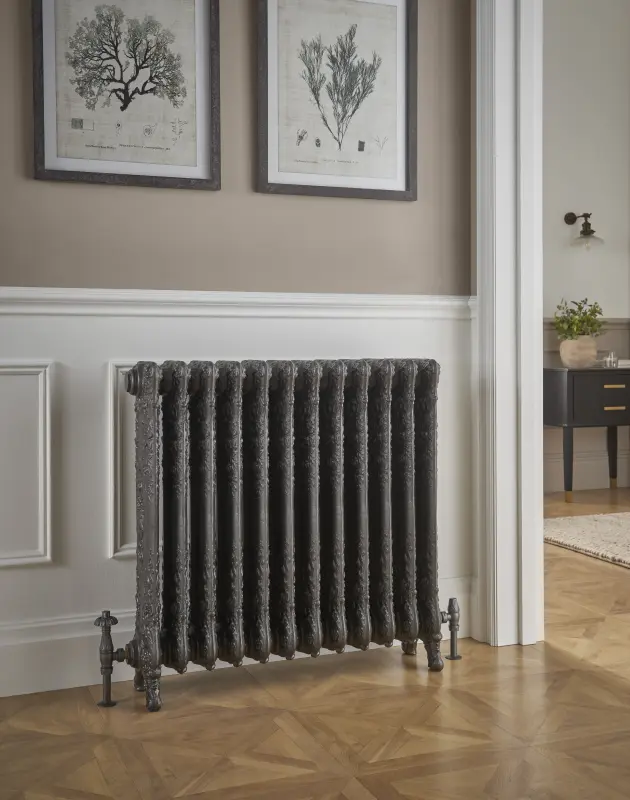
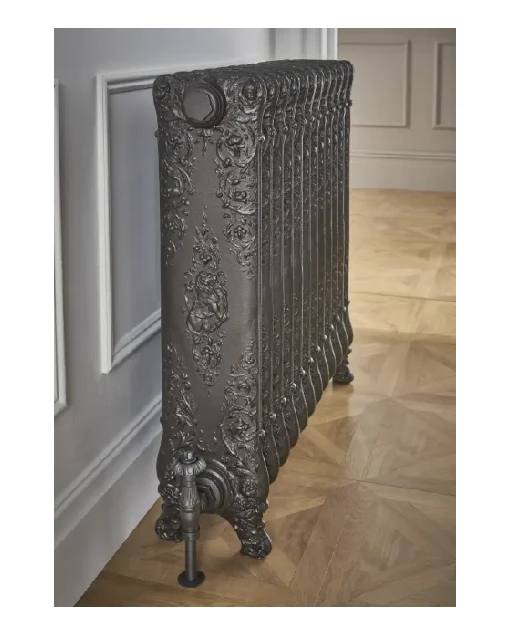
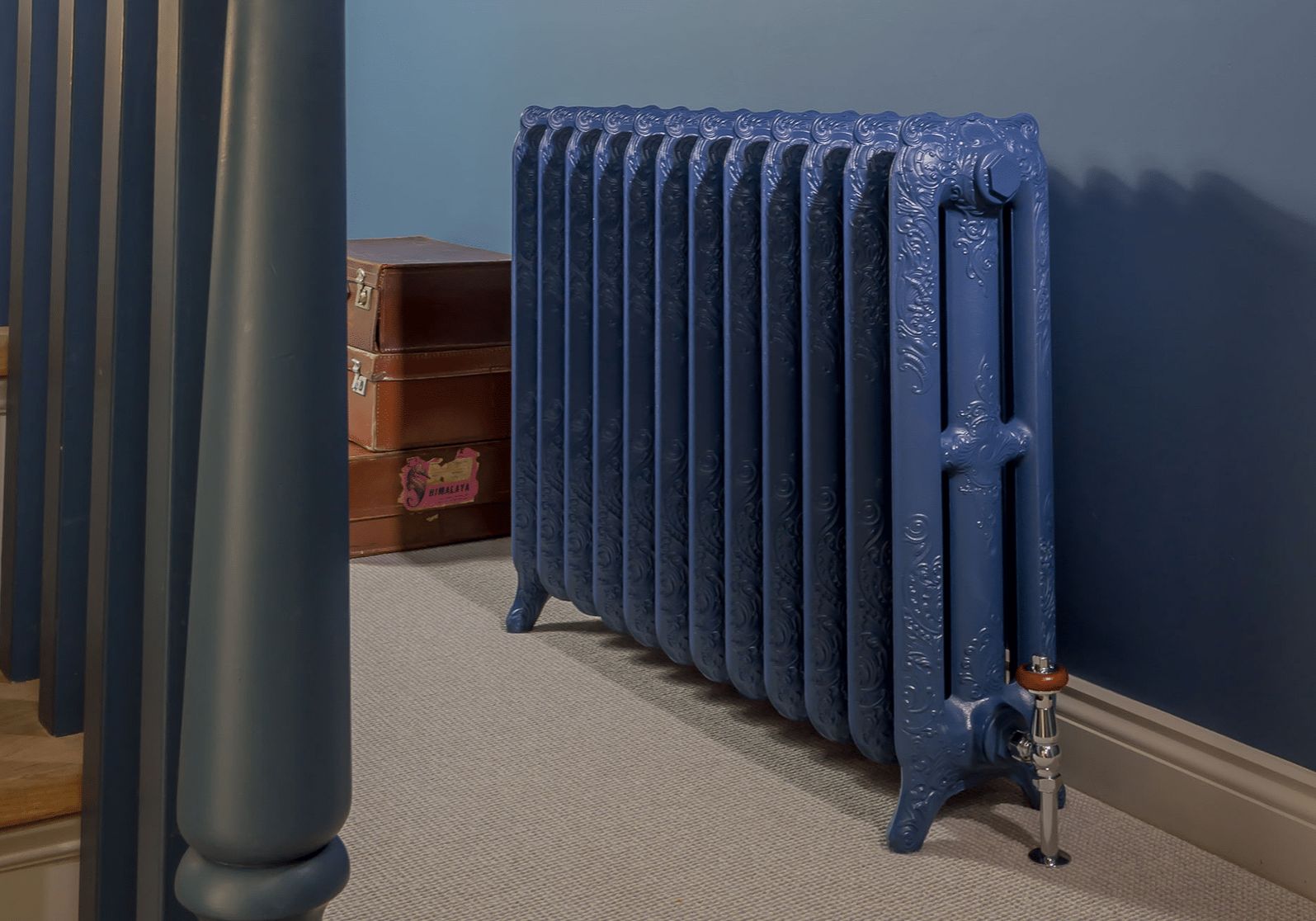
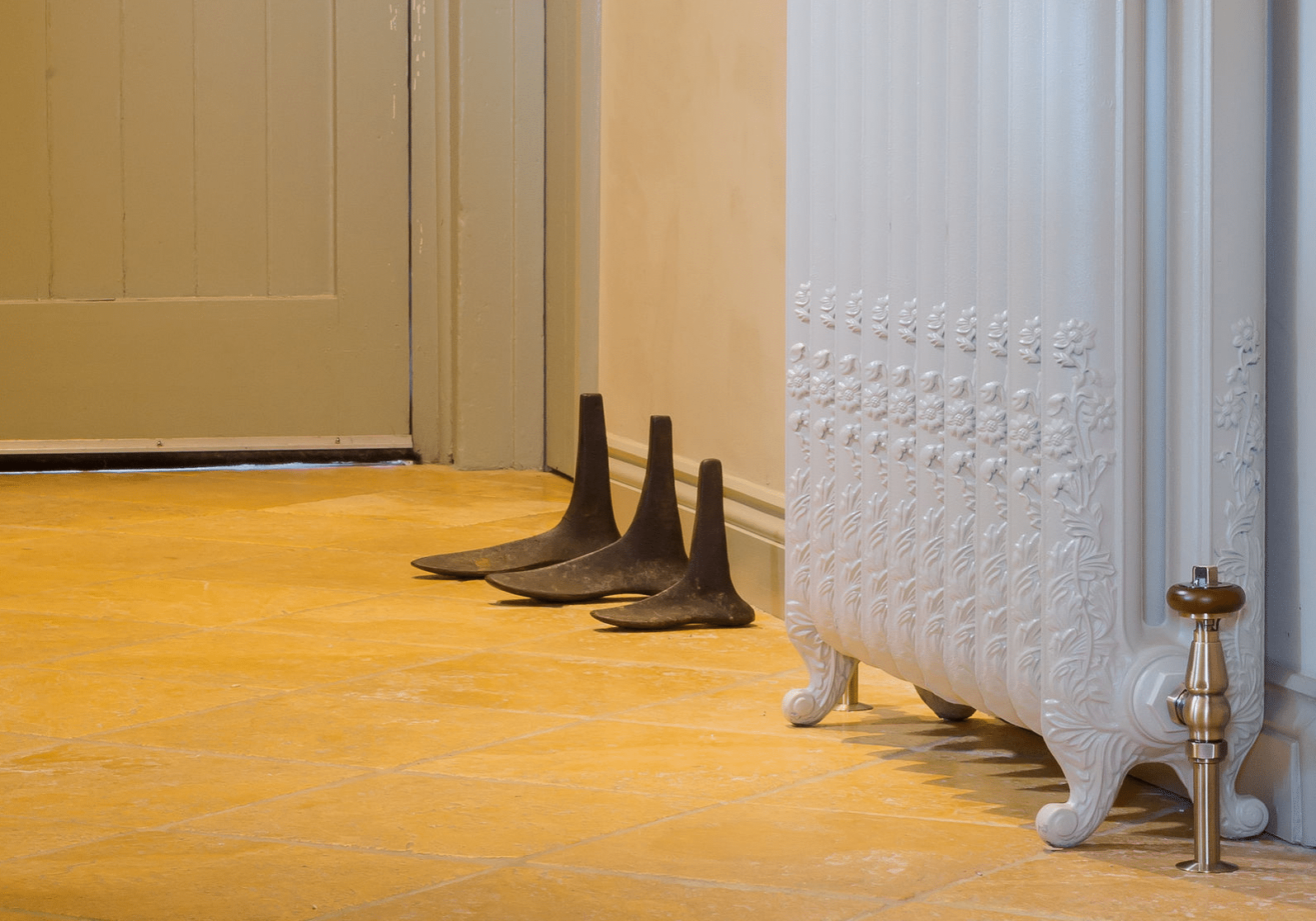
Yes, cast iron radiators work well with heat pumps, provided they’re sized correctly for the system’s flow temperature, the same as any other radiator type. Cast iron’s high thermal mass means it holds heat for longer once warm, which suits the steady, weather-compensated way a heat pump is designed to run rather than the quick on-off bursts of an older boiler.
That thermal mass is also a trade-off worth knowing about: cast iron warms up and cools down more slowly than an aluminium or steel panel radiator, so it responds less quickly if you like to set your heating back sharply overnight and bring it up fast in the morning. For a heat pump left running steadily at a lower background temperature, that slower response works in cast iron’s favour rather than against it. Browse our cast iron radiator range to see current sizes and finishes.
What size radiator do I need?
The radiator size you need depends on your room’s heat loss, measured in kilowatts (kW) or British Thermal Units per hour (BTU/h), not on the room’s floor area alone. A small, poorly insulated room can need more heat output than a larger, well insulated one, so it’s worth calculating rather than guessing from square footage.
| Heat output required | Approximate BTU/h |
|---|---|
| 0.5 kW | 1,706 |
| 1.0 kW | 3,412 |
| 1.5 kW | 5,118 |
| 2.0 kW | 6,824 |
| 2.5 kW | 8,530 |
| 3.0 kW | 10,236 |
As a real world example, a single section of our Churchill radiator outputs 480 BTU/h (141W), so a run of sections is added until the total meets the room’s calculated heat loss. This is the same logic that applies whatever radiator range you’re specifying from, heat pump or boiler.

What are standard radiator sizes in the UK?
UK cast iron radiators are typically sold by height rather than a single fixed size, with most ranges spanning from around 350mm up to 800mm or more, then extended to whatever length a room needs by adding sections. Here’s a sample from our own range to show the spread.
| Model | Available heights |
|---|---|
| Churchill | 350mm |
| Elizabethan | 500mm, 650mm, 750mm |
| Victoriana 3 Column | 450mm, 645mm, 745mm |
| Victoriana 4 Column | 460mm, 660mm, 760mm, 813mm |
| Neo Georgian 4 Column | 360mm, 505mm, 660mm, 760mm, 960mm |
| Montpellier | 590mm, 790mm |
| Saint Paul | 800mm |
Our full guide to standard radiator sizes covers the rest of the range in detail, including width and section spacing.
How many radiators do I need for a heat pump system?
You need one radiator per habitable room, each sized to that room’s own heat loss, rather than one figure calculated for the whole house. Halls, landings and bathrooms usually need smaller radiators than living rooms or larger bedrooms, and rooms with more external wall or window area need more output regardless of floor size.
The total number of radiators rarely changes when a home moves to a heat pump. What usually changes is the size of some of them, upgraded room by room where the heat loss survey shows the existing radiator falls short at the new, lower flow temperature.
Getting your sizing right before you buy
A heat pump only performs well when every radiator can deliver enough heat at the flow temperature it’s designed to run at. Start with our radiator configurator to get a working figure for each room, then talk to us about which of our hand-built cast iron ranges will hit that output in a size and finish that suits the room. Every Paladin radiator comes with a 10-year guarantee, and every radiator is hand-assembled at our Lincolnshire factory, so what you order is what you get.
“I want to say thanks and how fantastic the radiators look along with the cast quality and the excellent painting and polishing finish. I now can’t wait to get them installed! Many thanks again for all your help and assistance.”
“Thank you for all your help, we will definitely recommend Paladin to anyone we know who is looking for cast iron radiators and will get in touch when we’re needing radiators for our ground floor.”