
What are the radiator sizes?
Standard UK radiator heights run from roughly 300mm to 900mm. Widths span 400mm to 2000mm. Depths usually fall between 60mm and 170mm. That covers most modern panel radiators in British homes. Cast iron works a little differently. Heights are fixed per model. Width grows section by section. So you size the radiator to the wall and the heat output you actually need, not the other way round.
We’ve put this guide together to answer every size question we get asked at the factory: millimetres to inches, valves, and what fits a small bathroom versus a wide hallway. Whatever room you’re heating, we build cast iron radiators to the size you need.
What are the standard radiator sizes in the UK?
Standard UK panel radiators come in heights of 300mm, 450mm, 600mm and 900mm. Common widths run from 400mm up to 2000mm. Depths sit between 60mm for single panels and 170mm for double convector models.
Cast iron radiators don’t follow the same pattern. We build each radiator from individual sections joined together. Each model fixes the height. Section count fixes the width. So you get more flexibility on length than you’d ever get with a stamped steel panel.
For example, the Neo Georgian 4 Column is available in heights of 360mm, 505mm, 660mm, 760mm and 960mm, with anywhere from 3 to 40 sections. The Victoriana 3 Column comes in 450mm, 645mm or 745mm. The ornate Kensington sits at 580mm, 750mm or 780mm, also up to 40 sections wide.
What’s a quick radiator size chart for cast iron radiators?
Here’s how Paladin’s most popular models compare on size. Use it as a starting point. Then narrow down by output and style.
| Model | Heights available | Section count | Style |
|---|---|---|---|
| Neo Georgian 4 Column | 360, 505, 660, 760, 960mm | 3 to 40 | Column |
| Neo Georgian 6 Column | 360, 505, 660, 760, 960mm | 3 to 40 | Deeper column |
| Victoriana 3 Column | 450, 645, 745mm | 3 to 40 | Traditional column |
| Kensington | 580, 750, 780mm | 3 to 40 | Ornate vintage |
Every product page on our site has a downloadable data sheet with exact per metre and per section dimensions. Or use our radiator configurator to build your spec.
What are radiator sizes in inches?
UK manufacturers list radiator sizes in millimetres now, but if you’re matching to Imperial paperwork or salvaged radiators, here are the rough conversions.
- A 600mm radiator is about 23.6 inches
- A 750mm model is just under 29.6 inches.
- A 900mm tall radiator works out to roughly 35.4 inches.
- Width converts the same way: 1000mm is about 39.4 inches.
Older Victorian and Edwardian cast iron radiators were sold in feet and inches. Today, every spec we publish uses Metric. So if you’ve found a heritage radiator in a salvage yard and want to match the size, get the mm equivalent off a tape measure before ordering.
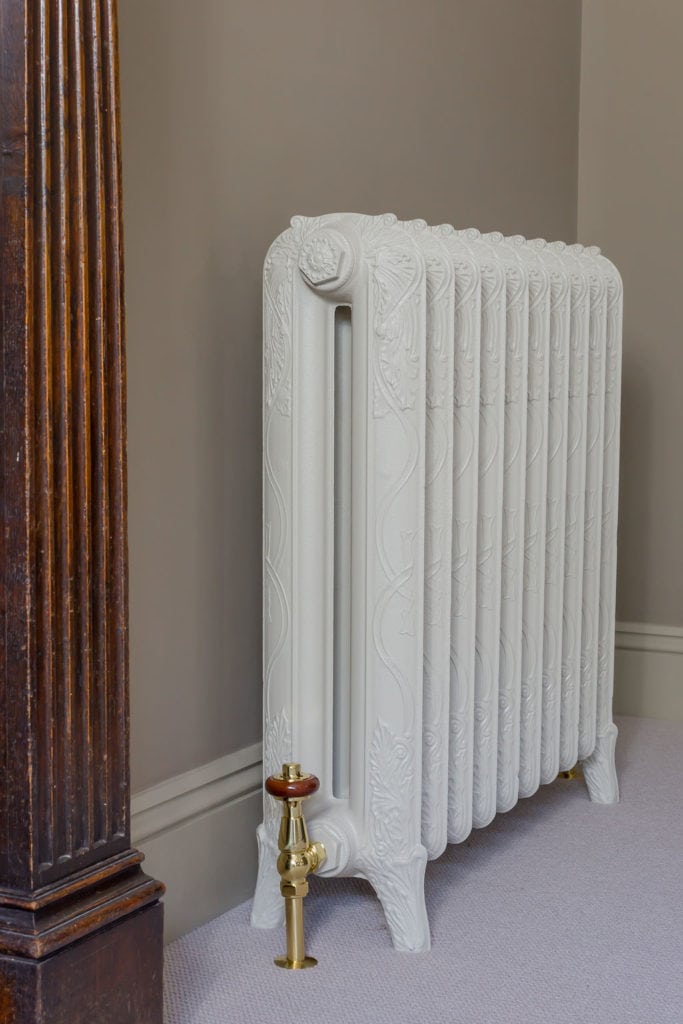
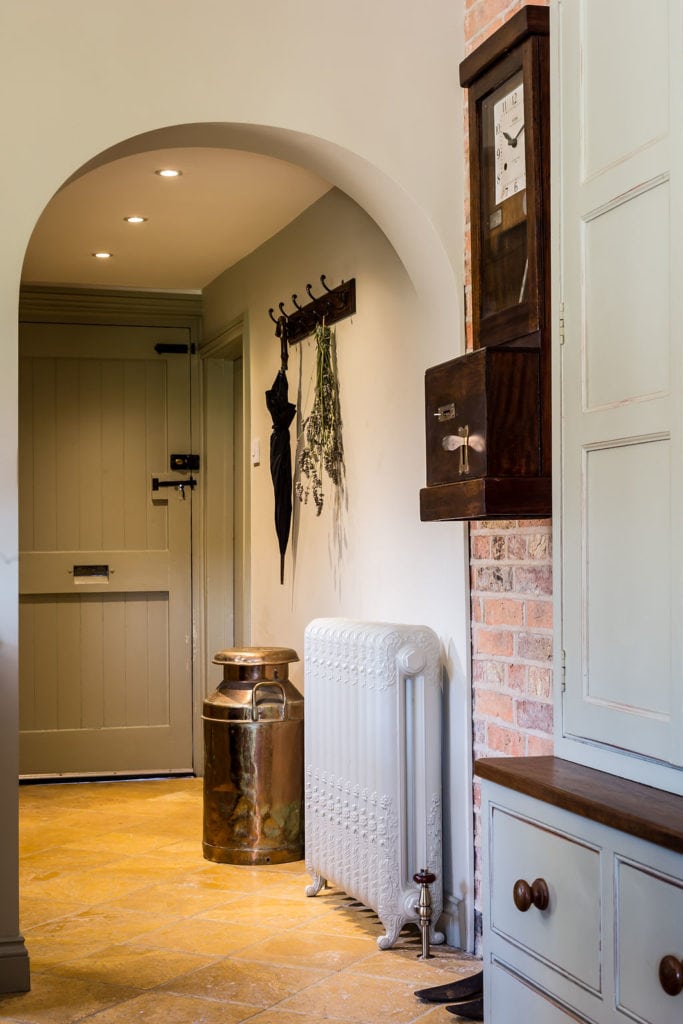
How do I choose the right radiator size for my room?
Start with the room’s heat loss in BTU per hour. The right radiator size meets or slightly exceeds that number. Get it wrong and you’ll either oversize and waste energy, or undersize and never warm the room properly.
To work it out, measure your room in metres: length, width and ceiling height. Multiply the three to get cubic metres. Then factor in:
- Window count and glazing type
- External versus internal walls
- Insulation level
- Room use, whether lounge, bedroom, kitchen or bathroom
Our heat calculator does the maths for you. Plug in the numbers and you’ll get a BTU target. From there, match a radiator that delivers that output at the height that fits your space.
How are radiator sizes and BTU outputs linked?
Bigger radiators put out more BTU. With cast iron specifically, taller models give more heat per section, and adding sections widens the radiator and adds output linearly. So you’ve got two levers to pull: height and section count.
A short, wide radiator can deliver the same BTU as a tall, narrow one. Wall space decides which works for you. Got a long wall under a window? Go wider, lower. Got a thin pier between two windows? Go taller, narrower. Both work as heaters. One will look right and the other won’t.
What sizes do small, low and tall cast iron radiators come in?
Small cast iron radiators start at around 360mm tall, low enough to sit under a window or counter. Tall options reach close to a metre, ideal for rooms where wall space is tight but heat demand is high.
Our low cast iron radiators cover the shorter end of the range. The medium height radiators sit between roughly 580mm and 760mm. For taller installations, our tall cast iron radiators reach 960mm in the Neo Georgian. So if you want a vertical statement in a hallway, that’s where to look.
What sizes do double and column cast iron radiators come in?
Column cast iron radiators come in 2, 3, 4 or 6-column depths. The number tells you how many vertical channels run front to back through each section. More columns means more surface area, more water capacity and more BTU per centimetre of width.
A 2 column radiator is the slimmest, useful for tight walls and corridors. A 3 column gives a balanced middle ground. A 4 column packs in serious output. And a 6 column is the heaviest hitter, suited to big rooms with high ceilings or weak insulation. Heights and section counts stay consistent across the column variants. So you can hit the same width and height with very different heat outputs, just by changing column depth.
Do white, black, grey or bronze radiator sizes differ?
No. The colour doesn’t change the dimensions. A black cast iron radiator at 745mm tall is exactly the same size as a white, grey or bronze version of the same model.
The finish goes on after casting. So whichever Paladin colour, Farrow & Ball shade or polished finish you choose, the millimetre measurements stay identical. You’re picking on look alone.
What size radiator valves do I need?
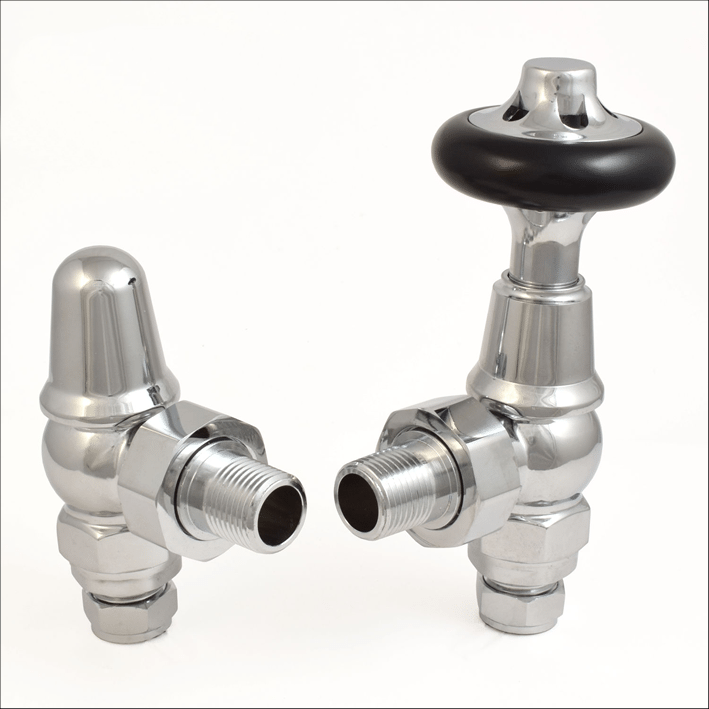
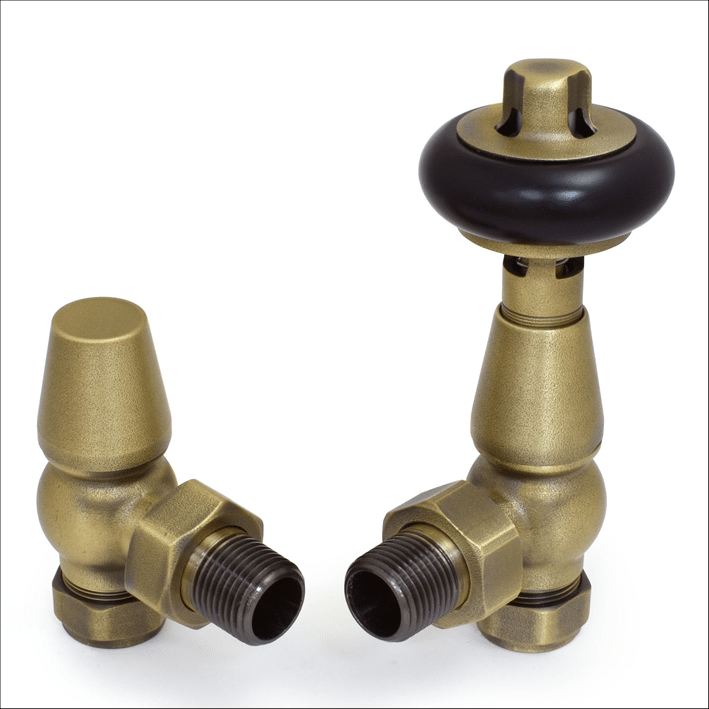
Most UK radiator valves are 15mm. That matches the standard 15mm copper pipework you’ll find in nearly every modern domestic heating system. Some larger systems run 22mm primary feeds, but the connection at the radiator itself is almost always 15mm.
You can choose between manual and thermostatic. Thermostatic radiator valves give you per-room temperature control (useful for managing energy use across a multi-storey home). Manual valves keep things simple. Both come in our finishes, including chrome, antique brass, brushed nickel and polished brass.
What’s the standard radiator pipe size?
Standard UK domestic radiator pipework is 15mm copper. Larger primary flow and return pipes from the boiler may run 22mm or 28mm. Some older homes still have 8 or 10mm microbore, which can supply most steel panel radiators but is worth checking with a heating engineer before specifying cast iron.
For visible pipework, our pipe sleeves and floor caps cover 15mm copper to give a clean finish that matches the valve.
What size radiator bleed key fits most valves?
Most UK radiator bleed valves take a square 5mm clock key. That’s the small metal key you’ll find in any plumber’s kit. Some older valves use a slotted version, but 5mm square is the modern domestic standard.
Bleeding traps air from the system and gets the top of the radiator hot again. We supply bleed valves and ornate alternatives in matching finishes. Our cast iron radiators ship with a brass air vent as standard, with knurled keyless versions available as an upgrade.
What sizes do radiator covers come in?
A radiator cover should be at least 50mm wider, taller and deeper than the radiator itself. So measure the radiator, add 50mm to each face, then size the cover from there. Anything tighter and you’ll cut down airflow, which kills heat output.
We don’t make radiator covers. With a cast iron radiator, you don’t need one. A polished, painted or antiqued cast iron radiator is the design feature
Ready to find the right radiator size for your room?
Get the size right and the heating works. Get it wrong and the room never feels right, no matter how good the boiler is. We’ve been sizing cast iron radiators for over 20 years from our Lincolnshire factory, and we’d rather spend ten minutes on the phone with you than see you order the wrong one. Browse the full cast iron radiator collection, or get in touch and we’ll size your room for you.
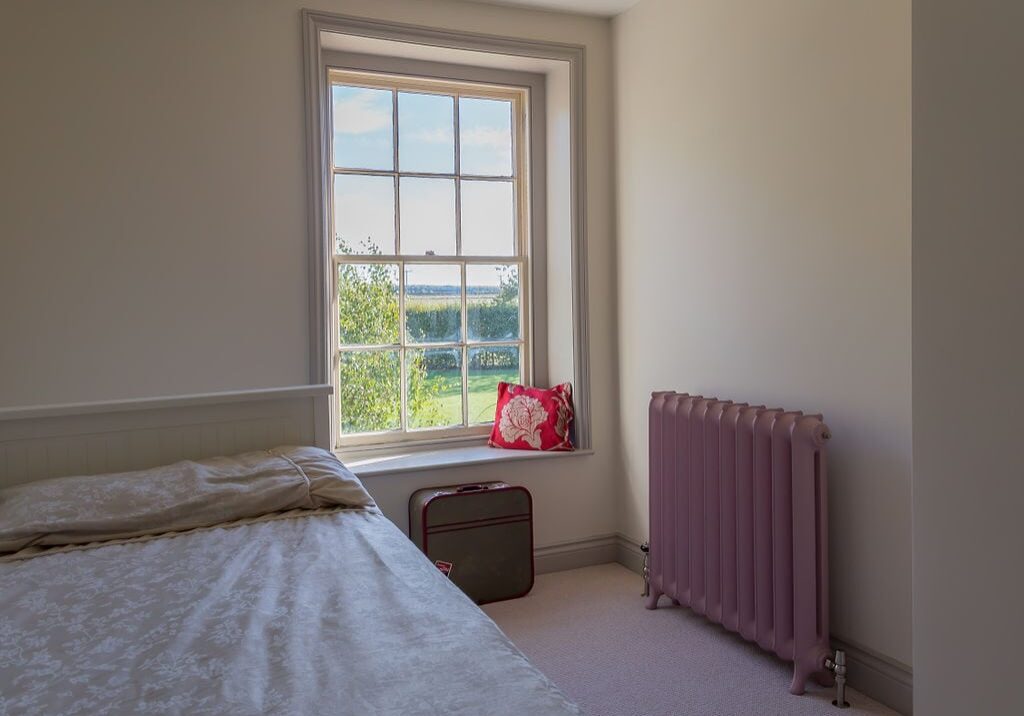
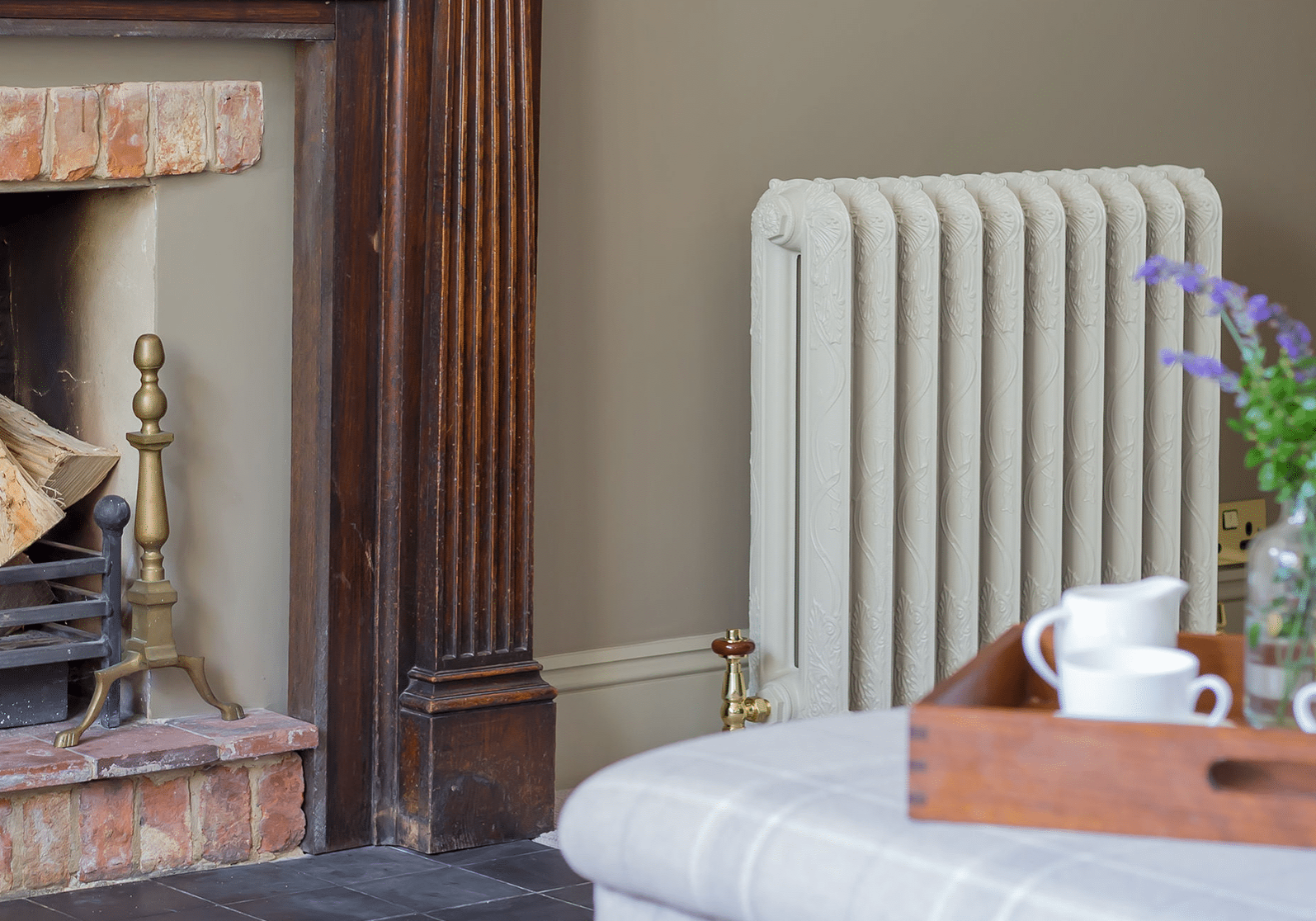
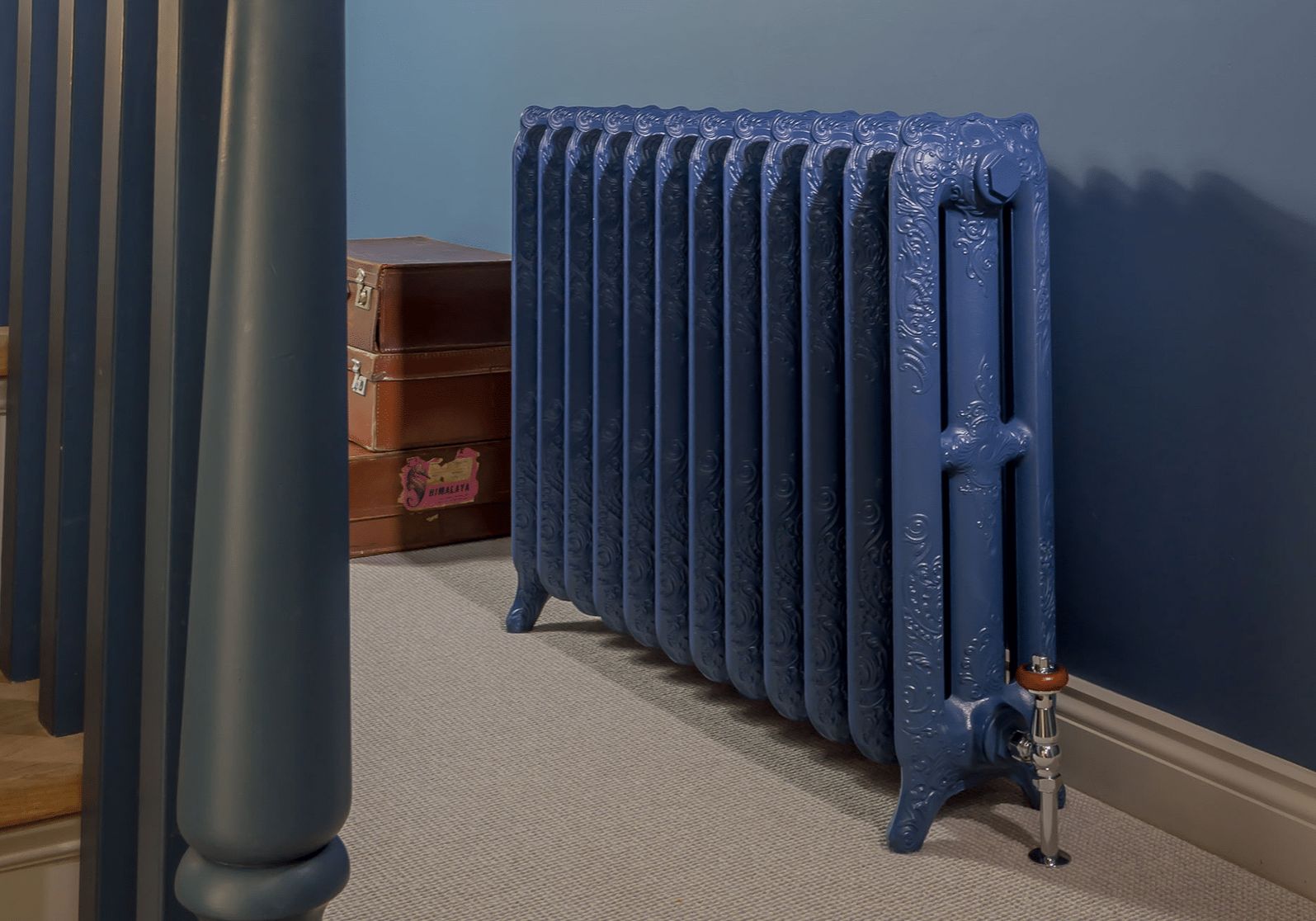
“I want to say thanks and how fantastic the radiators look along with the cast quality and the excellent painting and polishing finish. I now can’t wait to get them installed! Many thanks again for all your help and assistance.”
“Thank you for all your help, we will definitely recommend Paladin to anyone we know who is looking for cast iron radiators and will get in touch when we’re needing radiators for our ground floor.”