
What Are Traditional Horizontal Cast Iron Radiators? Style, Size and Efficiency Explained
If you’re looking at cast iron radiators and trying to work out which format suits your home, you’re in the right place. This guide covers what makes horizontal cast iron radiators different, why they remain a popular choice in period and contemporary properties, and how to find the right size and finish for your space. No jargon. Just what you need to buy well.
What is a traditional horizontal radiator?
How horizontal designs differ from vertical ones
A horizontal radiator sits wider than it is tall. Its sections run left to right across a longer span rather than stacking upward, giving the radiator a low, wide profile that feels natural beneath a sash window or along a hallway wall.

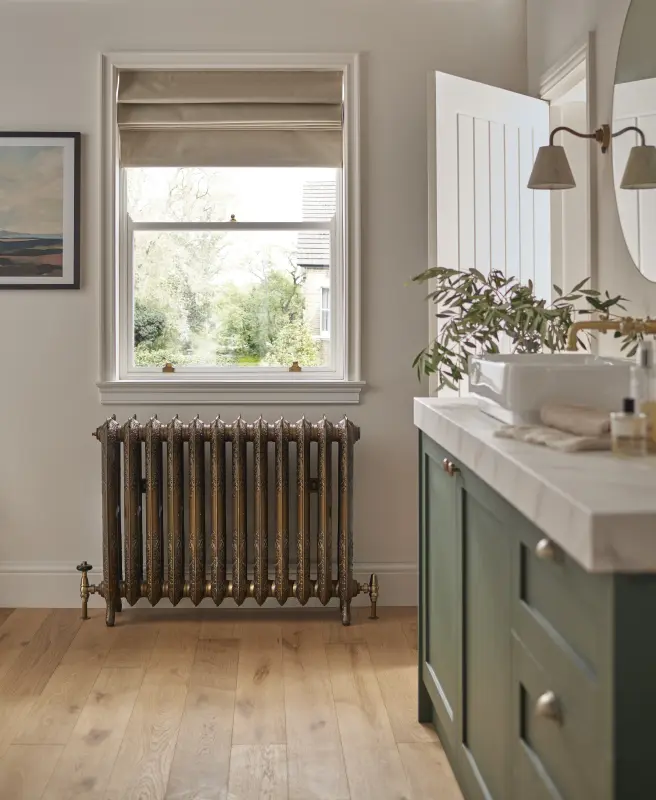

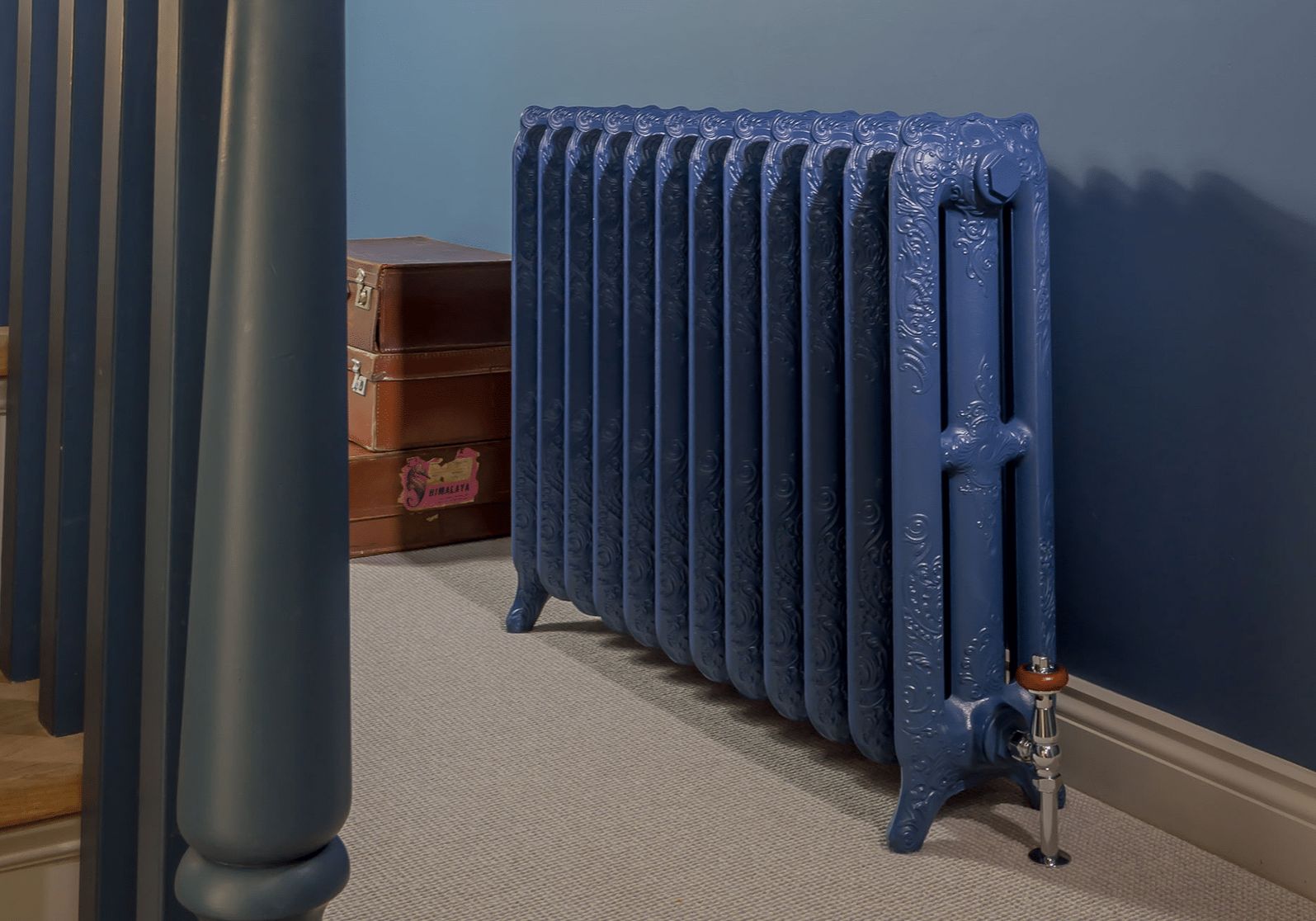
Most traditional cast iron radiators are horizontal by design. Victorian and Georgian-style models both follow this format, and many contemporary cast iron designs do too. At Paladin, nearly all our designs follow the same principle. Models like the Neo-Georgian, the Oxford and the Victoriana are each available in a range of heights and section counts, so you can match the output and footprint to your specific room.
Why choose a traditional horizontal radiator?
Window placement and the logic of heat distribution
There’s a practical logic to horizontal radiators that’s easy to overlook. The low, wide format is ideal beneath windows, where heat loss tends to be greatest.
A radiator placed directly under a window counteracts the draught that would otherwise roll across the floor, giving the room a more even temperature from the start.
Wall space matters too. Most rooms offer more horizontal run than vertical clearance. Dado rails and built-in joinery fixed at a certain height both limit where a taller radiator can realistically go. A horizontal model works with the architecture rather than against it.
What cast iron brings to the equation
Aesthetically, a horizontal radiator reads more like furniture than a heating appliance. It anchors a wall without pulling the eye upward and, in a period property, it tends to look as though it’s always been there.
The material itself changes things. Cast iron holds heat within the fabric of the radiator and releases it slowly and evenly, long after the boiler has cycled off. You’re not relying on a constant flow of hot water to maintain warmth. That steady, sustained output is what makes cast iron feel genuinely different to modern alternatives.
Are traditional horizontal cast iron radiators still efficient?
Thermal mass and how it affects everyday heating
They are. Cast iron stores heat in the material, not just in the water passing through it. Once the radiator reaches temperature, it keeps radiating warmth into the room well after the heating switches off. Is that a meaningful difference? In practice, yes. Particularly in rooms where you want consistent background warmth rather than heat that arrives and disappears quickly.
This characteristic also makes cast iron radiators a reasonable choice for systems running at lower flow temperatures. The thermal mass compensates for reduced water temperature by sustaining output for longer, so the heat source doesn’t have to work as hard to maintain comfort.
Longevity as an efficiency argument
A cast iron radiator that lasts for generations is a more sustainable product than a pressed steel alternative that needs replacing far sooner. The upfront cost looks different across a longer horizon.
How do I choose the right size horizontal cast iron radiator?
Calculating heat output for your room
Sizing comes down to two things: the heat output you need and the wall space you have.
Every room has a heat loss figure (the amount of warmth required to maintain a comfortable temperature). It depends on the room’s dimensions, insulation and window area. Paladin’s BTU calculator takes the guesswork out of this.
Columns, sections and wall run
Once you know the output you need, physical dimensions come into focus. The table below gives a quick overview of how column count affects depth and performance.
| Column type | Front-to-back depth | Best suited to |
|---|---|---|
| 2-column | Slimmer profile | Rooms with limited wall depth or shallower spaces |
| 3-column | Mid-range depth | Hallways, bedrooms and rooms with moderate heat requirements |
| 4-column | Deeper profile | Most standard living rooms and larger bedrooms |
| 6-column | Deepest profile | Larger rooms, high ceilings, significant heat requirements |
More sections mean a wider radiator, so you’ll need the wall run to accommodate it. If you’re unsure, call us. We’ll work through the figures and recommend the right model.
Choosing horizontal cast iron radiators for awkward spaces
Precise sizing for unusual walls
Not every wall is straightforward. Bay windows and alcoves create constraints that make standard radiator dimensions difficult to work with.
Horizontal cast iron radiators handle these situations well. Because the width is determined by the number of sections rather than a fixed manufactured size, you can specify the radiator to fit a precise run of wall. At Paladin, radiators are assembled to order. If you need a model to fit a specific opening or recess, we build it to those measurements.
Low level radiators for tight height clearances
Low-level cast iron radiators beneath deep window sills
A wider, lower radiator can deliver the same output as a taller model, staying within tighter vertical constraints. That makes low level horizontal radiators a practical choice beneath deep sills or in rooms where height clearance is restricted.
For spaces with genuinely unusual requirements, bespoke options are available. We’ve worked on heritage restorations and conversion projects where, in some cases, nothing standard would have fitted. If you have an awkward space, talk to us before assuming it can’t be solved.
Can I get a traditional horizontal cast iron radiator in a raw or vintage finish?
Raw cast iron finishes and aged effects
Yes, and it’s one of the more distinctive things about cast iron as a material.
A raw finish has a specific character: deep grey, slightly textured, with the grain of the metal visible across the surface. It works in spaces where bare materials are part of the design. Kitchens with exposed brickwork suit it well, as do utility rooms where the aesthetic is deliberately unfussy.
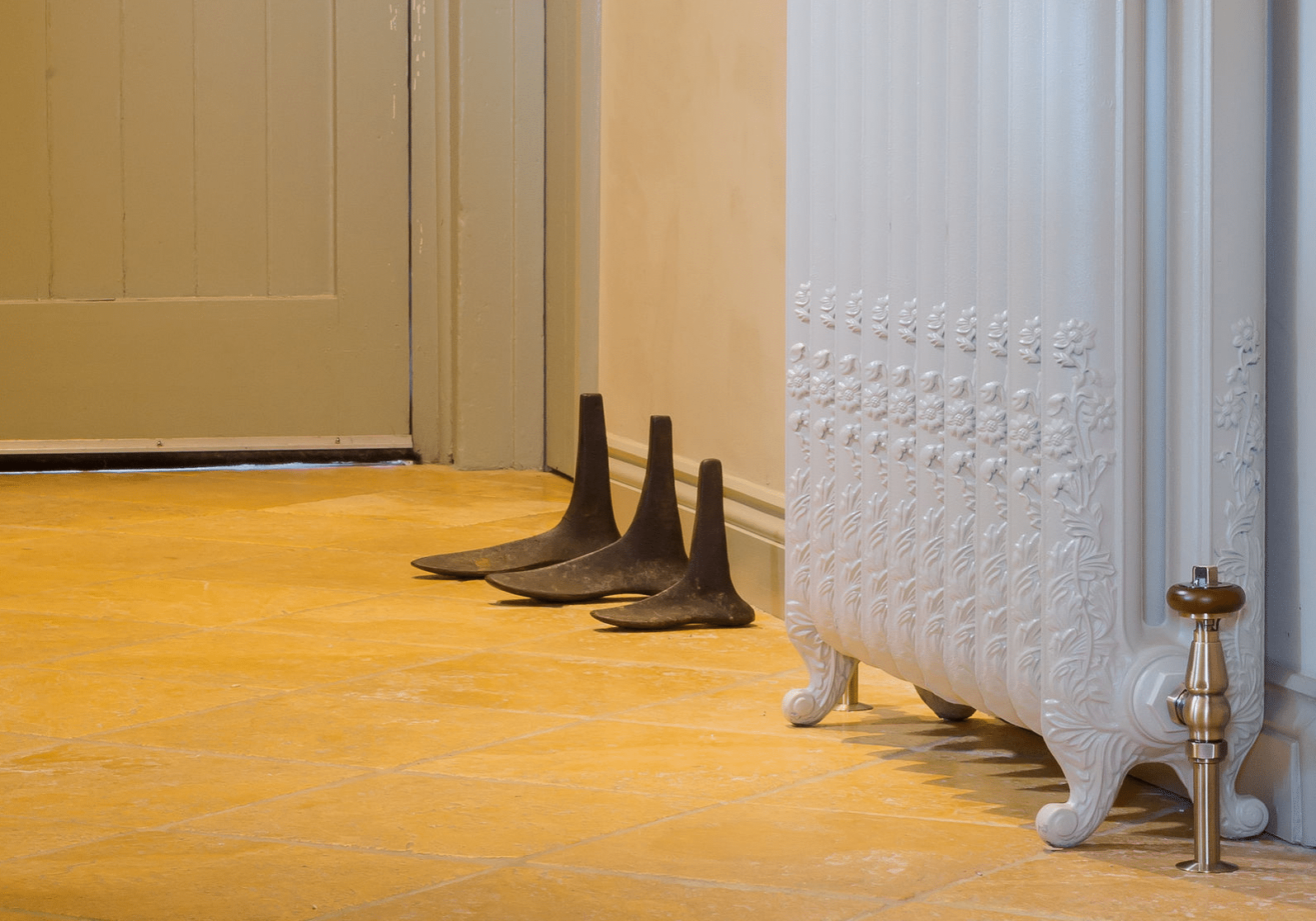
At Paladin, raw and aged finishes sit alongside our full painted range. Polished finishes are available too, bringing out the casting detail in a very different way: reflective, formal and sculptural.
Farrow & Ball, Little Greene and bespoke colour matching
Paint partnerships and colour options for cast iron radiators
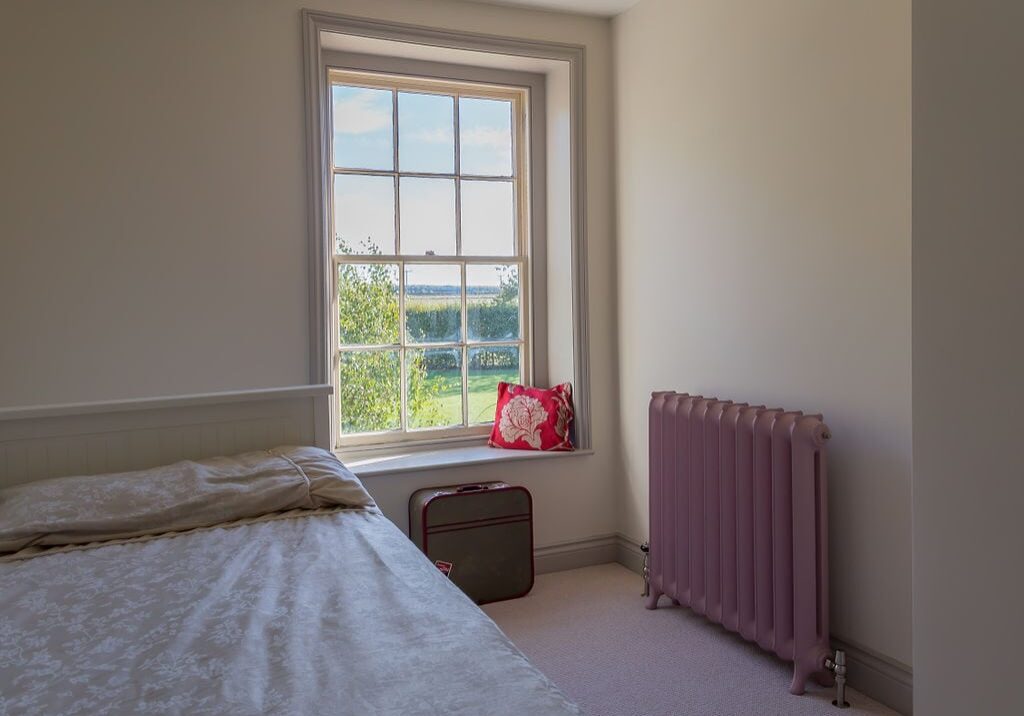
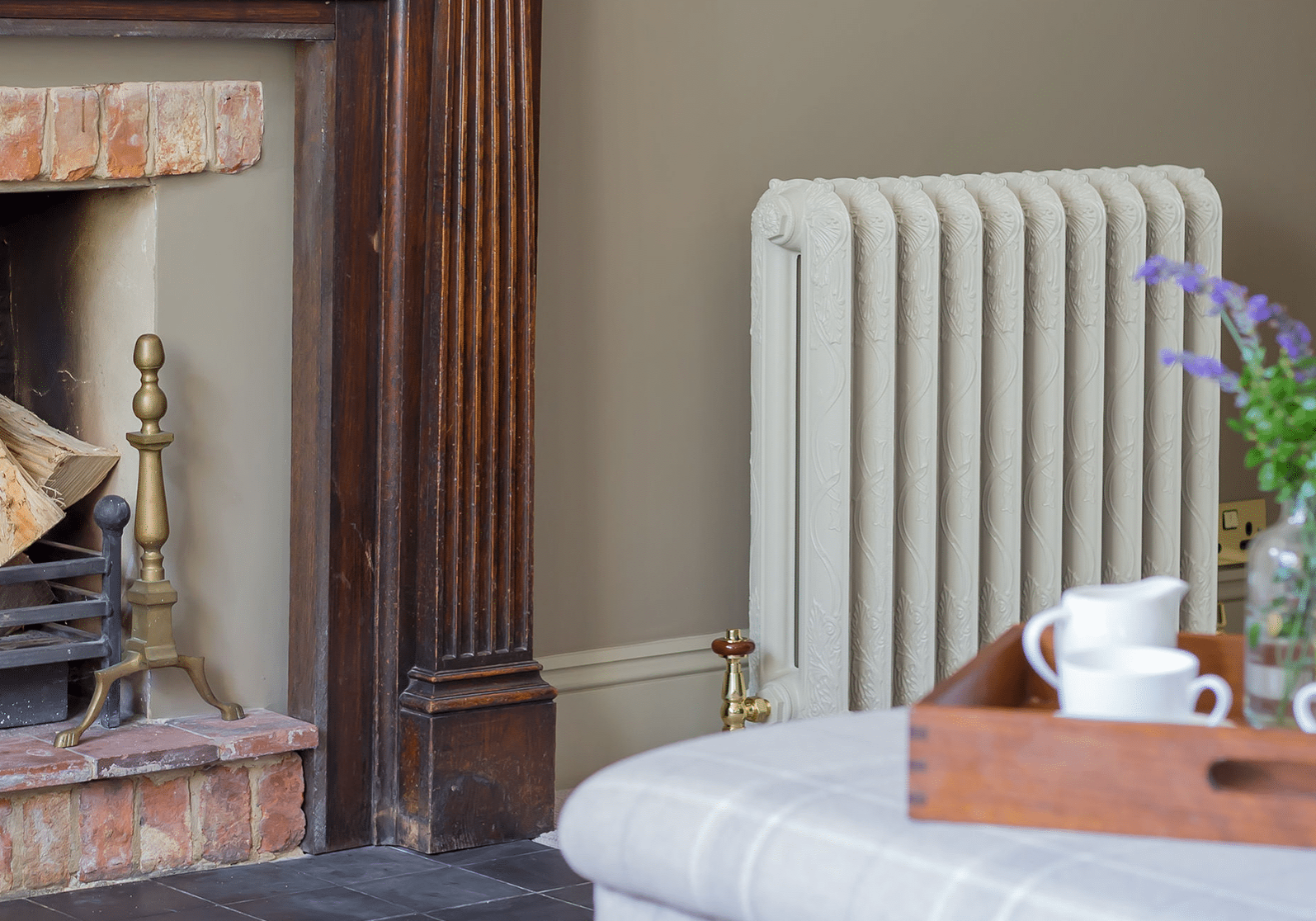
For painted finishes, we work with Farrow & Ball and Little Greene. Both colour ranges are available and applied directly to the radiator at our Lincolnshire factory. If you have a specific colour that falls outside either range, we offer a bespoke colour match service.
Every radiator is finished by hand. Whether you want a burnished metal effect or something entirely your own, the finish gets the same attention as the casting.
“I want to say thanks and how fantastic the radiators look along with the cast quality and the excellent painting and polishing finish. I now can’t wait to get them installed! Many thanks again for all your help and assistance.”
“Thank you for all your help, we will definitely recommend Paladin to anyone we know who is looking for cast iron radiators and will get in touch when we’re needing radiators for our ground floor.”