

What Are Floor Standing Cast Iron Radiators? Everything That Actually Matters
What Are Floor Standing Cast Iron Radiators? Everything That Actually Matters
If you’re considering floor standing cast iron radiators, the aesthetics probably aren’t the problem. You’ve seen them and you know they look right. The real questions are practical. Will they work in your property? What does installation involve? Are they going to do what you need them to? This guide answers those questions directly, drawing on our full cast iron radiator range to give you a clear picture before you buy.
What sets floor standing cast iron radiators apart?
The difference comes down to load. Most radiators move their weight through the wall. Floor standing models move it through the floor instead, with pipework feeding in from below the floorboards or along the skirting. That shift matters more than it might first appear. In a period property where walls are solid stone or subject to Listed Building restrictions, drilling into masonry for heavy fixings is either difficult or simply off the table. A floor standing radiator sidesteps that problem entirely — no specialist fixings, no risk to original fabric.
The role of wall stays
Floor standing doesn’t mean freestanding. Most installations include wall stays (lightweight brackets that anchor the radiator to the wall to prevent any forward movement, without bearing any structural load). Think of them as a safety catch rather than a support structure. They’re a small addition. The stability they add is not.

How heavy are cast iron radiators?
Heavier than most people plan for. This is worth knowing well before delivery day.
A single cast iron section is considerably heavier than a pressed steel panel. Exact weights vary by model and column count, but a multi-section radiator can weigh a significant amount before water is even added. The more sections, the more that adds up.
That mass is the point. Cast iron holds heat in a way steel panels can’t. Once it reaches temperature, it keeps a room warm long after the boiler has stopped firing. The heat doesn’t spike and drop. It settles.
What the weight means for your floor and your installation
For floor standing models, the wall is no longer the structural concern. The floor is. Suspended timber floors in older homes may need checking before a large radiator goes down; a structural engineer or experienced heating engineer can tell you more. A level surface matters too because an unlevel radiator distributes water unevenly through its sections, which reduces output.
Getting the radiator into position is a two-person job at minimum. Map the route through the property before delivery day. Doorways and stairwells are worth measuring beforehand. Our installation guide covers the specifics in full.
How convenient are floor standing radiators?


Key installation benefits for period properties
That depends on your property. For many period homes, they’re far simpler to install than the wall-mounted version.
No drilling into stone or brick. No risk to original lime plaster or delicate interior finishes. In a home where walls are either too solid or too fragile to drill into confidently, floor standing removes the complication entirely.
Placement flexibility and pipework: what to confirm early
Position is more flexible too. A floor-standing radiator can go where the room needs heat, rather than where a solid wall fixing happens to be available. Rooms with limited clear wall space (bay windows being the obvious example) become much easier to work with.
There are things to confirm with your heating engineer before you commit to a model, though. The pipework needs to suit a floor standing configuration: running under the floorboards or along the skirting, rather than straight out of the wall. Getting this confirmed early saves time later.
Room size is worth thinking about. A floor standing radiator occupies floor area, and in a compact space that’s a real trade-off.
In everyday use, maintenance follows the same process as any wet system radiator. Bleeding is done at the bleed valve at the top of the radiator. Wall stays keep the radiator stable without complicating access.
How do floor standing cast iron radiators heat a room?
Cast iron heats slowly and holds that heat. That’s the fundamental difference from a steel panel radiator, and it changes the character of a room noticeably.
A thin steel panel reaches temperature fast and cools fast. A cast iron radiator takes longer to warm up, then stays warm well beyond the end of the heating cycle. The room temperature holds steadier. There’s less of the cycling effect that makes some spaces feel alternately stifling and then cool.
Choosing the right column configuration
The number of columns sets both the depth of the radiator and its heat output. More columns mean greater depth and greater output from the same number of sections. Here’s how the main configurations compare:
| Configuration | Profile depth | Relative heat output | Best suited to |
|---|---|---|---|
| 2 column | Shallowest | Lower | Hallways, compact rooms |
| 3 column | Mid depth | Medium | Bedrooms, standard living rooms |
| 4 column | Deeper | Higher | Larger living rooms, period dining rooms |
| 6 column | Deepest | Highest | High-ceilinged rooms, large open spaces |
The gaps between columns do more than define the profile. They allow air to circulate naturally from the base of the radiator upward, warming as it passes through the columns and moving into the room without forced airflow. In rooms with high ceilings or solid masonry walls (both common in the properties where cast iron tends to fit best) that natural convection works to real effect.
Use our heat calculator to work out the output your room needs before settling on a model and column count.
What do floor standing cast iron radiators look like in a room?
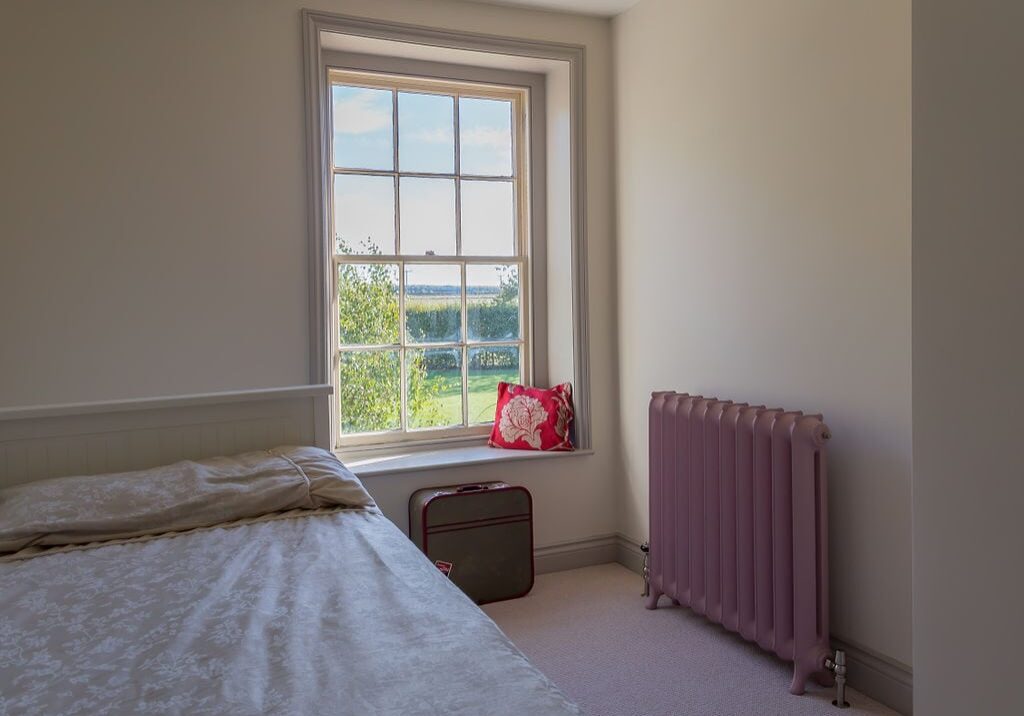
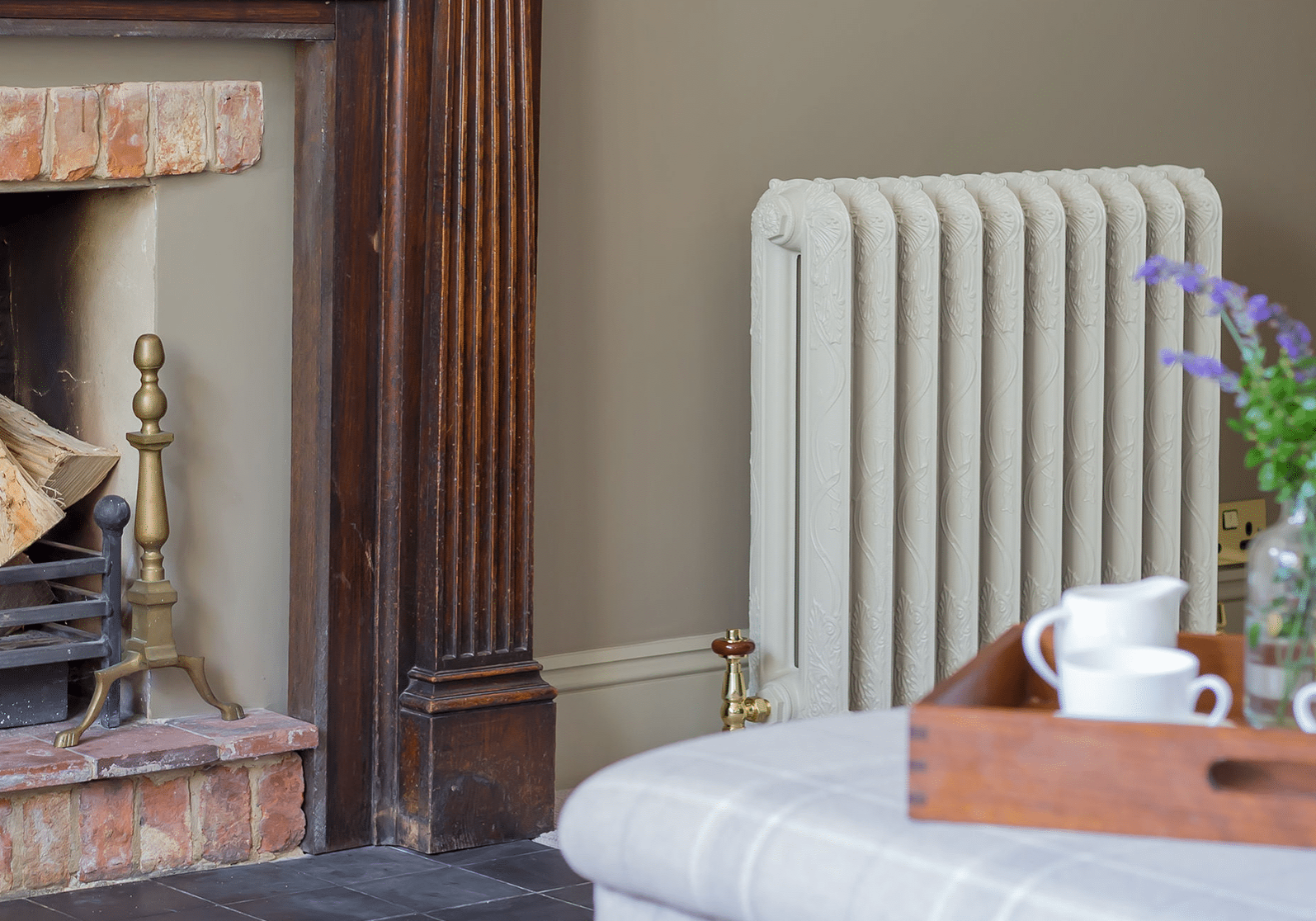
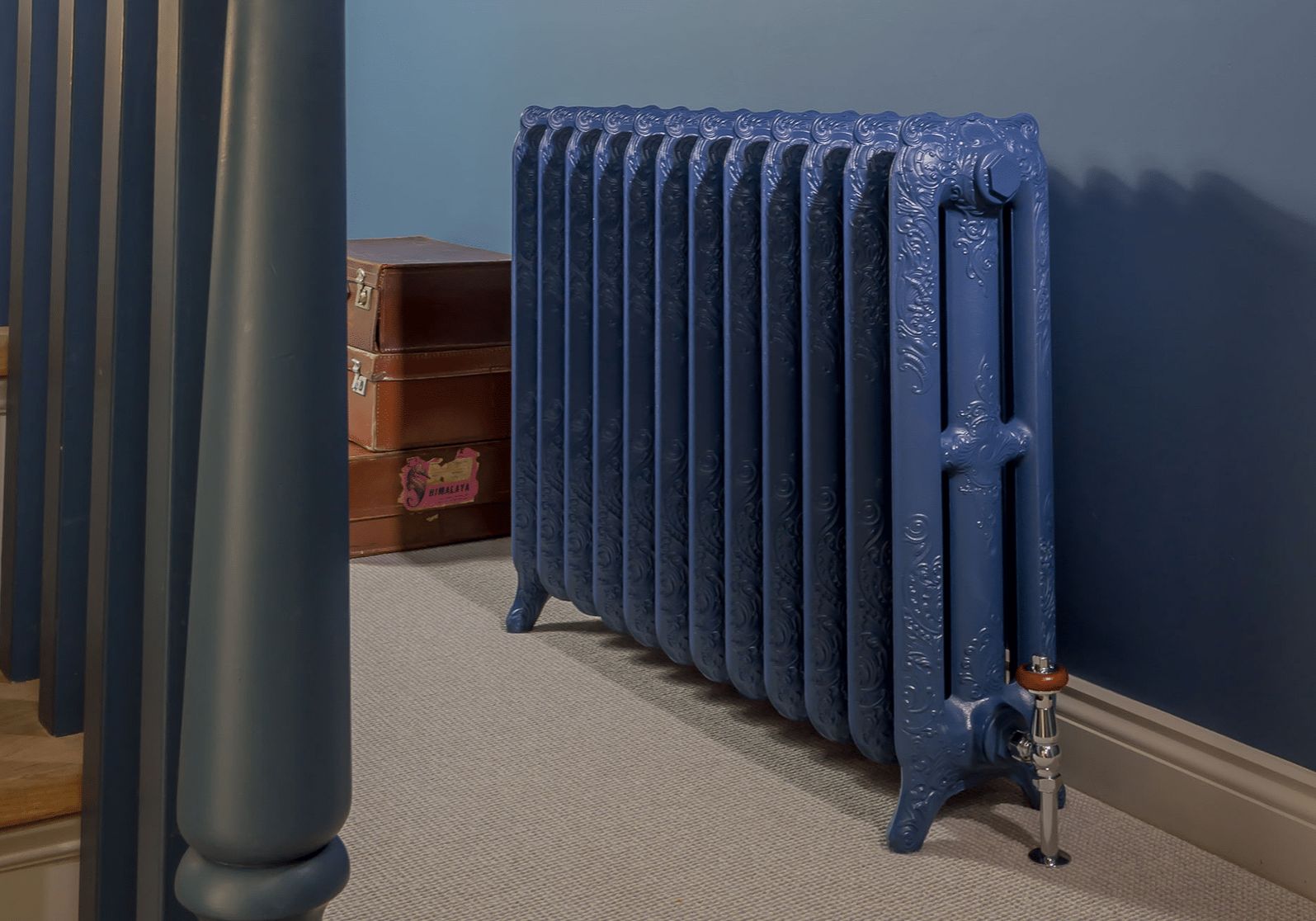
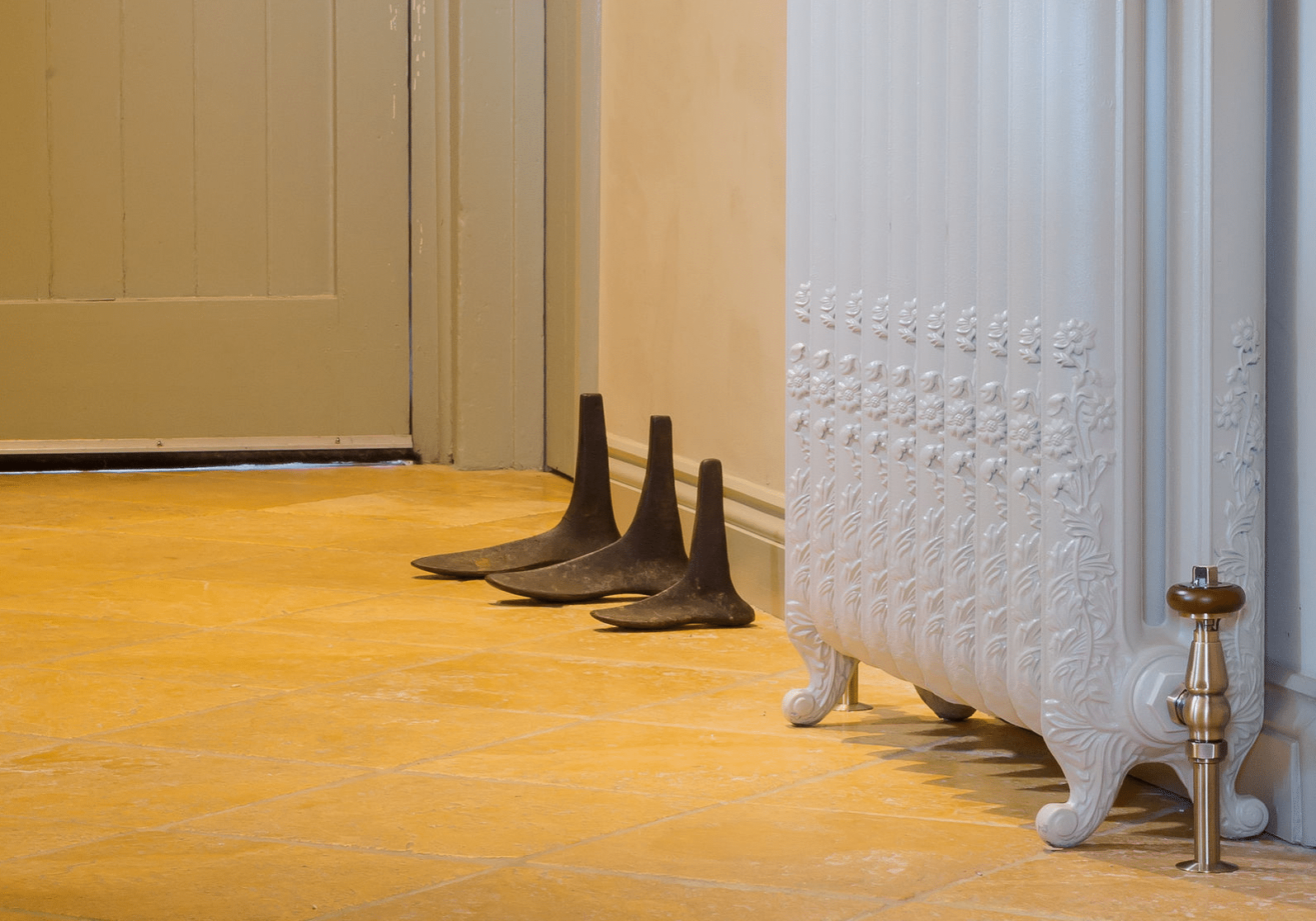
They make a statement. That’s partly by design and partly a consequence of scale. A floor standing radiator fills more of a room than a wall-hung version, and in the right space it reads as part of the architecture rather than an addition to it.
Design, colour and finish options
Our range spans eighteen designs, from richly detailed Victorian profiles to cleaner contemporary styles. Every radiator is hand-finished at our Lincolnshire factory, which means the quality of finish is consistent across every section.
The finish options are broad:
- Farrow & Ball and Little Greene paint ranges, applied in-house
- Bespoke colour matching to a specification of your choosing
- Metal effect finishes, including bronze, gold, silver and black
- Hand-polished and antique effects for period interiors
All finishes are available across the full floor standing range. The way you mount the radiator doesn’t limit what it can look like.
Are floor standing cast iron radiators the right choice?
They work well when walls make conventional fixing difficult, or when a room is large enough that the radiator needs to carry visual weight as well as produce heat. They’re a natural fit for period properties, larger living spaces and installations where pipework runs naturally under the floor.
If your room is compact, or your pipework configuration makes a floor standing setup impractical, a wall mounted cast iron radiator from the same range delivers identical thermal performance and the same quality of finish. The mounting method changes the installation, not the radiator itself.
Start with the heat output your room needs. Our radiator configurator will give you a figure to work from.
Then look at which models meet that figure in a profile that suits your space.
Browse the full cast iron radiator range or get in touch and we’ll help you work through it.
“I want to say thanks and how fantastic the radiators look along with the cast quality and the excellent painting and polishing finish. I now can’t wait to get them installed! Many thanks again for all your help and assistance.”
“Thank you for all your help, we will definitely recommend Paladin to anyone we know who is looking for cast iron radiators and will get in touch when we’re needing radiators for our ground floor.”