
What Are Low Cast Iron Radiators? The Complete Guide to Low Level Heating
Some rooms just don’t work with a standard radiator. A bay window leaves a stretch of wall that’s too short. A conservatory has glazing running almost to the floor. Low cast iron radiators are built for precisely these situations, and if you’re mid-renovation and finding that awkward spaces keep coming up, this guide will help you through them. Browse our full cast iron radiator range to see what’s possible before you start measuring.
What Are Low Cast Iron Radiators?
Low cast iron radiators are generally under 600mm in height. It sounds like a simple constraint, but that single measurement shapes a lot: which walls become viable heat sources, how the room reads visually and whether period architectural detail stays intact or gets worked around.
Height, thermal mass and why cast iron works at a smaller scale
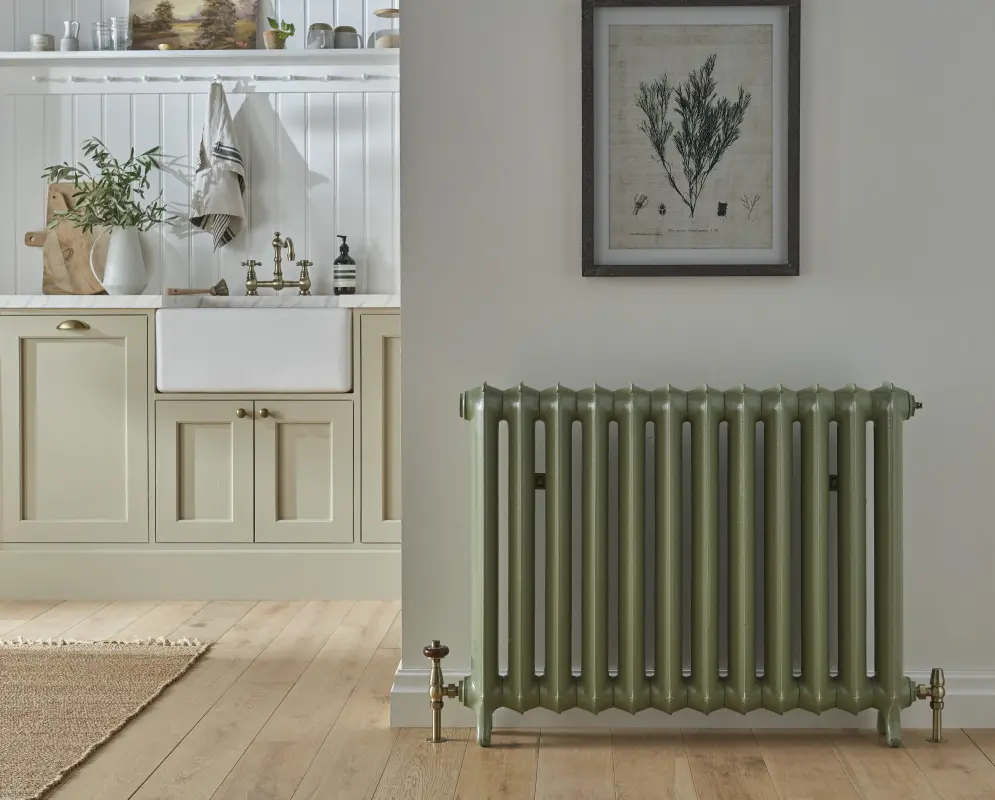
Cast iron’s density is what makes a shorter unit effective. It heats up more slowly than a pressed steel panel, but holds that heat and radiates it steadily long after the boiler has stopped. A low cast iron radiator isn’t a reduced performance product. It’s a different kind of unit, designed for a different kind of space.
This matters particularly in period properties. The steady, even warmth cast iron produces suits older buildings that were never designed around modern central heating. A short radiator that does the job properly is far better than a taller one squeezed in at the expense of a sash window or a plaster cornice.
2 column and 3 column: understanding the difference for low level use
A 2-column unit is the slimmest choice, suited to tight alcoves and narrow walls where depth is a real constraint.
A 3-column unit carries more thermal mass at the same height and produces more output as a result.
Neither is universally correct. The right call depends on the room’s heat needs and the space available.
Where Do Low Level Cast Iron Radiators Work Best?
Architecture drives this decision more than personal preference does. These are the spaces where a low-level radiator is simply the correct answer.
Under bay windows and low sash windows
Bay windows are beautiful, but they create short stretches of wall below the glass that a standard radiator can’t fit. A low level cast iron radiator fills that space, turns it into a heat source and stops cold air from running down the glazing.
Low sash windows present a similar problem, particularly in Victorian and Edwardian properties where window heights often sit closer to the floor than modern builds.
Working within the architecture rather than against it always produces the better outcome.
In conservatories with low perimeter walls
Conservatories typically have low brick or stonework walls with glazing above. A standard height radiator looks wrong in this setting. It dominates the sightlines and competes visually with the glazing. A low-level unit sits under the glass and heats the room without changing the way the space feels. In older conservatory additions with cast iron detailing elsewhere on the property, a matching Paladin radiator reads as architecturally consistent in a way that a steel panel doesn’t.
In period properties with high skirting boards
Victorian and Georgian properties carry substantial detail at mid-wall height. High skirting boards and dado rails eat into usable wall space. You don’t need to cut through joinery or compromise features that should be left alone. A low cast iron radiator works within those proportions instead. That makes a meaningful difference on a listed building or a careful restoration project.
In compact bathrooms and en suites
Wall space in a bathroom is always limited. A low profile cast iron radiator delivers real heat without dominating the room, and a well-chosen, well-finished example earns its place visually. It brings something to the space rather than just occupying it.
Your Bespoke Built Low Level Radiator
This is where Paladin’s approach differs from most of what’s available, and it starts well before the radiator reaches your door.
From foundry to factory: how every Paladin radiator is made
Why our dedicated foundry makes a difference
Every radiator we make starts at our own dedicated cast iron foundry. It works exclusively for us. No other manufacturer, no shared production runs. Our casting moulds stay sharp and the detail stays consistent. Every column and every decorative element comes through exactly as designed.
Many cast iron radiators on the market come from large, multi-product foundries running high-volume automation. In these settings, shared moulds can degrade over time and fine detail can suffer as a result. We made a different choice, one that’s reflected in every product we produce.
Assembly, finishing and the 10-year guarantee
Once the cast sections leave the foundry, they come to our factory in Lincolnshire. That’s where your radiator is hand-assembled, finished, painted and pressure-tested before it leaves us. Every product carries a 10-year guarantee.
Colour and finish: making it yours
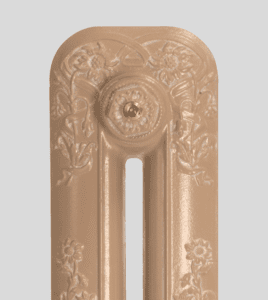


Low level doesn’t mean limited choice. Every radiator we produce can be specified in a colour from our own metals range, a Farrow & Ball shade or a Little Greene tone. If you have something specific in mind, we can colour match it.
Beyond standard paint, we offer
- specialist finish effects
- hand polishing to a mirror shine in brass or copper
- antiquing to bring out surface texture and give the radiator a sense of history
Your low cast iron radiator can be as understated as the room demands, or it can be the first thing people notice when they walk in.
Use our Radiator Configurator to plan across multiple rooms if you’re working on a larger project.
Are Low Level Cast Iron Radiators Suitable for Small Rooms?
Yes. For many small rooms, a low level cast iron radiator is the strongest choice available. Here’s why.
Getting the heat output right in a smaller space
A shorter radiator doesn’t automatically mean lower output. Section count and column depth both play a role in BTU output, and those variables can be adjusted to suit the room. Our heat calculator is a useful starting point. If you’d rather talk through the numbers, call us. We’d much rather spend ten minutes on the phone getting it right than leave you guessing.
Cast iron’s thermal mass is particularly valuable in smaller rooms. It heats up slowly and holds that warmth long after your boiler has stopped, releasing it evenly throughout the space. You avoid the temperature swings that lightweight steel panels produce, which heat fast and cool equally fast. The result is a more consistent room temperature and, often, a more efficient system overall.
The case for cast iron in a compact or period room
There’s a design dimension here that’s easy to overlook. A Paladin cast iron radiator in a small bathroom or a compact study, finished correctly and fitted with matching valves, becomes part of what makes the room feel designed.
Period properties with smaller rooms particularly benefit from this. A cast iron radiator is period correct in a way nothing else can replicate and, in a compact room, every visible object carries weight. The radiator needs to earn its place. Ours do.
What to Look for When Buying a Low Level Cast Iron Radiator
A few practical questions are worth working through before you commit.
Measuring for the right fit
Finding your maximum radiator height
Start with the available height. Measure from the floor to the underside of the window cill (that’s your ceiling for radiator height). Then measure the available wall width. Width determines section count, which directly affects heat output. Our guide to measuring a radiator correctly walks through this step-by-step.
Column depth is worth checking separately. A 2-column radiator sits shallower from the wall than a 3 or 4-column unit. In a tight alcove or a narrow conservatory ledge, that depth difference matters.
Valves, weight and lead times
Valves complete the look and they’re easy to underestimate. Our valves and accessories range covers manual and thermostatic valves in finishes to match your radiator. Getting the configuration right for your existing pipework is something we can advise on directly.
Cast iron is heavy (that’s part of what makes it so effective at retaining heat), so keep the weight in mind at the installation stage. Our installation guide covers the detail, and we offer a full installation service if you need it.
Bespoke finishes take time to produce correctly. Standard finishes can be available within 7 days. If you’re working to a project deadline, speak to us early and we’ll give you a clear picture of what’s achievable.
About Paladin Radiators
We’ve been making cast iron radiators in the UK for over 20 years. Our radiators have been installed at Apsley House, Belton House, the Tate Gallery and Chester Town Hall. We’re a National Trust Registered Supplier and a member of the Listed Property Owners Club.
More than those credentials, we’re a team you can actually talk to. Call us and describe your project. You’ll get real guidance from people who know these radiators well. Our showroom in Lincolnshire is open if you’d like to visit. Cast iron radiators need to be seen in person.
Explore our cast iron radiator collection or get in touch.
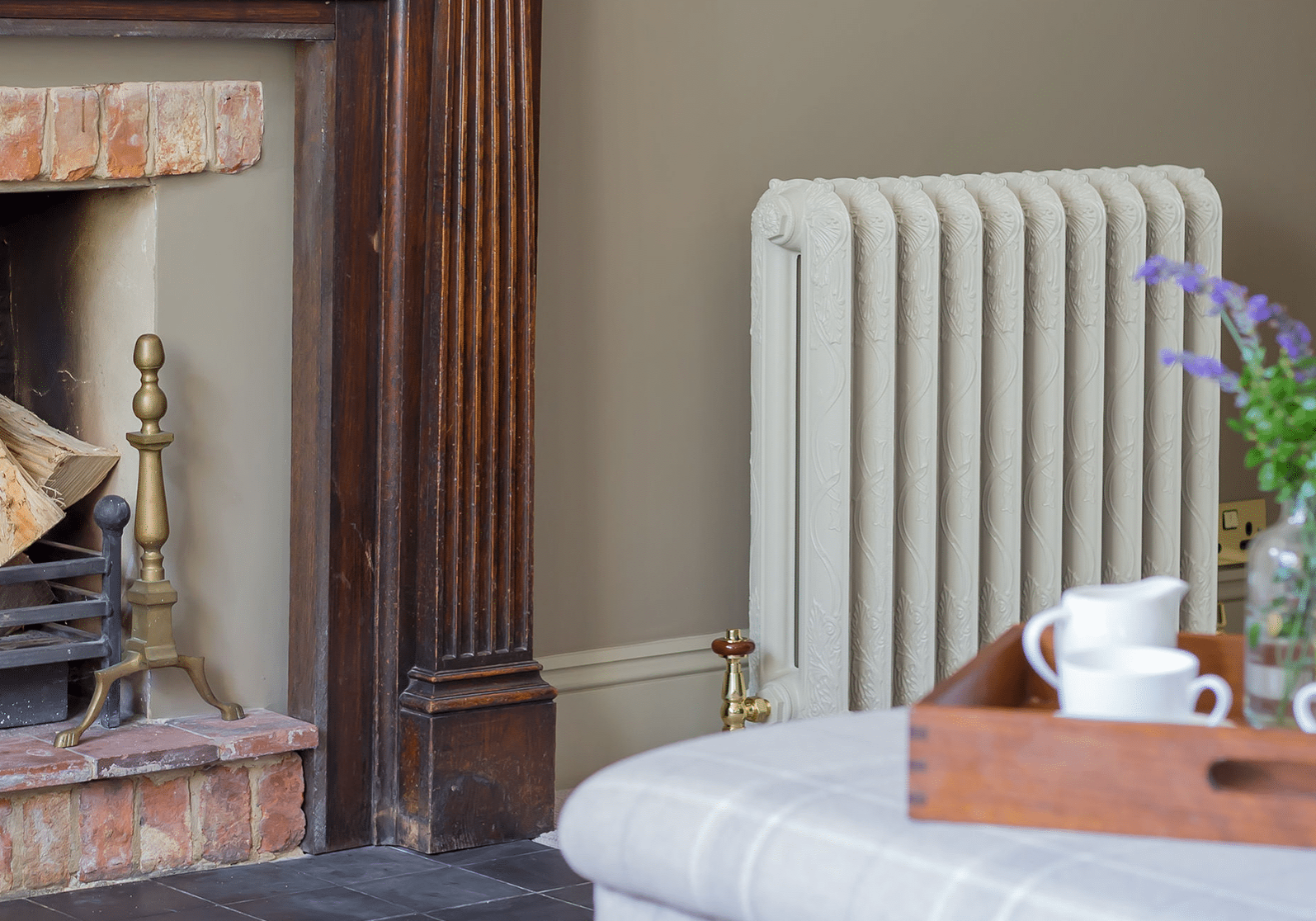
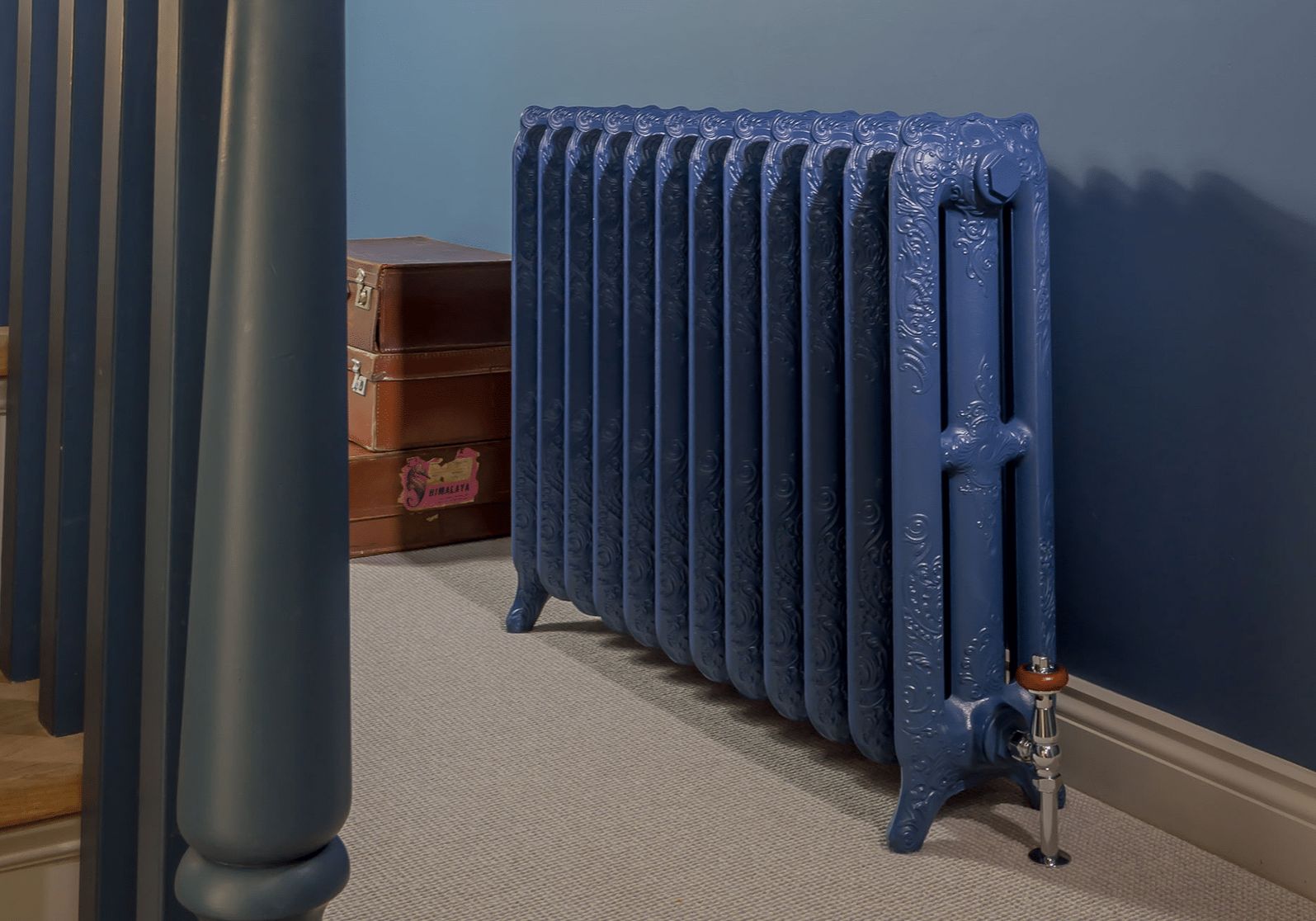
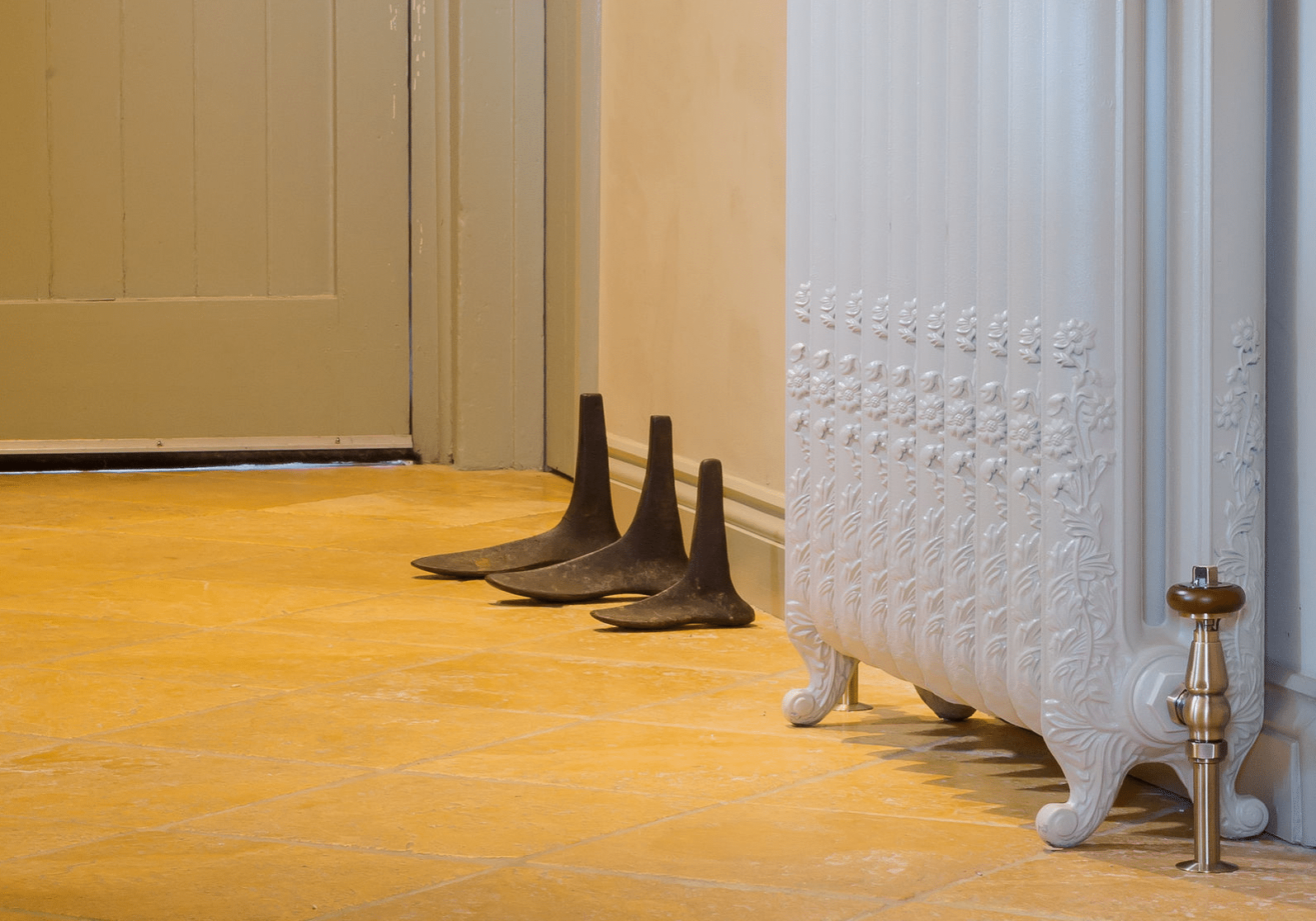
“I want to say thanks and how fantastic the radiators look along with the cast quality and the excellent painting and polishing finish. I now can’t wait to get them installed! Many thanks again for all your help and assistance.”
“Thank you for all your help, we will definitely recommend Paladin to anyone we know who is looking for cast iron radiators and will get in touch when we’re needing radiators for our ground floor.”