
Can cast iron radiators work as heat pump radiators?
Cast iron radiators are a strong match for heat pump systems. Their high thermal mass and generous surface area let them release heat steadily, even at the lower water temperatures a heat pump produces.
Getting the sizing right still matters though, and browsing our cast iron radiators range is a good place to start before you switch.
Estimated reading time: 6 minutes
How does a heat pump’s lower flow temperature affect radiators?
Heat pump flow temperatures run lower than a gas boiler’s. Often somewhere between 35°C and 55°C, compared to 70°C or more from a boiler. That matters because a radiator’s heat output depends on how much hotter it is than the room around it: (a difference the industry calls Delta T). Cast iron holds onto heat well, so it keeps delivering comfortable warmth even at these lower temperatures. But every radiator, cast iron or otherwise, gives out less heat per section once the flow temperature drops. And that’s the real sizing challenge behind any heat pump installation.
Do heat pumps work with existing radiators?
Heat pumps are compatible with many existing radiators. It depends on how generously your installer sized them in the first place. Older systems built for a hot gas boiler often aren’t big enough once the flow temperature drops. Some homes get away with keeping their current radiators exactly as they are. Others need bigger radiators, extra sections or an extra radiator in that one room that’s always struggled to warm up. So, get a proper heat loss survey done. It settles the question room by room, rather than leaving it to guesswork.
How much bigger do heat pump radiators need to be?
Heat pump radiators are usually bigger than the ones a gas boiler needs for the same room. Heating engineers commonly put the increase in output somewhere between 20% and double, depending on how low the flow temperature is set. That’s a wide range rather than one fixed number. Why? Because the right size depends on the room’s heat loss, its insulation and how far the flow temperature has dropped from what the old boiler used. A heat pump radiator size calculator, or a full heat loss calculation done room by room, gives you an answer specific to your own home rather than a generic rule of thumb. With cast iron, we can simply add sections to increase output, without changing the radiator’s style or footprint.
Are cast iron radiators better than steel panel radiators for a heat pump?
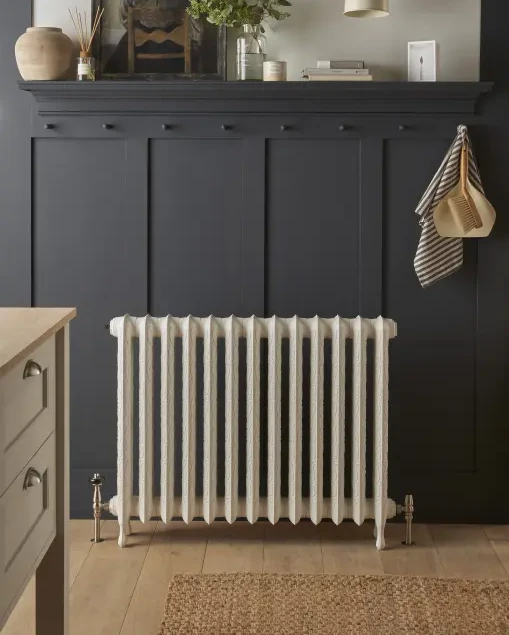
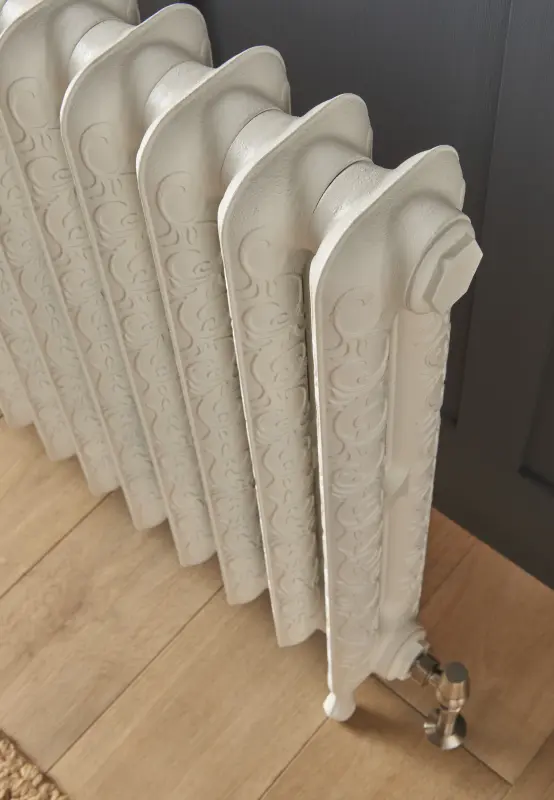
Cast iron radiators are generally the better option for a heat pump, mainly down to surface area and thermal mass. Steel panel radiators can still work, but usually only once you’ve upgraded them, to a double or triple panel version, or something larger altogether, to make up for what a single panel lacks. Cast iron’s column design already gives it loads of surface area for its footprint. And its mass means it keeps releasing warmth long after the heat pump has finished a cycle. Cast iron also tends to outlast several heating systems over its lifetime, which is one reason we back ours with a 10 year guarantee.
Low water content radiators are another option some installers use. They heat up fast. However, they cool down just as fast once the heat pump stops running.
For most homes, the choice comes down to available wall space and whether you want the radiator itself to add some character to the room. That’s usually where cast iron wins.
What should you check before installing cast iron radiators with a heat pump?
Cast iron radiators are heavy, and that’s worth knowing before you commit. Especially in an older home, where the floor joists weren’t built with a few hundred kilos in mind. A qualified installer can check whether a room needs extra support underneath, and it’s usually a quick job to sort if it does.
Cast iron also holds more water than a steel panel radiator of a similar size. That’s part of why it retains heat so well, but it does mean your heat pump’s pipework needs to move enough water at the right flow rate to keep up. Get your installer to factor this in alongside the heat loss survey, rather than treating it as an afterthought.
Why might a heat pump radiator not feel hot?
Heat pump radiators are meant to feel warm rather than hot. That’s normal, not a fault. The water running through them sits at a lower temperature, so the surface itself stays cooler even when the radiator’s heating the room properly.
Feels barely warm, or cold in patches? That’s usually a different problem altogether:
- trapped air in the system
- an unbalanced system
- a radiator that’s genuinely too small for the room
Check these first. Don’t assume the heat pump’s at fault.
Do ground source heat pumps need different radiators from air sources?
Ground source and air source heat pumps are much the same when it comes to radiator sizing. Both types typically run at low flow temperatures. The real difference between them is where the heat comes from: the ground or the air, not how the system spreads it around your house.
So the radiator choice comes down to the same few factors either way: room heat loss, target flow temperature and how much surface area the radiator can offer.
What should you look for in heat pump radiators?
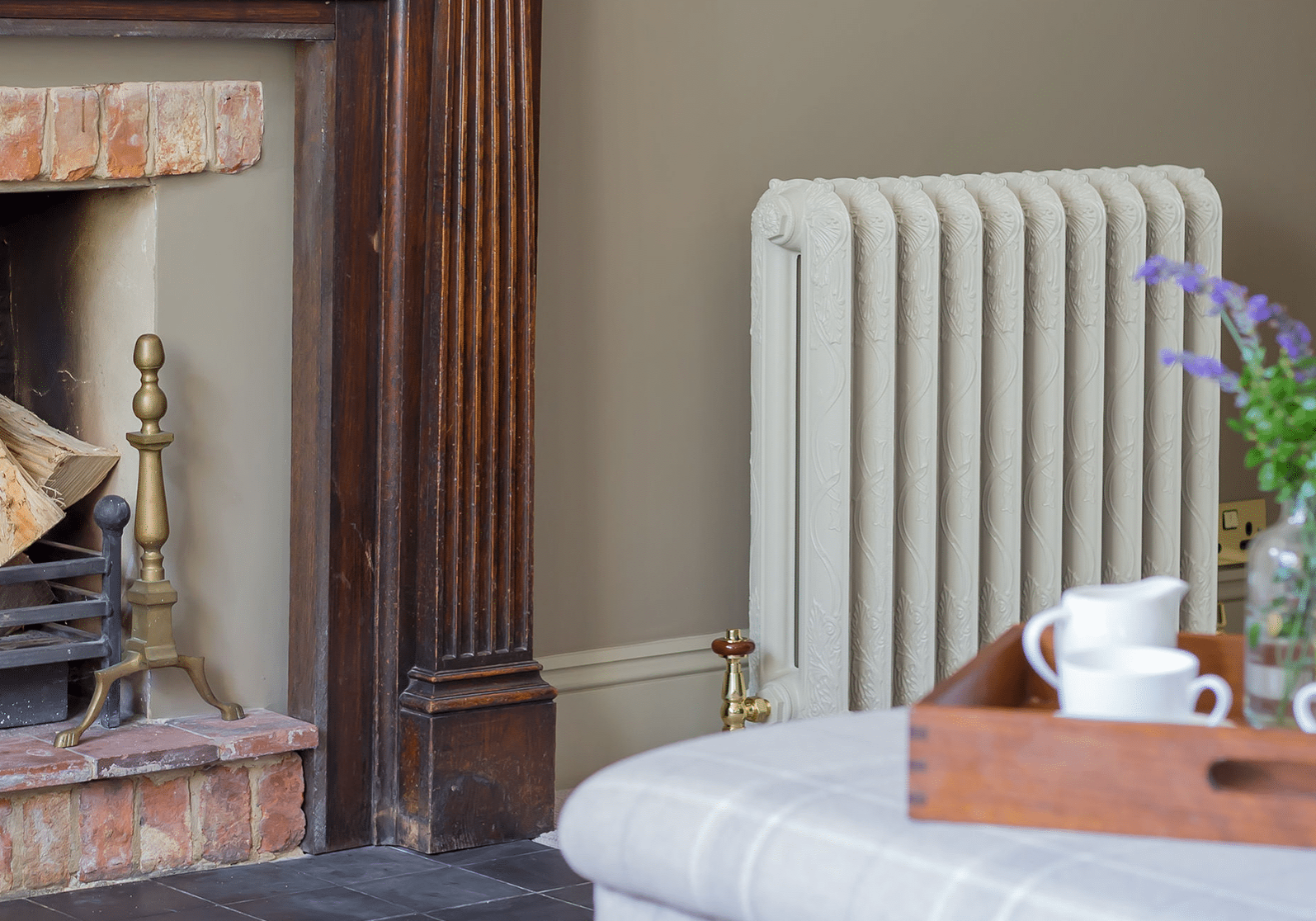
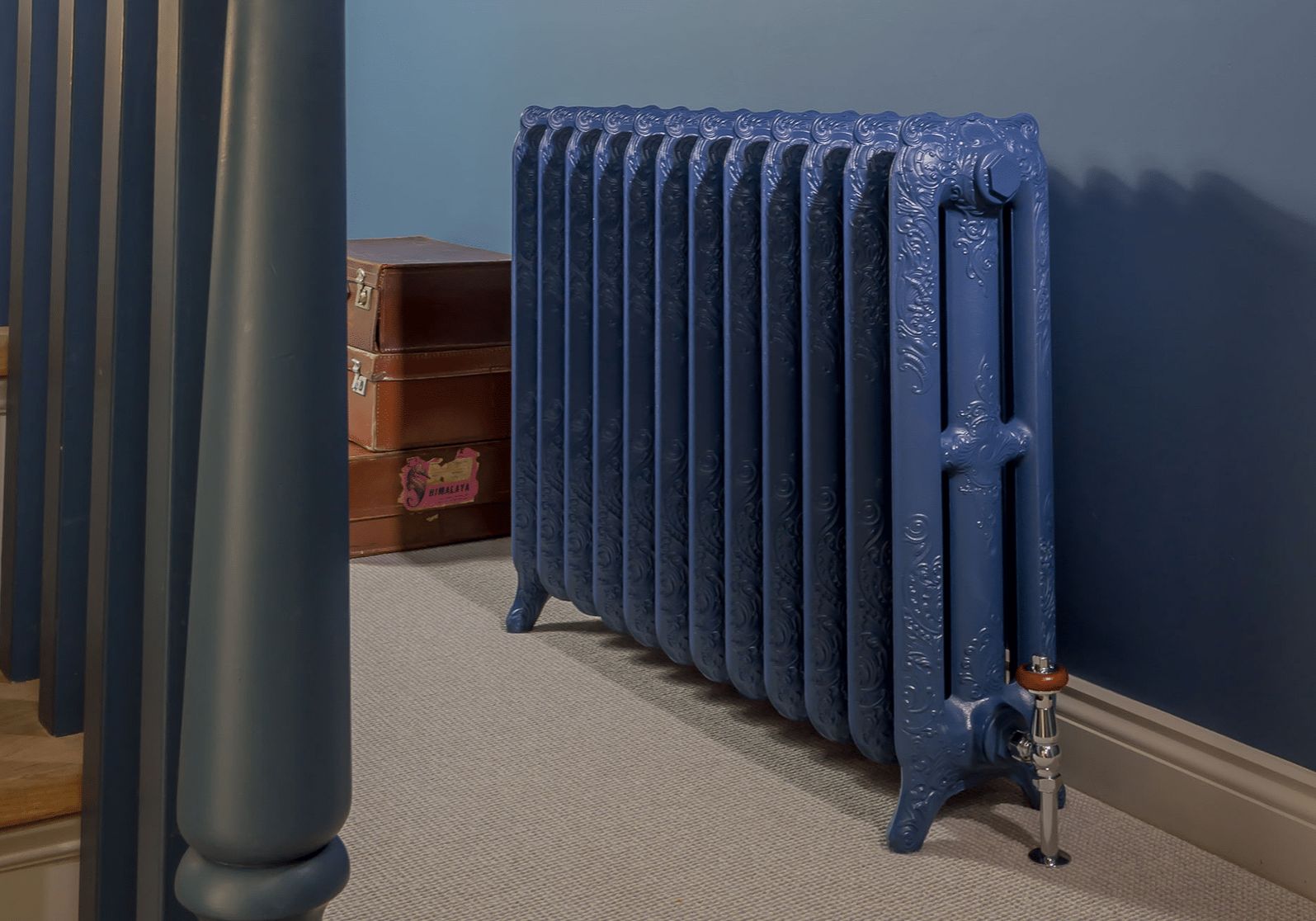
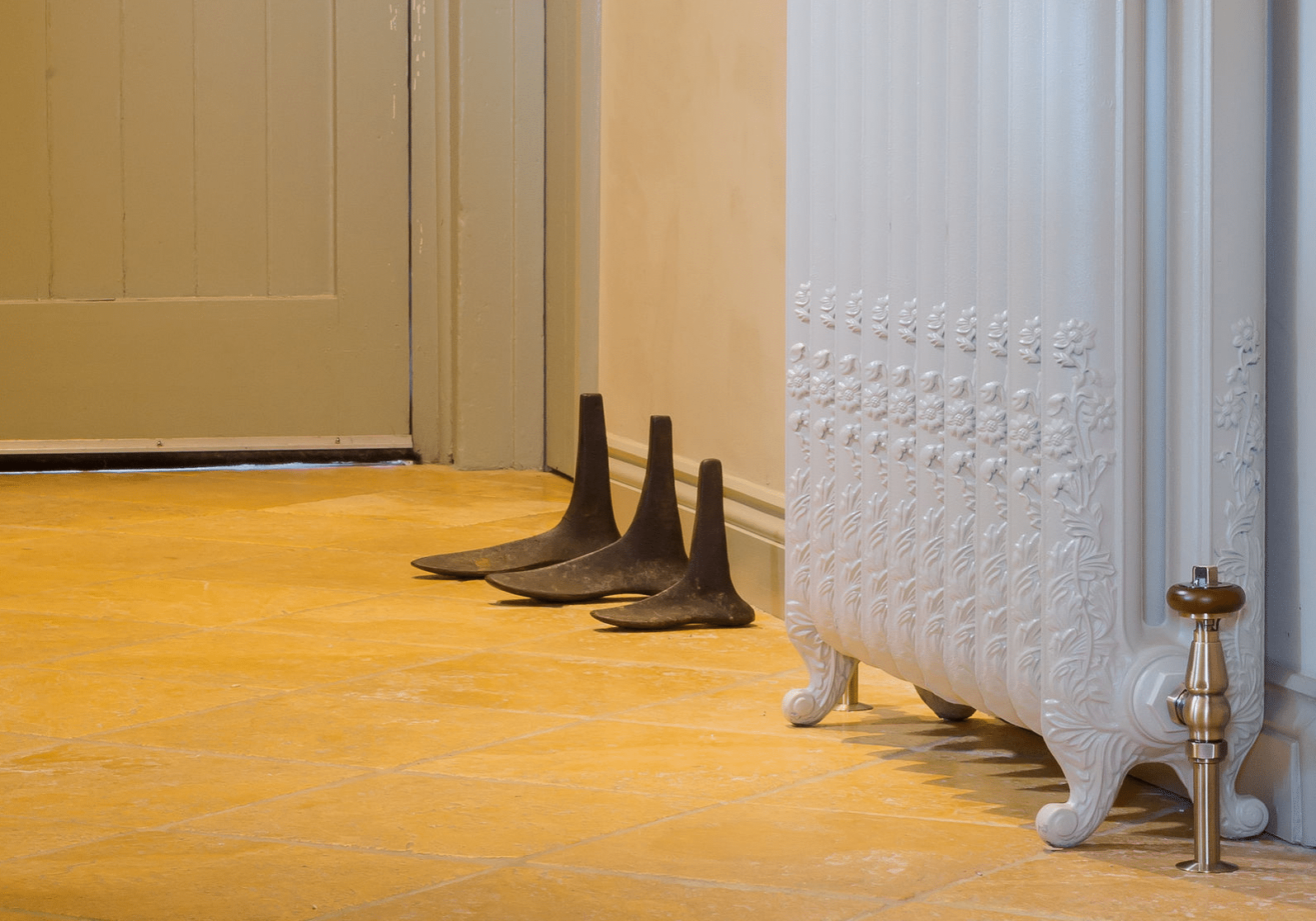
Good heat pump radiators are generous with surface area relative to their footprint. That’s what lets them release heat efficiently at lower temperatures. Cast iron performs well here, thanks to its mass and its column design, both of which add to the surface in contact with the room’s air.
Take our Churchill model. It outputs around 480 BTU per section at standard rated conditions, and because we build it section by section, scaling up the output is easy without changing its character.
Look for radiators built to the exact length your room needs. Don’t settle for the nearest off the shelf size.
Pairing it with a good thermostatic valve helps too. A TRV lets you fine tune each room, rather than heating everything to the same level.
If you’re planning to fit a heat pump and want to know whether your current radiators will keep up, our radiator configurator gives you a quick, room specific answer. And if you’d like to talk it through, our team’s happy to help you work it out.
“I want to say thanks and how fantastic the radiators look along with the cast quality and the excellent painting and polishing finish. I now can’t wait to get them installed! Many thanks again for all your help and assistance.”
“Thank you for all your help, we will definitely recommend Paladin to anyone we know who is looking for cast iron radiators and will get in touch when we’re needing radiators for our ground floor.”