
What are the best cast iron radiators for hallways?
Estimated reading time: 6 minutes
A hallway radiator doesn’t just have to provide heat. It can make an impression the moment the front door opens. They’re most useful in period properties, Victorian terraces and Edwardian townhouses and any home where the hallway is a genuine room rather than just a thoroughfare. This guide will help you understand which styles, sizes and finishes work best in a hallway, and why getting this right makes more difference than most people expect.

Why it’s a mistake to overlook heating in the hallway
The hallway is the first room anyone enters. It sets the temperature of the house: quite literally. A cold hallway creates a cold first impression and makes the rest of the home feel harder to heat. Heat moves through open doors and rises through stairwells, so a well-heated hallway contributes warmth to adjacent rooms too.
Cast iron radiators retain heat exceptionally well. Once the water cools, the iron itself stays warm and continues to radiate into the space. In a hallway, where the front door opens and closes regularly, that thermal mass matters. You’re not constantly reheating from cold every time someone comes in.
There’s another reason to take the hallway seriously. A hallway radiator is on permanent display. It’s one of the first things guests notice. There’s no logic in hiding it behind a cover or choosing something purely functional when you could have something genuinely beautiful.
Can hallway radiators double as interior design?
Yes – and in most hallways, they already do, whether the owner planned it or not.
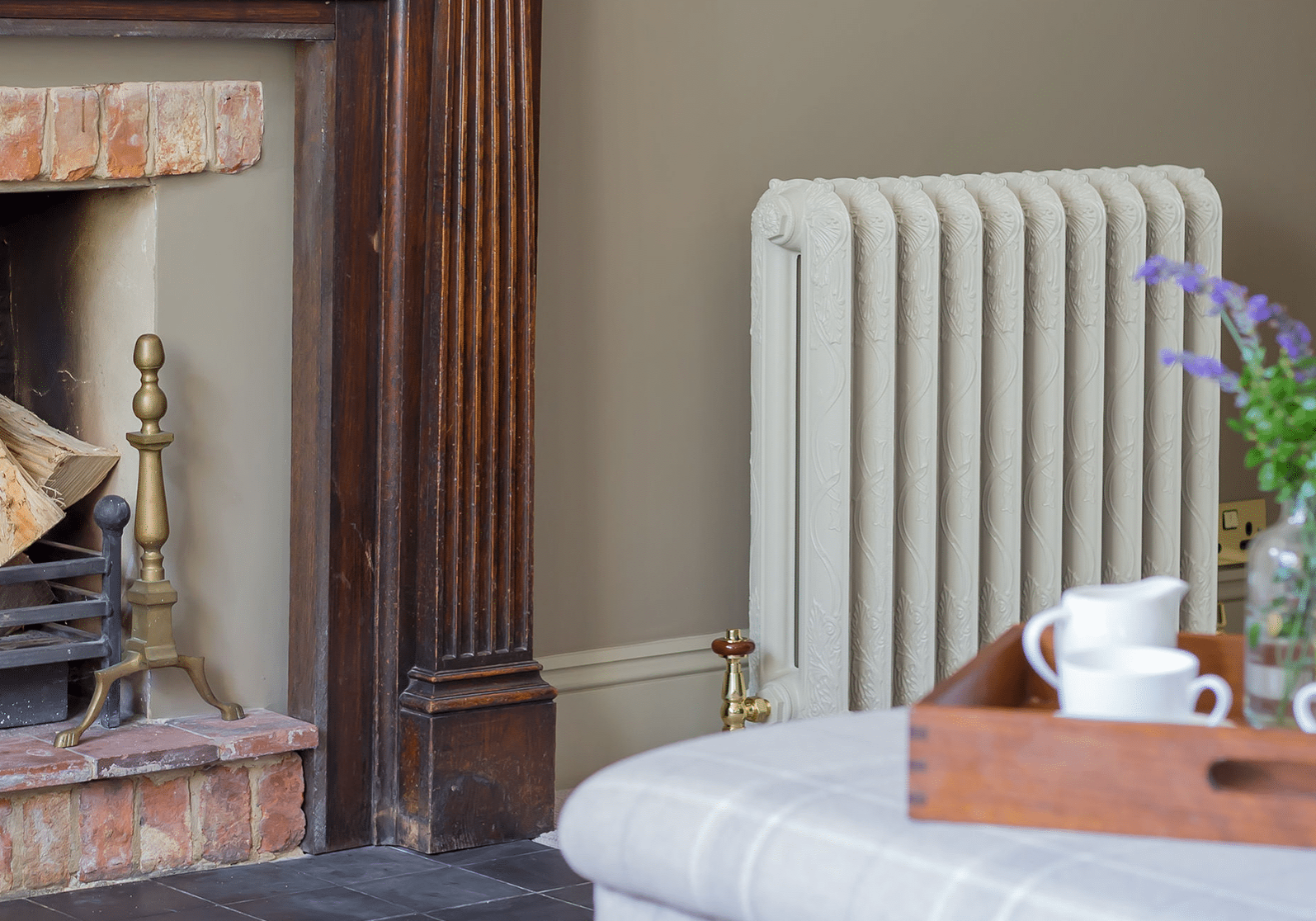
A hallway radiator sits in plain view. It’s often the only piece of ‘furniture’ in the space. That makes it an opportunity rather than an afterthought. A cast iron radiator brings texture, weight and history to a hallway. The ornate detail of a column radiator, the sculptural quality of each section, the depth of a hand-applied finish: these things read as interior design choices rather than utility decisions.
Think of the hallway as the introduction to your home’s interior. Everything in it signals something about what lies beyond. A Paladin cast iron radiator signals quality, tradition and attention to detail. It tells anyone who walks in that whoever lives here cares about how things look as much as how things work.
Which cast iron radiator styles work in a hallway?
Several of our models suit hallways particularly well, depending on the size of the space and the character of the property.
The Sloane is one of the slimmer designs in the range and is ideal for narrower hallways where wall space is limited. It delivers a strong heat output without projecting far from the wall, which is exactly what you need in a corridor where every inch of depth counts.


The Pimlico is an elegant 2-column radiator with a 100mm depth. First produced in the late Victorian era and popular in Edwardian homes, it works well in Victorian and Edwardian hallways where its slim profile and refined character are right at home.
For wider entrance halls with more space to work with, a 4-column cast iron radiator makes a strong visual statement. The Victoriana 4-column has an unmistakable Victorian character that suits period properties beautifully, and its section-based construction means you can size it precisely to the wall run available.


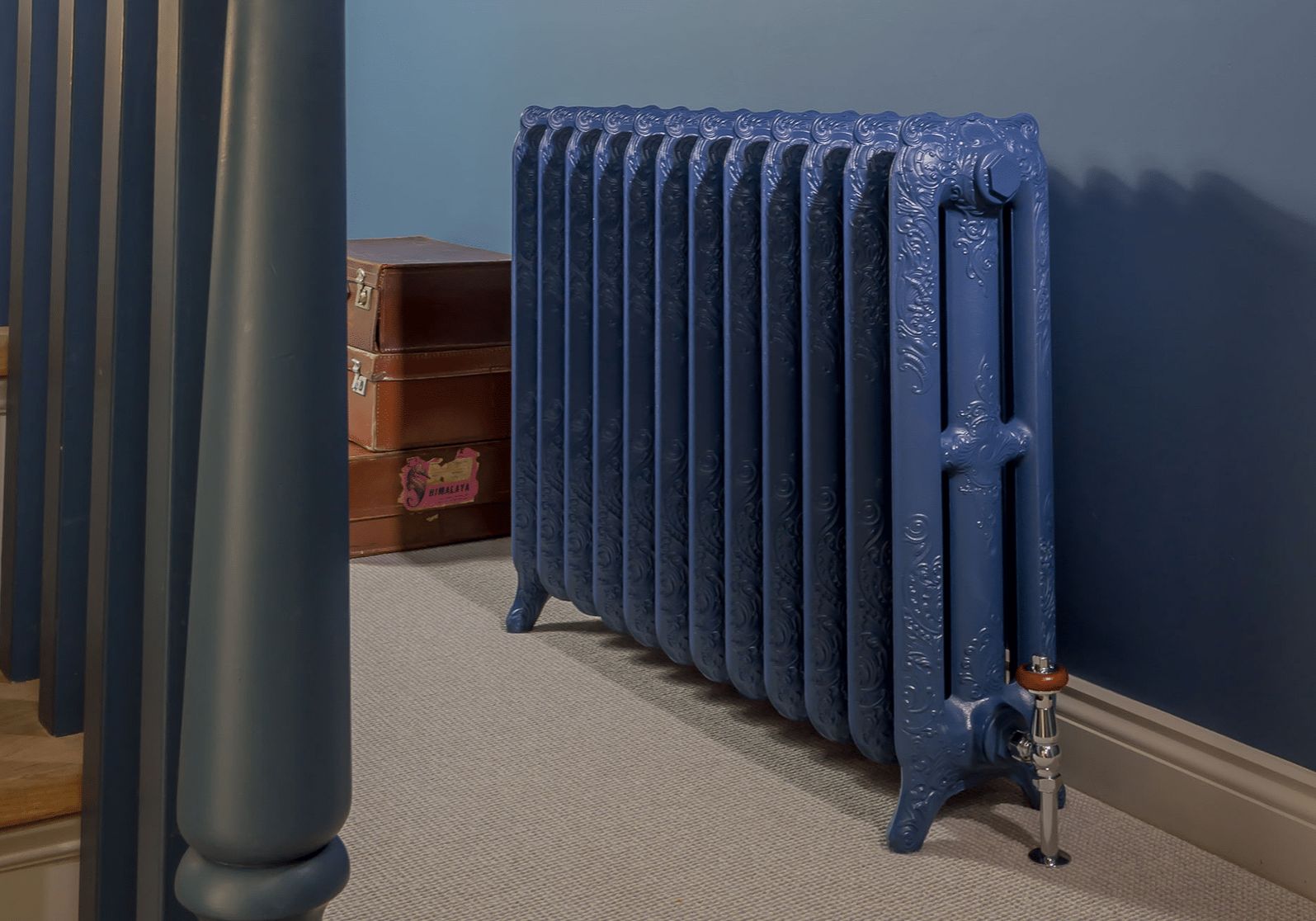
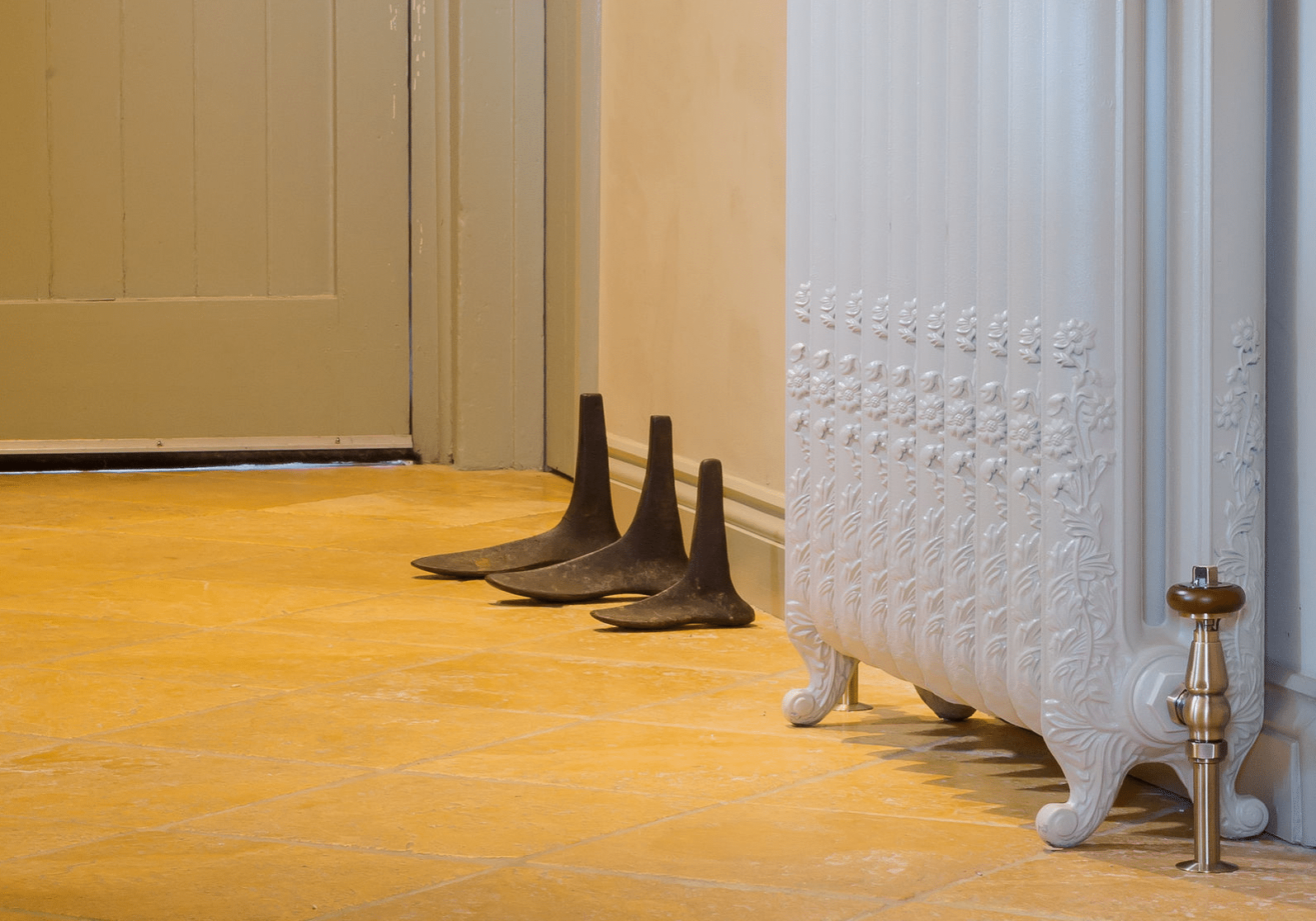
If your hallway is generous and your tastes run to the ornate, the Kensington and the Oxford offer some of the most intricate surface detailing in our range. These are radiators that reward closer inspection and hold their own as standalone features.
Can you customise a cast iron radiator for your hallway?
Yes and customisation is one of the strongest arguments for choosing cast iron over a standard panel radiator.
Hallways come in all shapes. Some are narrow Victorian terrace corridors. Others are wide Edwardian entrance halls with high ceilings. Some are the lobbies of Georgian townhouses, with stone floors and corniced walls. A single off-the-shelf size doesn’t serve all of these spaces.
Our bespoke service lets you specify the number of sections, the height and the finish to suit your exact wall space and heat requirement. If a standard configuration doesn’t fit the alcove or wall run you have in mind, we can work with you to find one that does.
On finish, the choices are wide. You can choose from our full paint colour range, including our Farrow & Ball partnership colours, or bring us a specific shade and we’ll match it. We can hand-polish radiators to a mirror finish, antique them to enhance the cast surface detail, or apply paint effects and metallic finishes that aren’t available from any other manufacturer.
“A hallway radiator that matches the front door colour, picks up the floor tile tones or echoes the handrail finish is a completely different object from a white panel bolted to the wall. That’s what customisation gives you.”
Jon Walker, Paladin Radiators
How to find the best size for a cast iron radiator?
The right size depends on two things: the space’s heat requirements and the available wall space.
For heat requirement, you need a BTU calculation. Hallways are typically draughty spaces with exterior doors, so they often need more output than their floor area alone would suggest. Use our heat calculator to get an accurate figure before you commit to a model.
For wall space, measure the available run carefully, including the clearance needed for valves on either side. Also check how far the radiator will project from the wall: in a narrow hallway, even a small amount of extra depth can affect how freely people can move through the space.
Cast iron radiators are sized by adding or removing sections. A taller section of a given model produces more heat output than a shorter version of the same model, so using a taller model means you can hit your required BTU with fewer sections and therefore a shorter wall run. In a tight hallway, this can make a real difference.
Which is the right type of radiator for your hallway?
The answer comes down to column count and height. These two variables shape how the radiator performs and how it looks.
A 2-column cast iron radiator is slimmer and projects less from the wall. It’s the right choice for narrower hallways where depth is a concern. It can be made taller to compensate for the reduced width, giving you the heat output you need without taking over the floor space.
A 4-column radiator gives you more output per section but projects further from the wall. In a hallway wide enough to accommodate it, a 4-column radiator becomes a genuine focal point: substantial, characterful and impossible to overlook.
The style of the property also matters. Victorian terrace hallways suit the ornate detailing of models like the Kensington or the Piccadilly. Edwardian properties tend to suit the Pimlico’s slimmer, more restrained profile. Modern homes can take either, depending on whether you want the radiator to contrast with its surroundings or complement them.
What radiators work best in a small hallway?
In a small or narrow hallway, the priority is maximising heat output from a minimal footprint. That means going tall rather than wide.
A slim radiator like the Sloane or the Pimlico with a higher section count will give you more BTUs from less wall space than a wider, lower model. The vertical emphasis also suits narrow spaces visually: it draws the eye upward rather than across, which can make a corridor feel taller and less cramped. Avoid overly ornate designs in very tight hallways. The detail gets lost when you can’t stand back far enough to appreciate it. A cleaner, more architectural profile often works better.
What radiators work best in a large hallway?
In a large hallway or entrance hall, you have room to make a statement. A wide 4-column or 6-column radiator becomes a centrepiece rather than a background feature.

The Victoriana 4-column suits grand Victorian entrance halls with high ceilings and wide walls. The Neo-Georgian and its 6-column variant offer a different kind of presence: substantial in mass and well-suited to formal spaces that call for something imposing without being fussy.
In a large space, it’s also worth considering two shorter radiators rather than one long one, positioned symmetrically on either side of a doorway or staircase. This is a classic period approach and it distributes heat more evenly through the space.
Large hallways with stone or tiled floors and high ceilings can be the hardest spaces to heat. Cast iron’s thermal mass helps considerably: the radiator keeps radiating after the boiler cycles off, reducing the temperature swings you’d get from a panel radiator under the same conditions.
What kind of finish should I get on a hallway radiator?
The hallway is one of the most visible rooms in the house, so the finish deserves real thought.
In Victorian and Edwardian properties, traditional finishes work particularly well: antique brass effects, burnished metallic tones or classic colours in deep greens, navy blues or off-whites. A period finish reinforces the character of the hallway rather than working against it.
For more contemporary interiors, a single strong colour (anthracite, charcoal or a Farrow & Ball tone matched to the walls or woodwork) makes the radiator feel like a deliberate design choice rather than an appliance.
Hand-polished finishes are especially striking in a hallway. The reflective quality of a mirror-polished cast-iron radiator picks up light in a space that can often feel dark, creating a focal point that needs no other decoration.
Whatever you choose, the finish needs to hold up to hallway conditions: occasional knocks, humidity from wet coats and umbrellas, and regular handling near the valves. Our specialist heat-resistant paints and finishes are formulated for exactly this, and they carry the durability you’d expect from a radiator built to last for generations.
Shop Cast Iron Radiators by Room


Ready to find the right cast iron radiator for your hallway? Browse the full range or get in touch and we’ll help you choose the right model, size and finish for your space.
“I want to say thanks and how fantastic the radiators look along with the cast quality and the excellent painting and polishing finish. I now can’t wait to get them installed! Many thanks again for all your help and assistance.”
“Thank you for all your help, we will definitely recommend Paladin to anyone we know who is looking for cast iron radiators and will get in touch when we’re needing radiators for our ground floor.”