
Cast Iron Radiators Paint: Complete Guide to Painting & Finishing
Yes, you can paint cast iron radiators. The key to success lies in using heat resistant radiator paint combined with thorough surface preparation and proper application technique. DIY painting is possible for those willing to invest time and effort.
However, the results depend heavily on preparation quality and paint choice. For those seeking an exceptional finish that lasts for generations, professional finishing services like those we offer at Paladin Radiators in Lincolnshire provide factory quality results with access to exclusive colour ranges and specialist techniques that simply aren’t possible at home.
Can You Paint Cast Iron Radiators?
Absolutely. Cast iron radiators respond remarkably well to painting, provided you follow the correct process. Unlike modern panel radiators, cast iron’s surface accepts paint beautifully and holds finishes for decades when properly prepared.
The real question isn’t whether you can paint them. It’s whether you should tackle it yourself or entrust the work to specialists. DIY painting works for straightforward refreshes, but achieving a flawless, durable finish requires specific materials, proper technique and considerable patience.
Cast iron’s thermal properties actually make it an ideal painting surface. The metal expands and contracts gradually with temperature changes. This means quality radiator paint won’t crack or peel as readily as it might on other surfaces. However, this same heat retention demands specialist paint formulations that can withstand sustained temperatures without degrading.
What Type of Paint Should You Use on Cast Iron Radiators?
Heat resistant radiator paint is your only viable option. These specialist formulations withstand temperatures between 90 to 100°C without discolouring, blistering or releasing fumes. You’ll find both water based and oil based options at most DIY stores, though oil based varieties generally offer superior durability and a harder wearing finish.
Before applying any topcoat, you’ll need a metal primer designed for radiators. This preparation step ensures proper paint adhesion and prevents rust development beneath your chosen colour. Skip the primer and you’ll likely see your work flaking away within a heating season.
The finish you choose affects both appearance and practicality. Think gloss, satin or matt. Gloss finishes clean more easily and suit traditional interiors. Matt finishes hide imperfections better and complement contemporary spaces. Satin offers a middle ground that works across most design styles.
Results That DIY Approaches Simply Cannot Replicate
Professional finishing takes paint quality to another level entirely. Our paint colours use industrial grade coatings applied in controlled factory conditions. The difference becomes apparent not just in initial appearance but in how the finish performs over years of daily heating cycles.
How Do You Paint Cast Iron Radiators? A Step by Step Guide
Painting cast iron radiators demands methodical preparation and patience. Rush any stage and you’ll compromise the final result.
Preparation Phase
Turn off your heating system and allow the radiator to cool completely. Attempting to paint even a warm radiator causes paint to dry too quickly, creating brush marks and uneven coverage. Wait at least 24 hours after the heating was last on.
Clean the entire surface thoroughly using sugar soap or a dedicated degreaser. Years of dust, grime and airborne cooking oils accumulate on radiators, and paint won’t adhere properly to contaminated surfaces. Pay attention to the top and gaps between columns where debris collects.
Inspect for loose or flaking paint. Remove any compromised areas using a wire brush or medium grit sandpaper. If you encounter extensive flaking or multiple paint layers, you may need to consider complete paint stripping rather than painting over existing finishes.
Lightly sand the entire surface with fine grit sandpaper. This creates a key for the primer to grip. You’re not trying to remove paint, merely roughen the surface slightly. Wipe away all sanding dust with a damp cloth and allow it to dry completely.
Protect surrounding areas with dust sheets and masking tape. Radiator painting inevitably results in drips and overspray, particularly when working on ornate designs with intricate detailing.
Priming Process
Apply metal primer designed for radiators using a radiator brush or small roller. Radiator brushes feature angled heads that reach behind columns and into tight spaces. Work systematically from top to bottom, ensuring complete coverage including all back surfaces and between sections.
Allow the primer to dry according to manufacturer instructions. Typically 4 to 6 hours but potentially longer in cool or humid conditions. Adequate drying time prevents primer being disturbed when you apply topcoats.
Painting Technique
Apply your first topcoat thinly and evenly. Multiple thin coats always produce superior results to single thick applications. Thick paint runs, sags and takes days to cure properly.
Work in the same systematic manner as priming: top to bottom, front to back. Don’t overload your brush and maintain a wet edge to avoid visible joins between sections.
Allow the first coat to dry thoroughly before assessing whether you need a second. Most radiators require at least two coats for even colour coverage. Some darker shades demand three.
Drying and Curing
This is where patience proves essential. Paint may feel dry to touch within hours. However, it requires several days to cure fully. Manufacturers typically recommend waiting 48 hours before turning heating back on, though longer is preferable.
When you reintroduce heat, do so gradually. Set the thermostat lower than usual initially and increase temperature over subsequent days. This allows paint to harden properly without thermal shock that could cause cracking.
The entire process takes at least a week. From preparation through to a fully cured finish. This timeline explains why many people prefer professional finishing, particularly when multiple radiators require attention.
Can You Spray Paint Cast Iron Radiators?
Spray painting cast iron radiators is possible and offers certain advantages. However, it presents unique challenges that make success dependent on experience and conditions.
Aerosol radiator paint provides the most accessible spray option for DIY enthusiasts. These cans contain proper heat-resistant formulations in convenient formats. The key advantage is how spray reaches intricate details and recessed areas that brushes struggle to coat evenly. For ornate Victorian radiators with elaborate patterns, spray application can achieve coverage that would take hours with a brush.
But spray painting demands excellent ventilation and meticulous masking. Overspray travels further than you’d expect, coating floors, walls and furniture unless properly protected. Working outdoors solves ventilation concerns but introduces weather dependencies. Wind, humidity and temperature all affect spray paint performance.
Achieving even coverage without runs requires technique. Hold the can at a consistent distance, typically 20 to 30cm, and maintain steady movement. Stop and start in the same place and you’ll create obvious marks. Spray too close and paint runs. Too far and you’ll get dusty coverage that lacks adhesion.
Professional spray application transforms these challenges through controlled environments and industrial equipment. The spray facilities at Paladin Radiators demonstrate what’s possible when factory conditions replace garage limitations. The finish quality difference is immediately apparent.
Speak To Us About Transforming Your Radiator
What About Painting Old Cast Iron Radiators?
Older cast iron radiators present additional considerations beyond those for newer pieces. Decades of previous paint applications create unique challenges that affect your approach.
Many old radiators carry multiple paint layers accumulated over 50 to 100 years of redecorating. Each layer potentially used different paint technologies. From lead based paints common before the 1960s through modern acrylics. These layers can build up significantly, obscuring the beautiful ornate details that make cast iron radiators special.
Assess the existing paint’s condition carefully. If it’s firmly adhered with minimal cracking or flaking, you can paint over it following standard preparation procedures. However, if you notice thick paint accumulation hiding details, extensive cracking or rust bleeding through, stripping back to bare metal produces far superior results.
Older radiators may also show rust, particularly around joins or where water has leaked historically. Address rust before painting using a rust converter or treatment product. Paint applied over active rust will fail regardless of how carefully you work.
The good news? Old cast iron itself remains perfectly sound. Unlike modern steel radiators which can corrode through, cast iron lasts indefinitely when properly maintained. That Victorian radiator in your hallway will outlast its modern equivalents by decades. Proper finishing is a worthwhile investment.
When renovating period properties, consider whether your radiator’s original finish might be preserved or enhanced rather than covered. Some paint effects techniques can restore aged patinas and highlight original details rather than obscuring them beneath uniform modern paint.
When Should You Strip Paint from Cast Iron Radiators?
Paint stripping represents the most labour intensive approach. However, it delivers unmatched results when existing finishes have deteriorated beyond simple repainting.
Several situations demand complete stripping:
Chemical paint strippers designed for metal offer the most accessible DIY method. These caustic formulations soften paint layers allowing them to be scraped away. Work requires adequate ventilation, protective equipment and considerable time. Intricate radiator designs mean countless crevices where paint hides stubbornly.
Heat guns provide an alternative that avoids harsh chemicals, though they demand careful temperature control. Too much heat can damage cast iron’s surface or, in extreme cases, crack sections. The technique works best on flat surfaces rather than ornate details.
Professional paint stripping through hot caustic dipping offers the most thorough solution. Radiators are immersed in heated chemical baths that strip every trace of paint and rust, leaving pristine bare metal. This process reaches everywhere. Between columns, inside bolt holes and around all the intricate details where manual stripping inevitably misses areas.
After stripping, radiators require immediate treatment to prevent rust formation on the newly exposed metal. Professional operations apply protective coatings once the metal is still warm from the stripping process. This ensures comprehensive protection before finishing.
Stripped radiators then offer a blank canvas for any finish you desire. Whether you want traditional finishes, contemporary colours or specialist effects, starting from bare metal ensures optimal results. This is why our manufacturing process begins with new castings that have never seen paint. This allows factory fresh finishes that century old radiators struggle to match even after stripping.
What Are the Common Mistakes When Painting Cast Iron Radiators?
Understanding frequent pitfalls helps you avoid compromising your efforts through preventable errors.
Painting when the radiator is warm tops the list. Even slight residual heat causes paint to dry too quickly, creating brush marks that remain visible forever. Always ensure complete cooling. If the metal feels even slightly warm to touch, wait longer.
Inadequate surface preparation undermines otherwise careful work. Skipping proper cleaning, neglecting to remove loose paint or omitting primer almost guarantees disappointing results. Surface preparation takes longer than actual painting but determines whether your finish lasts months or decades.
Using incorrect paint might save a few pounds initially but costs far more when you’re repainting within a year. Standard emulsion, household gloss or non heat resistant paint fails quickly on radiators. Only specialist formulations withstand the thermal cycling radiators experience.
Applying paint too thickly creates the runs and sags that mark amateur painting. Impatience leads people to load brushes heavily hoping to complete the job in one coat. Multiple thin applications always outperform single thick ones.
Rushing the drying process causes as many failures as poor preparation. Paint that feels dry to touch hasn’t cured fully. Turning heating on prematurely softens paint that hasn’t hardened completely, causing it to wrinkle or become tacky again.
Ignoring intricate areas leaves obvious gaps in coverage. The backs of radiators, between columns and around brackets all require equal attention to visible front surfaces. These areas show when light catches them at certain angles or when you move furniture.
Poor ventilation extends drying times and concentrates fumes. Working in well ventilated spaces speeds curing and makes the process more pleasant.

Learning from these mistakes explains why professional finishing eliminates these variables entirely. When we finish radiators at Paladin, controlled factory conditions, specialist equipment and experienced craftspeople remove the guesswork that compromises DIY attempts.
What Colour Options Work Best for Cast Iron Radiators?
Colour choice transforms cast iron radiators from purely functional heating into design features that complement or contrast with your interior scheme.
Traditional colours remain popular for good reason. White cast iron radiators suit virtually any interior style and help radiators recede visually in smaller rooms. Cream cast iron radiators offer a softer alternative that works beautifully in period properties where brilliant white can appear too stark against older paintwork.
Black cast iron radiators have become increasingly fashionable as statement pieces. The dramatic contrast works particularly well in contemporary interiors or when you want radiators to become visual focal points rather than disappearing into the background. Black also suits industrial aesthetics and complements exposed brickwork or concrete.


Metallic finishes celebrate cast iron’s inherent material qualities. Silver cast iron radiators and gold cast iron radiators create luxurious touches in bathrooms and principal rooms. These finishes work especially well when complemented by matching fixtures and fittings. Hand polishing takes metallic finishes further still, creating mirror like surfaces that showcase radiators as crafted objects in their own right.


More adventurous colours allow radiators to make bold design statements. Grey cast iron radiators offer contemporary sophistication that bridges traditional and modern styles. Blue cast iron radiators inject personality into spaces, particularly bathrooms and children’s rooms. Even orange cast iron radiators find homes in eclectic interiors where personality matters more than convention.


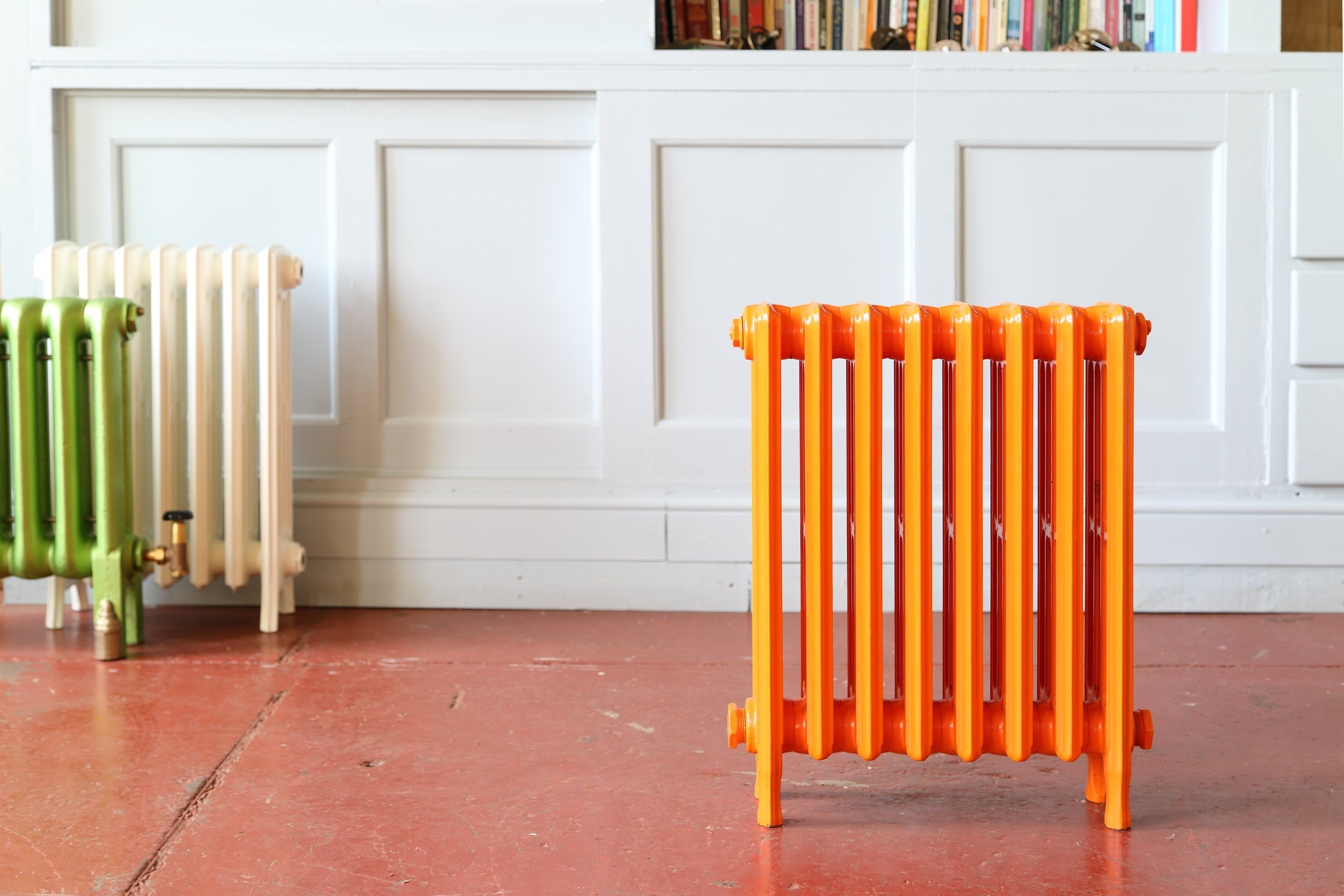

Rusted cast iron radiators deliver industrial character through controlled oxidation effects that would be impossible to achieve through standard painting. These specialist finishes highlight how professionals can use techniques that DIY painters can’t easily replicate.
The reality is that DIY painting limits you to colours available in heat resistant radiator paint ranges. Selection has improved, but you’ll still find mostly standard colours. This limitation disappears entirely with professional finishing.
Our partnership with Farrow & Ball and Little Greene opens hundreds of sophisticated colour options specifically developed to coordinate with British homes. These aren’t approximations or near matches but exact reproductions of colours that designers and homeowners rely on for cohesive interior schemes.
Beyond these ranges, we offer complete bespoke colour matching. Bring any paint sample, colour card or even a photograph and we can precisely replicate the finish. This service proves invaluable when renovating period properties where matching existing historical colours matters, or when contemporary design schemes demand exact colour coordination across all elements.
What’s the Difference Between DIY Painting and Professional Finishing?
Understanding what separates DIY attempts from professional finishing helps you make informed decisions about which approach suits your circumstances.
Preparation Standards: DIY preparation depends entirely on individual diligence. Most people underestimate the time required and cut corners when fatigue sets in. Professional finishing begins with industrial cleaning and stripping processes that remove every trace of contamination before work begins.
Environmental Control: Home painting occurs in whatever conditions exist. Temperature fluctuations, humidity variations and dust all affect results. Factory finishing happens in controlled environments where temperature, humidity and cleanliness are maintained at optimal levels throughout the process.
Application Equipment: Brushes and aerosols represent DIY limitations. Professional operations use spray booths with industrial compressors that atomise paint far finer than aerosols achieve. This creates the smooth, uniform coverage that distinguishes superior finishes.
Paint Quality: Retail radiator paints meet basic heat resistance requirements but don’t match industrial coatings’ durability. Professional finishes use paints formulated specifically for factory application and long term performance.
Finish Techniques: Standard painting produces one uniform colour. Professional finishing offers techniques impossible at home. Antiquing effects that highlight ornate details, graduated finishes that emphasise radiator architecture, and specialty metallic applications all require expertise and equipment beyond DIY scope.
Durability Expectations: Well executed DIY painting typically lasts 5 to 10 years before requiring attention. Professional finishing routinely survives 20 plus years of daily heating cycles without degradation. It often outlasts the paint on surrounding walls.
Time Investment: Painting a single radiator properly consumes at least 8 to 10 hours across several days. This includes preparation, priming, multiple coats and drying time. Professional finishing handles multiple radiators simultaneously and returns them finished to exact specifications within weeks.
The cost comparison isn’t as straightforward as it appears. Factor in materials, equipment, time value and the likelihood of needing to repeat the process within a decade. Professional finishing often proves more economical long term.
How Can Paladin Help with Your Cast Iron Radiator Finish?
We bring two decades of specialist experience to every finishing project at Paladin Radiators. Traditional craftsmanship combined with contemporary colour science.
As Britain’s only dedicated cast iron radiator foundry, we control the entire manufacturing process from casting through finishing in our Lincolnshire facilities. This integration ensures every radiator receives finishing standards impossible when different companies handle manufacturing and painting separately.
Bespoke Colour Matching
Your interior deserves radiators that integrate perfectly rather than compromise. Our colour matching service replicates any colour you provide with laboratory precision. Whether matching existing paintwork in a period property or coordinating with a contemporary design palette, we’ll create the exact shade you need.
This service extends to our exclusive partnerships with Farrow & Ball and Little Greene. The premier paint brands that define British interior design. These collaborations mean you can specify radiator finishes in colours developed specifically to complement British architecture and design traditions.
Hand Finishing Techniques
Modern spray equipment delivers flawless base coats. However, the character finishes that make radiators special still require skilled hands. Our craftspeople apply paint effects that highlight ornate details, create aged patinas or add subtle glazes that give depth standard painting cannot achieve.
Hand polishing transforms metallic finishes into reflective surfaces that showcase cast iron as the sculptural material it truly is. These mirror finishes require hours of careful work and specialised compounds that build up to jewellery quality lustre.
Complete Project Support
Finishing is just one element of radiator specification. We provide comprehensive support through the entire selection and installation process. Our radiator configurator helps you specify precisely the right radiator for each room. Our buying guide explains technical considerations that ensure optimal performance.
For larger projects involving multiple rooms or properties, our team works with you to develop cohesive schemes that balance practical heating requirements with aesthetic ambitions. We’re equally comfortable discussing BTU calculations with heating engineers as colour coordination with interior designers.
Heritage and Craftsmanship
Choosing Paladin means supporting British manufacturing traditions that stretch back generations. Every radiator leaves our Lincolnshire factory hand finished to standards that honour cast iron radiator heritage and embrace contemporary colour possibilities.
This combination of traditional craftsmanship and modern capabilities explains why architects, designers and discerning homeowners throughout Britain trust us when radiator finishing cannot be left to chance.
Visit our showroom to experience the difference professional finishing makes, or contact us to discuss how we can transform your radiators into features that enhance your home for decades to come.